How to Start an Online Beauty Store: Skincare and Cosmetics Guide
How to Start an Online Beauty Store: Skincare and Cosmetics Guide
If you want to know how to start an online beauty store, the good news is that skincare and cosmetics suit online selling well: products are small, light and bought again and again. The hard part is trust. Shoppers can't test a serum or swatch a lipstick through a screen, so your product pages, photos, labels and reviews have to do the job a shop assistant would.
This guide covers the decisions that matter, from niche and sourcing to shades, labels, batches, samples, shipping and marketing, and ends with a ready-made storefront you can launch on.
Pick a Niche You Can Explain in One Sentence
"Beauty" is too broad to market. A new store wins by being the obvious choice for one group of people. Niches that suit small sellers:
| Niche | Who it's for | Watch out for |
|---|---|---|
| Skincare for one concern (dryness, sensitive skin, breakouts) | People tired of trial and error | Claims: describe what a product does, don't promise medical results |
| Clean or minimal-ingredient beauty | Ingredient readers | "Clean" means different things to different people, so define it on your site |
| Makeup for a specific skin tone range | Shoppers poorly served by big brands | You need good swatches on real skin |
| Men's grooming | Buyers who want a short routine | Simple names and clear "how to use" steps matter more than glamour |
| Handmade soaps, balms and body care | Gift buyers and local shoppers | Consistent batches and safe production |
| Curated indie brands | People who want discovery | Margins are thinner when you resell other brands |
Write your niche as one sentence, such as "Gentle skincare for sensitive skin." Every product, photo and post should fit it.
Sourcing: Make It, Private Label It or Resell It
There are four common ways to fill your shelves:
- Your own formulas. Full control and a real story, but you need safe production, testing and documentation. Many makers start with balms, soaps or body oils.
- Private label. A manufacturer produces an existing formula under your brand. You choose packaging and scent, they handle production. Ask for ingredient lists, batch documentation and minimum order quantities before you commit.
- Curated brands. You buy stock from smaller brands and resell it. You get variety quickly, and the brands often supply photos and copy.
- Authorised reselling. Selling established brands only works if you buy through approved channels. Grey-market stock can be old, counterfeit or simply stop being supplied.
Whichever route you take, test samples yourself for a few weeks first. Your notes become your product descriptions.
Product Data: Shades, Sizes and Ingredients
Beauty products carry more information than most catalogues. Set up your product data properly from the start:
- Variants for shades and sizes. A foundation in 20 shades is one product with 20 variants, not 20 products. Each variant needs its own stock count, price and, ideally, its own photo.
- Full ingredient list. Show it on the page, in the same order as on the pack. Ingredient readers will look for it before they buy.
- Key ingredient highlights. Pull out the three ingredients that explain the product (for example "hyaluronic acid, ceramides, shea butter") and show them as tags.
- Skin type and concern. Tag products by skin type and by concern so shoppers can filter "dry skin" or "dull skin" in one click.
- How to use. Amount, place in a routine, morning or night. This cuts support emails and disappointed reviews.
- Size next to price. Shoppers compare a 30 ml serum with a 50 ml one, so make the size obvious.
For the rest of the page layout, the ecommerce product page checklist covers images, calls to action and trust signals in more detail.
Labels and Claims: Check the Rules Where You Sell
Cosmetics are regulated in most places, and the details vary a lot from market to market. Before you print labels or write product copy, check the rules where you sell for:
- what must appear on the label (ingredient list, net quantity, your business details, warnings)
- whether you need safety assessments or product records before selling
- which claims are allowed: words like "cures", "treats" or "heals" can turn a cosmetic into something regulated very differently
- extra rules for sunscreens, children's products and active ingredients, and any registration steps
If you sell into several countries, check each one. An hour with a regulatory consultant is cheaper than relabelling a batch.
Batches, Expiry Dates and Stock
Beauty products don't last forever, and customers notice when they get an old tube. A few habits keep you safe:
- Record the batch number of every delivery, so a complaint or recall can be traced to the right orders.
- Ship oldest stock first. Label shelves by batch and pick the oldest batch still in date.
- Track best-before and period-after-opening dates. Many products show a small open-jar symbol with a number of months. Mention it on the product page.
- Set low-stock alerts so bestsellers don't sell out while you are waiting for a new batch.
You don't need warehouse software on day one. A simple system is enough to start; see Inventory Basics for MVP Stores for one that works.
Samples, Minis and Routines
Samples solve the biggest problem in online beauty: "will this work for me?"
- Paid sample kits. A few minis at a low price, with a code that credits the kit against the first full-size order.
- A free sample with every order. Pick a product you want people to discover, not leftovers.
- Routines and bundles. "Morning routine for dry skin: cleanser, serum, moisturiser" is one decision instead of three. Price it slightly below the parts.
- Gift sets. Ready-made sets with gift wrap do well before holidays.
Photos, Reviews and Before/After Trust
Beauty shoppers buy with their eyes, so invest here early.
- Shoot every shade on more than one skin tone. One swatch on one arm doesn't help most customers.
- Show texture. A close-up of the cream or the oil drop tells people more than the bottle.
- Ask for photo reviews. Send a follow-up email a few weeks after delivery, when results are visible, and ask for a photo.
- Keep before/after images honest. Same light, same angle, no retouching, and say how long and how the product was used. Edited results damage trust and may break advertising rules where you sell.
- Show reviewer context. Skin type or concern next to a review makes it much more useful.
Pricing Your Products
Add up the full cost of an order before you set prices: product, packaging, the free sample, shipping materials, payment fees and an allowance for breakage and returns. Leave room for discount codes and bundles.
Price single products for margin, then use bundles, minis and a free-shipping threshold to raise the order value. Keep a few low-priced entry products (lip balms, minis, sample kits) so first-time buyers can try you without much risk.
Shipping and Returns for Beauty Products
- Pack for leaks. Seal pumps and droppers, bag liquids and pad glass.
- Watch the weather. Balms melt in hot vans, so avoid shipping them just before weekends in summer.
- Restricted items. Fragrances, aerosols and nail polish can count as restricted goods. Check your carrier's rules before you list them.
- A clear returns policy. Many beauty stores refuse opened products for hygiene reasons but replace damaged or faulty ones. Check consumer rules where you sell and link the policy from every product page.
For choosing between flat-rate and live shipping rates, read Shipping for eCommerce MVPs.
SEO and Marketing for a Beauty Store
Search. Beauty shoppers search by problem and by ingredient: "serum for dry skin", "what does niacinamide do". Build a page for each concern and key ingredient, link them to products, and give category pages a short intro, not just a grid.
Content. Routine guides and ingredient explainers rank in search and answer pre-sale questions. Link every post to the products it mentions.
Social and creators. Short videos of texture and application work well. Send products to small creators whose followers match your customers.
Email. Set up a welcome series, a reorder reminder when a product is likely to run out, and a review request after delivery.
Launch Faster With the Beauty Products Store
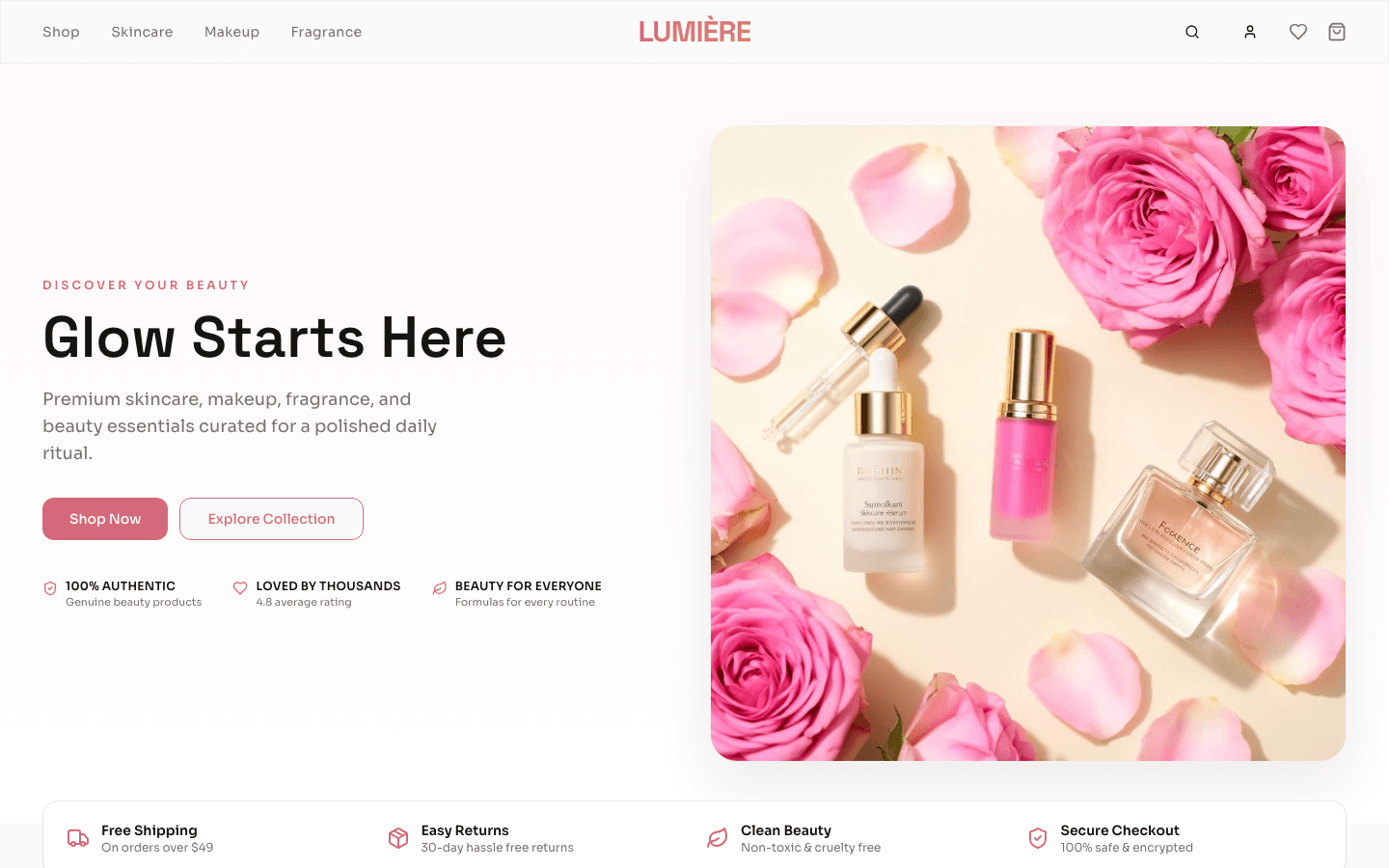
You can build all of this yourself, or start from a store that already handles it. We built the Beauty Products Store for beauty brands that want their own storefront.
What's inside:
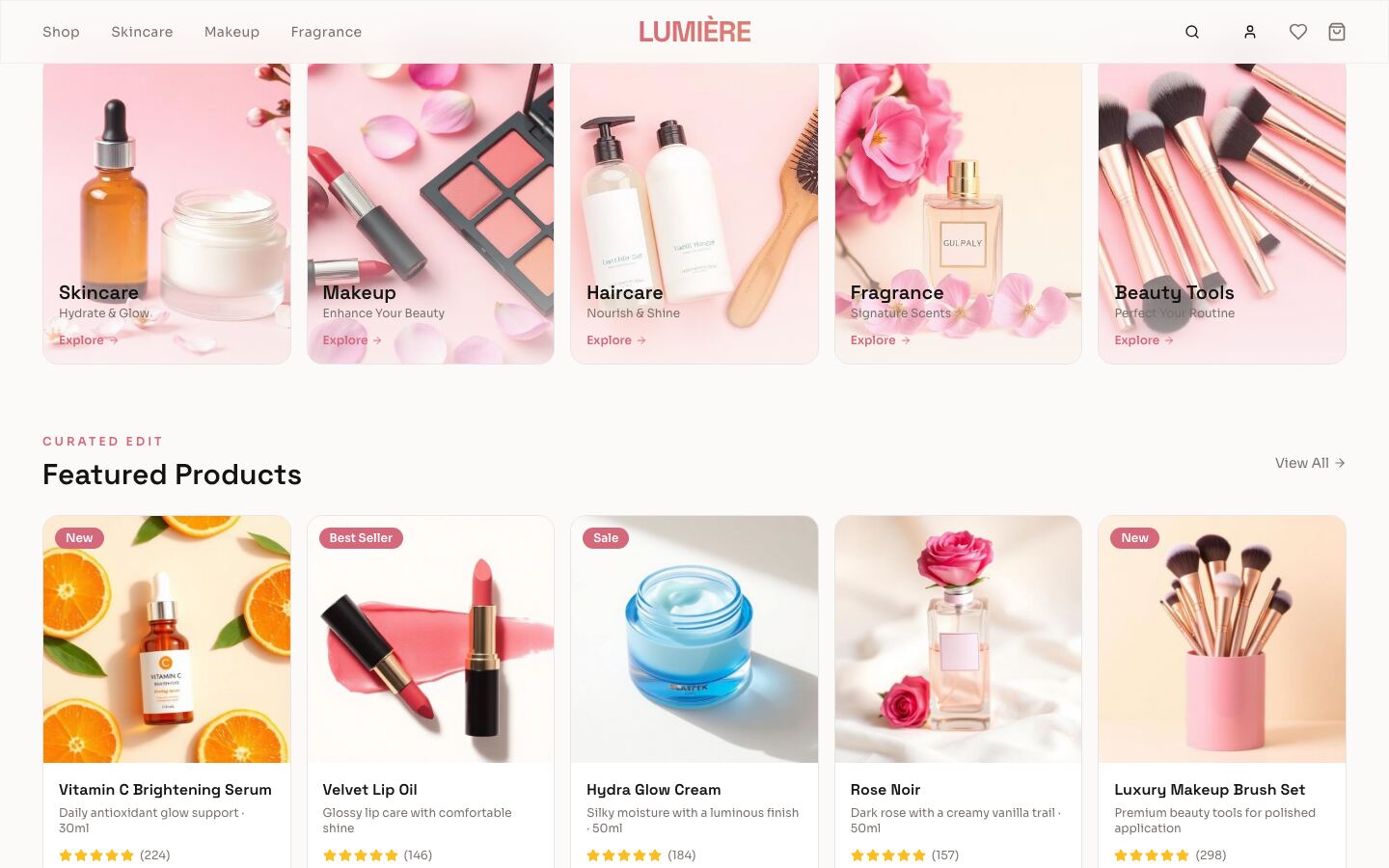
- A demo catalogue of 32 products for a fictional brand, Lumiere Beauty, across skincare, makeup, fragrance, haircare and body care, plus collection pages for best sellers, new arrivals, clean beauty and sale
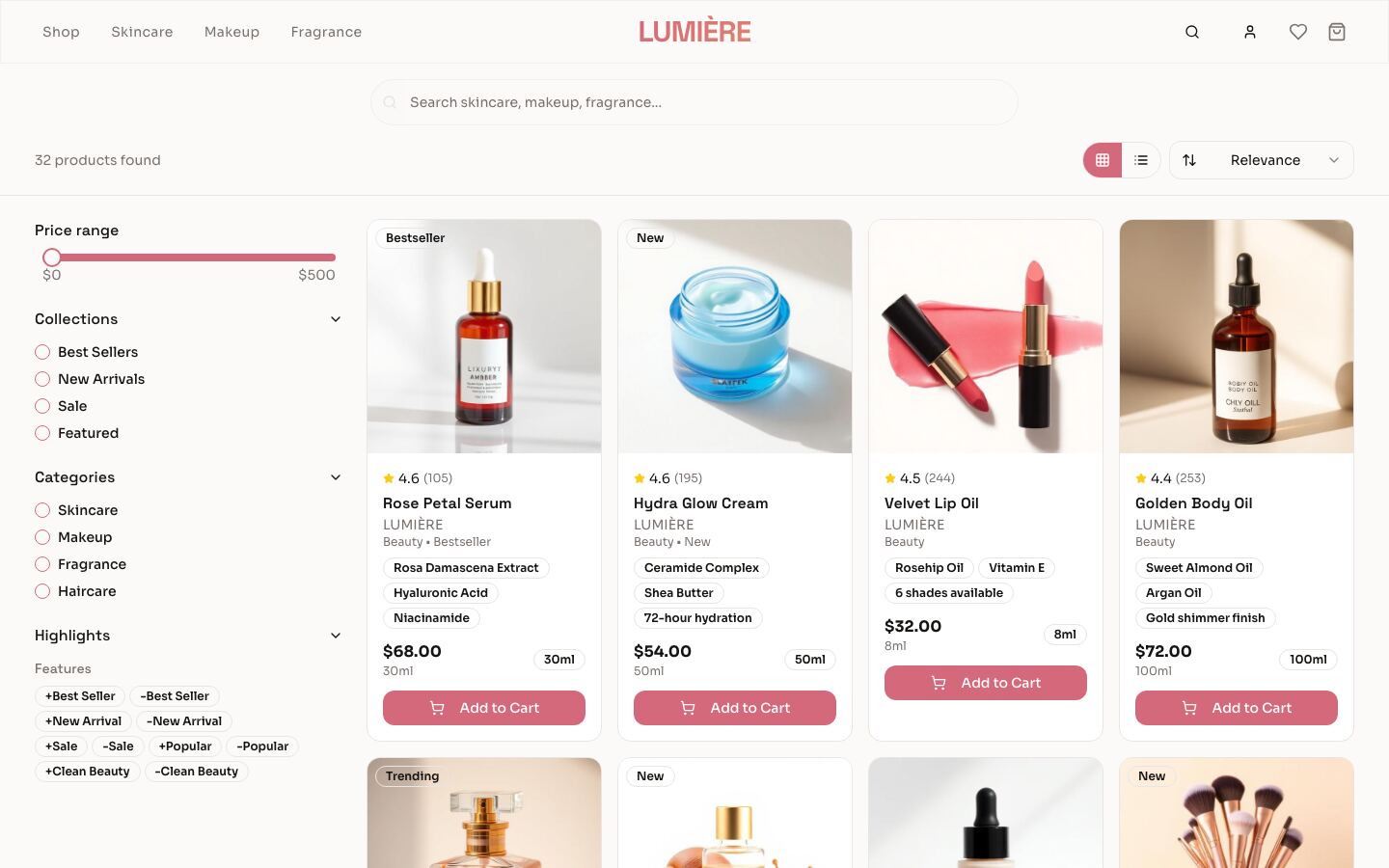
- Shop and search with live suggestions, filters for price, collection, category and highlights, sorting, grid or list views and side-by-side product comparison
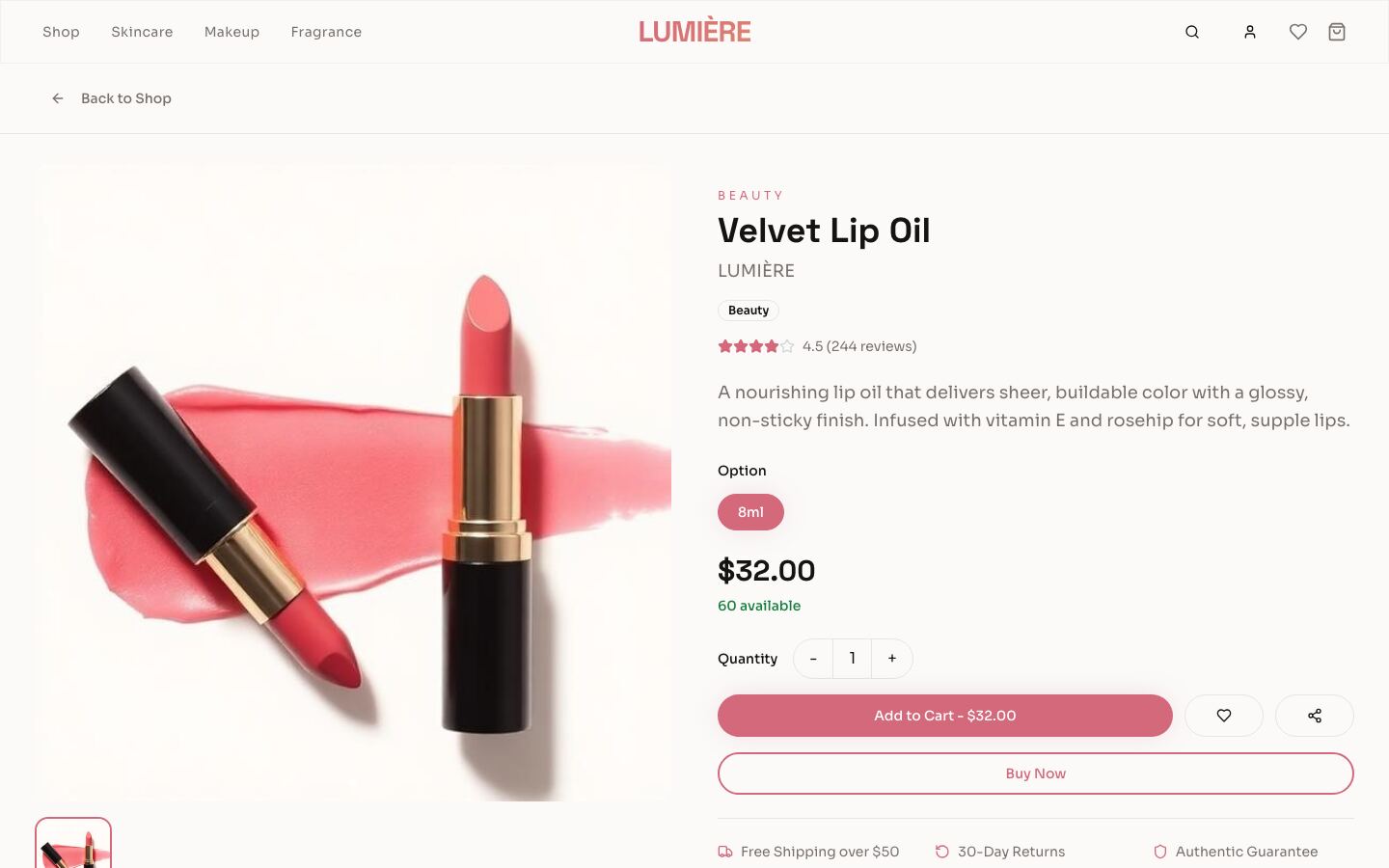
- Product pages with an image gallery, size options, stock levels ("Only 3 left"), ratings and reviews, ingredient highlights and related products
- Wishlist, cart with gift wrap and promo codes, and a step-by-step checkout with an order confirmation page
- Content pages for shipping, returns, FAQ, ingredients, sustainability and gift cards, plus a blog
- SEO built in: metadata, canonical URLs, Open Graph tags, a sitemap and Product structured data
It runs straight away on its built-in demo catalogue, with no database. When you're ready for real orders, connect the open-source commerce backend it is built for, which you host yourself. One command loads the catalogue, and its admin dashboard covers products, orders, customers, inventory and promotions. Card payments work through Stripe once you add your keys, and the backend adds return and replacement requests and a low-stock report. The setup guide in the download covers every step.
| Stack | Next.js 16, React 19, TypeScript, Tailwind CSS |
| Live demo | beauty-store.mvp.sale |
| Price | $39, one-time, with the full source code (a mobile app and other framework versions are available on request) |
| Get it | Beauty Products Store |
Your First 30 Days
| Week | Do this |
|---|---|
| 1 | Write your one-sentence niche, test samples and choose 10 to 20 launch products. Check labelling rules where you sell. |
| 2 | Shoot photos and swatches, write ingredient lists and "how to use" notes, and set up shades and sizes as variants. |
| 3 | Rebrand the store, load products, connect payments, write shipping and returns pages, and place test orders. Go live. |
| 4 | Post texture and routine videos, send products to a few small creators, and ask first customers for photo reviews. |
FAQ
How much money do I need to start an online beauty store? It depends mostly on stock. Curating a few small brands or launching with a short private-label range keeps the first order small. Your storefront doesn't need to be the big cost.
Do I need my own formulas? No. Many stores start by curating brands or using private label, then develop their own products once they know what customers want.
Should I accept returns on opened products? Decide on a policy that fits the rules where you sell, then state it clearly on your returns page and product pages.
Start Your Beauty Store
A beauty store runs on trust: honest photos, clear ingredients, samples and careful delivery. Get those right for one niche, then grow.
See the Beauty Products Store or browse all ecommerce apps on MVPHub.
The cover image was created with AI image generation. The screenshots are from the Beauty Products Store demo.