Shop by category.
Start with the kind of product you want to launch, then compare verified listings, stacks and delivery options.
Browse all categories
Listings & Marketplaces
Marketplace MVPs — multi-vendor stores, job boards, and listing platforms with search, posting, and payout flows.
2 MVPs →#E-Commerce
Selected commerce templates after the SaaS and AI starter focus — headless, SSR, SPA, or mobile.
11 MVPs →@Local Services & Booking
Appointment-based services, scheduling, and multi-tenant booking platforms.
1 MVP →~Finance & Accounting
Invoicing, billing, and small-business finance tools.
1 MVP →+Offers & Rewards
Coupons, cashback, merchant deals, and consumer rewards platforms.
1 MVP →*Games
Playable browser games and game foundations — board games, puzzles, and casual titles built on modern web stacks.
0 MVPs →$Contests & Challenges
Contest, hackathon, and coding-challenge platforms with submissions, judging, and leaderboards.
2 MVPs →#AI & Automation
Generative AI apps, chatbots, automation workflows, and ML-powered tools.
0 MVPs →@APIs & Products
Parsing, summarization, metadata.
0 MVPs →~Audio & Video
Web recorders, editors, mixers.
0 MVPs →+Content & Publishing
Blogs, newsletters, docs, and content distribution platforms.
0 MVPs →*Customer Support
Tickets, SLAs, inboxes.
0 MVPs →$Data & Analytics
Business intelligence dashboards, data collection tools, visualization platforms, and reporting systems.
0 MVPs →#Design & Creative Tools
Creation, editing, and asset workflows for designers, marketers, and dev teams.
0 MVPs →@Developer Tools
Starters, SDKs, infra helpers, and utilities for building apps faster.
0 MVPs →~DevOps & Cloud
CI/CD pipelines, monitoring tools, infrastructure as code, and container management platforms.
0 MVPs →+Education & Learning
Online courses, quizzes, tutoring platforms, and study tools.
0 MVPs →*Entertainment & Media
Streaming platforms, podcasting tools, meme generators, and media optimization utilities.
0 MVPs →$Legal & HR
Templates, signatures, storage.
0 MVPs →#Marketing & SEO
Templates, A/B testing, CTAs.
0 MVPs →@No-Code & Low-Code
Templates and components for Bubble, Webflow, Glide, Airtable, Retool, and similar.
0 MVPs →~Personal Tools
Journaling apps, habit trackers, personal finance tools, and life dashboards.
0 MVPs →+Productivity & Collaboration
Getting-things-done tools for individuals and teams.
0 MVPs →*Real Estate & Property
Property listings, management systems, inspections, and booking platforms.
0 MVPs →$SaaS Tools
Subscription-based web apps that solve focused business problems with recurring revenue models.
0 MVPs →#Security & Compliance
Access management, vulnerability scanners, compliance tracking, and audit logging systems.
0 MVPs →@Social & Community
Forums, chat platforms, communities, and social networking tools.
0 MVPs →~Travel & Events
Trip planning, event ticketing, venue booking, and local discovery platforms.
0 MVPs →Marketplace highlights
Groover Multi-Purpose Store
$39A fully-polished, multi-purpose e-commerce template engineered for brands that need the full feature set on day one — not a minimal starter you outgrow in a month. Groover ships with a live Medusa-backed catalog, category + collection merchandising, search with multi-facet filtering (category, collection, price, sale, stock, sort), product-detail with variant selection + image gallery + stock messaging + related products, Stripe Elements checkout with provider-aware setup panels, account dashboard with guest order lookup and authenticated order history, customer auth with login/register/logout/profile edit, wishlist with guest browser persistence and signed-in customer sync, blog list + detail, store directory, track-order page, branded 404, About/Contact/FAQ/Terms legal shell, GTM-friendly dataLayer wired into PDP/cards/wishlist/cart/checkout/search, locale + RTL foundation with persistent language switcher, PWA installability baseline, theme switching that applies before hydration and persists in both local storage and cookies, header active-route navigation with live mini-cart summary, skip-link / focus accessibility basics, app-level and route-level loading fallbacks, a recoverable error boundary, generated robots.txt and sitemap.xml, shared SEO metadata helpers, and a Playwright / Vitest / Lighthouse test harness. Every copy string lives in a typed content map so rebranding is a find-and-replace pass, not a code rewrite. Deploy it as-is or use it as the most complete starting point you can buy for a serious storefront.
 FU LIVEecommerce
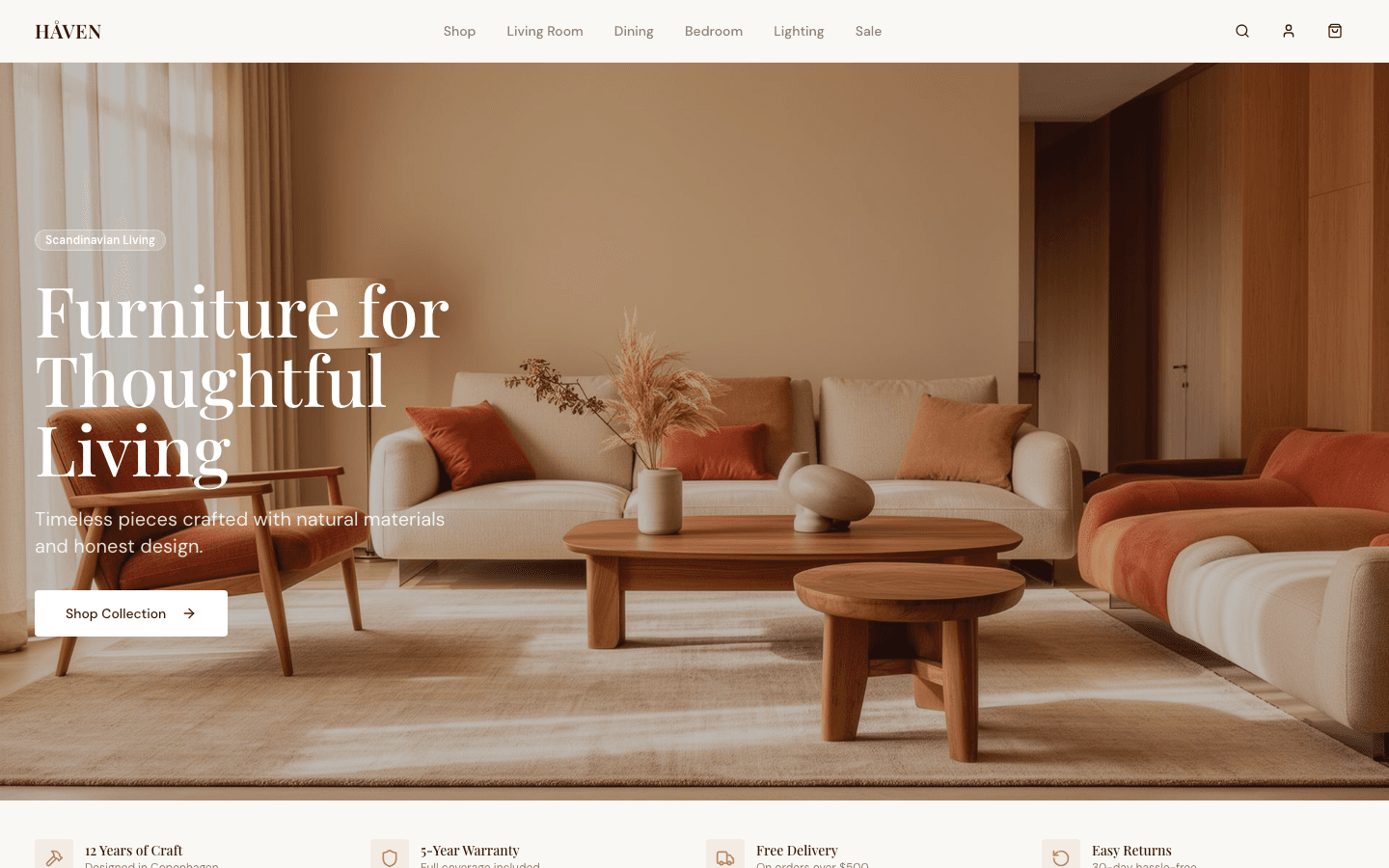
Furniture Store
$39An elegant furniture and home furnishing e-commerce app with a design-forward Next.js storefront for SEO-optimized product pages and server-rendered category browsing. Alternative framework and mobile ports are available on demand. The visual design emphasizes large product imagery, room-based browsing, and material/color variant selection. Built with Radix UI, shadcn/ui, Tailwind CSS, and Framer Motion for a premium feel. Connects to any headless commerce backend — Medusa JS SDK integration is included. Form handling via React Hook Form with Zod validation ensures robust checkout and account flows. Great for furniture brands, interior design shops, or home decor marketplaces.
 PE LIVEecommerce
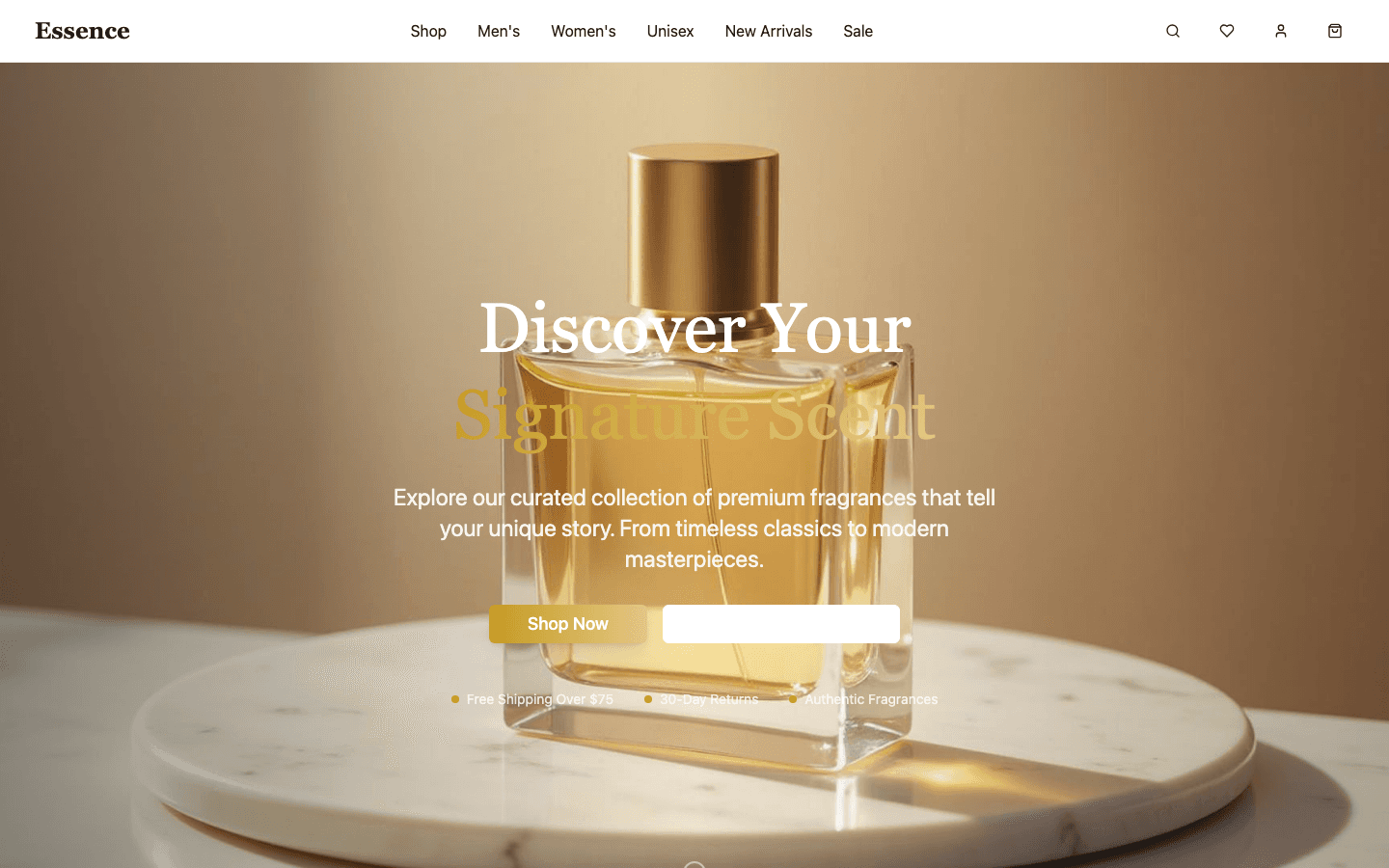
Perfume Store
$39A luxury-styled perfume and fragrance e-commerce app built for premium brand presentation. The ready-to-buy Next.js storefront features rich product pages with scent profiles, bottle size variants, gift set options, and server-rendered collections. Mobile, backend, and alternative framework ports are available on demand. The design uses shadcn/ui and Tailwind CSS with an elegant, minimalist aesthetic suited for luxury goods. Easy to customize — swap product data, update branding, and deploy. Perfect for perfume brands, fragrance boutiques, or niche scent marketplaces.
Plant Pot Store
$39A stylish Next.js e-commerce app specializing in plant pots, planters, and plant stands, with server-rendered product pages for SEO. Alternative framework and mobile ports are available on demand. Features size and color variant selection, material-based filtering (ceramic, terracotta, concrete, wood), and curated collections. The UI uses shadcn/ui and Tailwind CSS with Framer Motion animations for smooth product transitions. Connects to any headless commerce backend — Medusa JS SDK is integrated in the storefront. Easy to maintain and extend — the component architecture is modular, and the API layer is abstracted for quick backend swaps. Perfect for home decor brands, plant accessory shops, or artisan pottery stores.
 BE LIVEecommerce
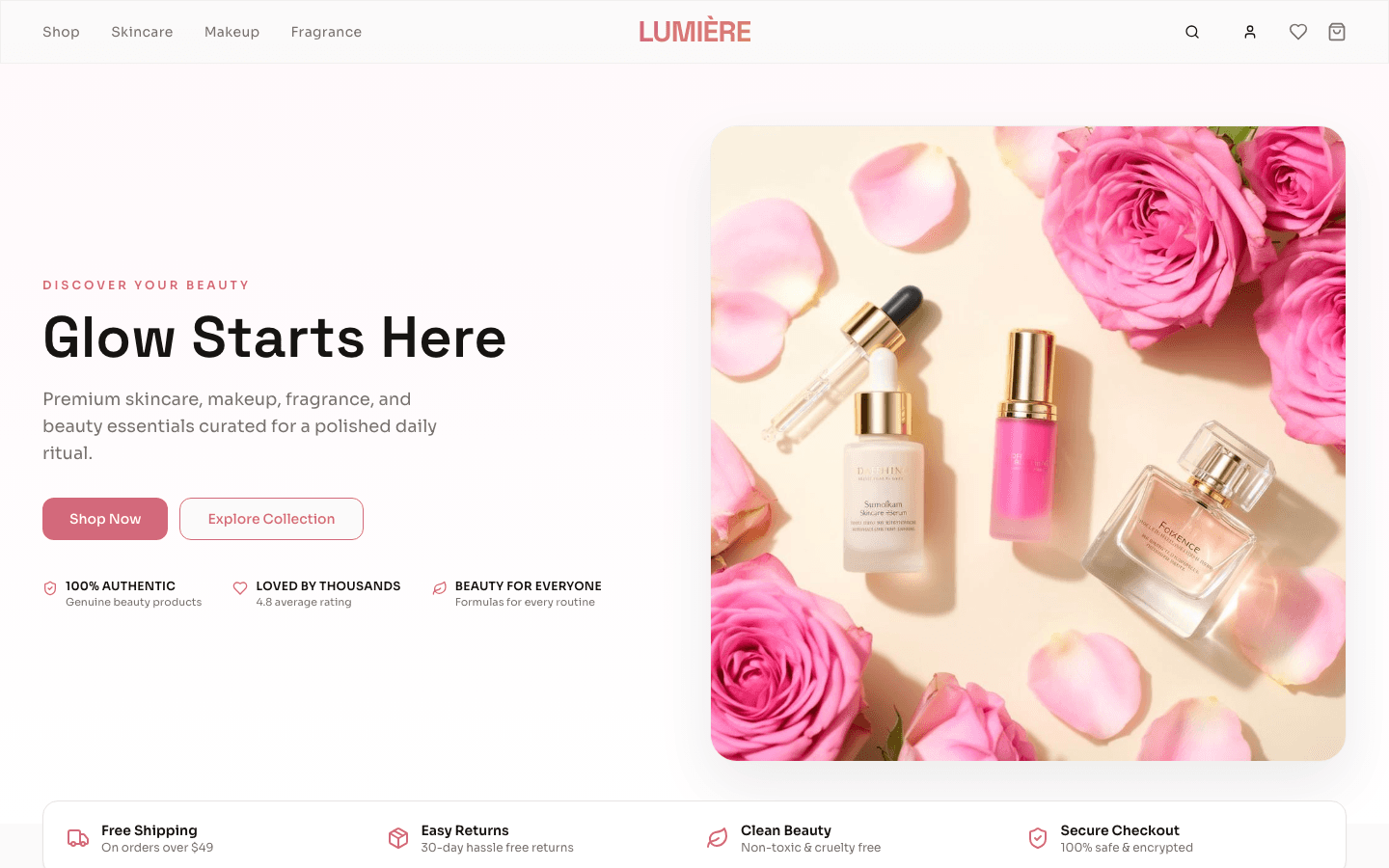
Beauty Products Store
$39A modern, full-featured beauty and cosmetics e-commerce application built around a server-rendered Next.js storefront with SEO optimization. Alternative framework and mobile ports are available on demand. Connects seamlessly to a headless e-commerce backend such as Medusa, Shopify, or a custom API. Features product browsing with category filters, search, cart management, Stripe checkout, user authentication, and order tracking. The UI is built with Radix UI and shadcn/ui components styled with Tailwind CSS for a polished, accessible experience. Easy to set up — clone, install dependencies, configure your backend URL, and you are live. Ideal for launching a beauty brand, skincare line, or cosmetics marketplace.
 CH LIVEecommerce
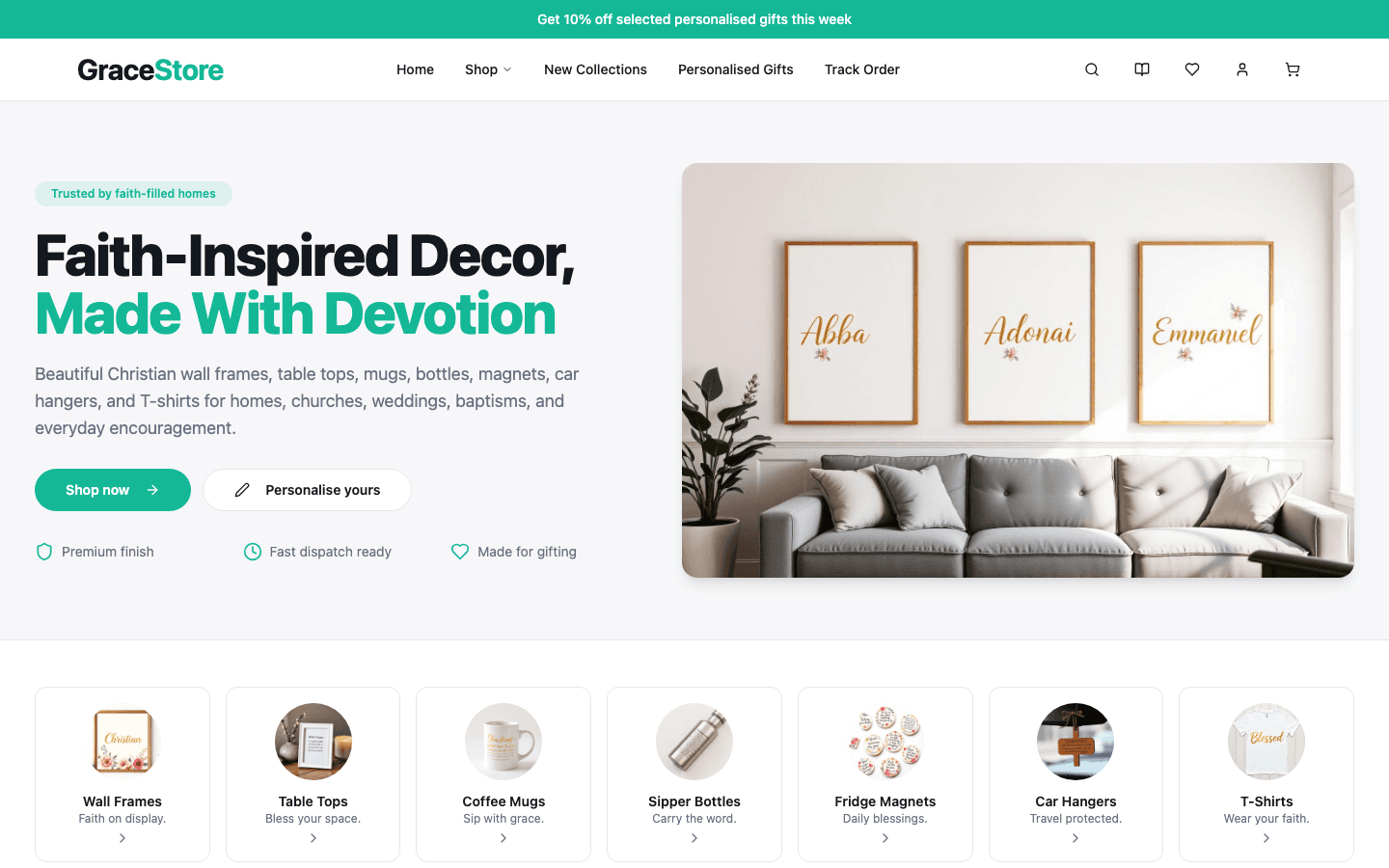
Christmas Gift Store
$39A festive, holiday-themed e-commerce application for selling Christmas gifts, decorations, and seasonal products. The ready-to-buy Next.js storefront provides server-rendered pages and full SEO support; mobile, backend, and alternative framework ports are available on demand. The storefront uses shadcn/ui and Tailwind CSS for a beautiful, responsive UI with holiday-ready theming, and connects to Medusa or another headless commerce API. Perfect for seasonal pop-up stores, gift shops, or holiday marketplaces that need to launch fast and look professional.