How to Sell Furniture Online: From Product Pages to Delivery
How to Sell Furniture Online: From Product Pages to Delivery
A sofa is not a phone case. It costs more, takes weeks to make, needs two people to carry, and has to fit through a doorway the customer has never measured. That is exactly why learning how to sell furniture online is worth the effort: the order values are high, loyal customers come back for the next room, and most of the work that wins sales is careful, unglamorous detail that big stores often get wrong.
This guide covers choosing a business model, product pages, fabric and finish options, photography, large-item delivery, lead times, returns, SEO and marketing, then shows a ready-made furniture storefront you can launch on.
Why Furniture Sells Differently Online
Shoppers can't sit on a sofa through a screen, so every doubt a showroom would answer has to be answered on the page:
- Will it fit? Room size, doorways, stairs and lifts.
- What is it made of? Solid wood or veneer, real linen or a blend, foam or feather.
- What will it look like in my home? Colour accuracy and scale.
- When will it arrive, and who carries it in?
- What happens if it's damaged, or just wrong?
Answer those five questions well and you have most of a furniture business. Leave any of them vague and the customer goes to a store they can visit.
Choose Your Furniture Business Model
| Model | Stock you hold | Typical lead time | Main challenge |
|---|---|---|---|
| Your own designs, made to order | Materials only | Weeks | Managing expectations while you build |
| Curated brands bought wholesale | Finished pieces | Days | Cash tied up in big, slow stock |
| Dropship from manufacturers | None | Varies by supplier | Quality control, delivery you don't control |
| Vintage and restored pieces | One of each | Days | Photographing and describing every item |
| Niche range (small spaces, kids, outdoor, home office) | Some | Days to weeks | Owning a clear niche in search |
Many successful small brands mix two of these: a core range in stock for fast delivery, plus made-to-order versions in more fabrics and finishes.
How to Sell Furniture Online With Product Pages That Replace the Showroom
Your product page has to do the job of a salesperson with a tape measure. Make these details easy to find, not buried in a tab:
| Detail | Example | Why it matters |
|---|---|---|
| Overall dimensions | Width × depth × height | The first thing serious buyers check |
| Key fit measurements | Seat height and depth, leg clearance, table seats six | Comfort and fit with other furniture |
| Packaged size and weight | Largest box, number of boxes | Doorways, stairs and lifts |
| Materials | Solid oak frame, oak veneer top, linen blend cover | Price justification and trust |
| Finish and care | Oil finish, wipe clean, avoid direct heat | Fewer complaints later |
| Assembly | Arrives assembled, or legs attach in ten minutes | Sets delivery expectations |
| Lead time | In stock, or made to order in weeks | The biggest source of support emails |
Write a short paragraph that says who the piece suits: "a deep seat for lounging, best in rooms at least this wide" helps more than "timeless design". For a complete list, see the eCommerce product page checklist.
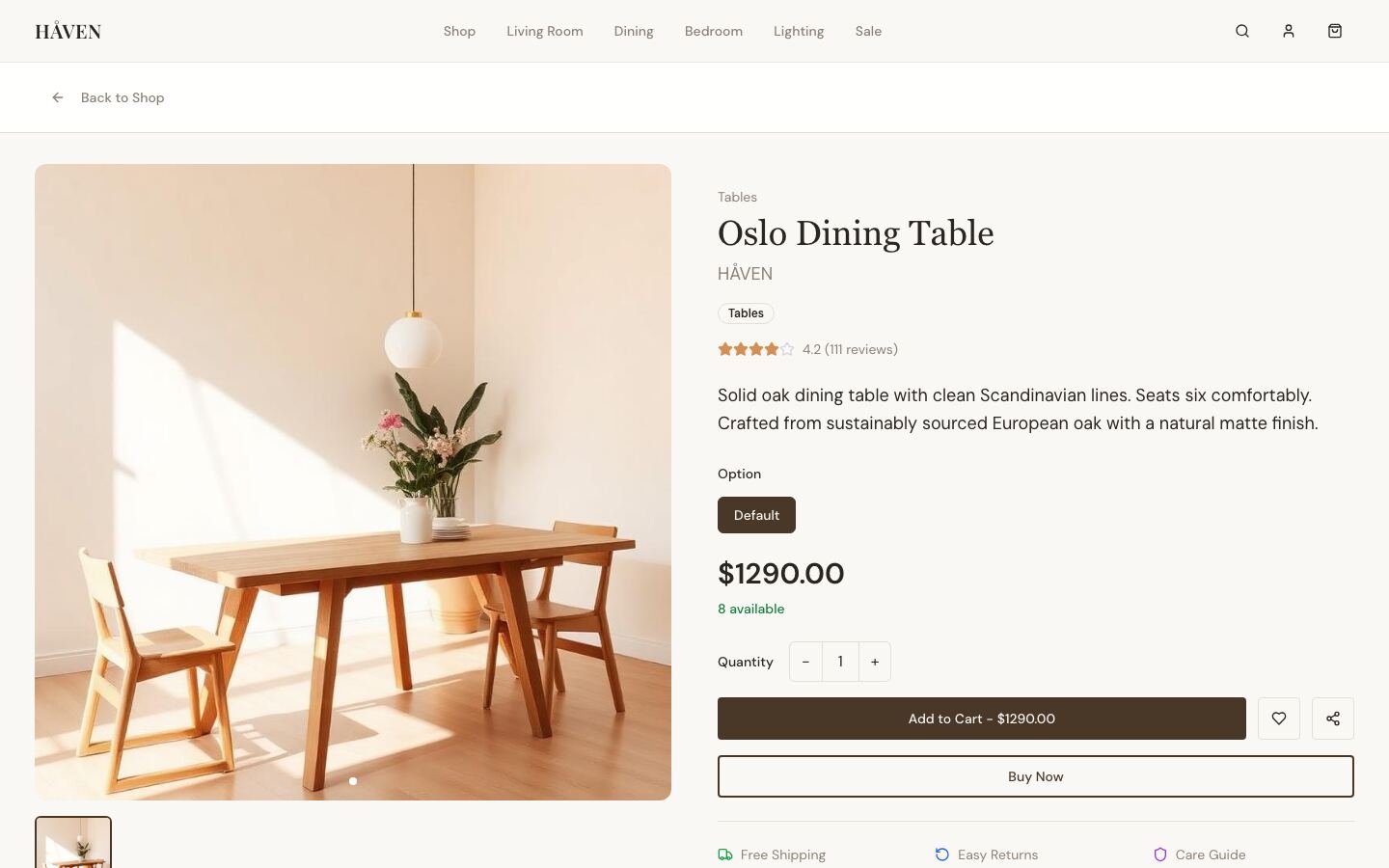
Fabric and finish options
Options are where furniture stores make or lose money:
- Price each option on its own. A wool cover or a longer table usually costs more. Show the price change as soon as the shopper picks it.
- Track stock and lead time per option. The terracotta linen may be in stock while the moss weave is made to order.
- Offer swatches. Free or low-cost fabric and wood samples cut returns caused by "the colour looked different".
- Keep the list short at launch. Three fabrics that sell beat twenty that confuse.
Photos That Sell Furniture
Furniture is bought with the eyes first. Plan each product shoot around the questions buyers ask:
- A clean main image on a plain background for listings and search results.
- Lifestyle photos in a real room, so shoppers can picture scale and style.
- Details: joinery, fabric weave, legs, drawer runners and the underside.
- Scale: a person sitting on the sofa, or a mug on the side table.
- Every option: one photo per fabric and finish, shot in the same light.
Shoot in soft natural light and check colours on more than one screen. If you can't afford a room set, partner with a café, a rental home or a customer who loves your pieces.
Delivery: The Hardest Part of Selling Furniture
Delivery is part of the product. A beautiful table that arrives scratched, late or stuck on the kerb is a bad table. Offer clear options and price them honestly:
| Service | What the customer gets | Good for |
|---|---|---|
| Parcel delivery | Boxes left at the door | Small, flat-pack and lighting items |
| Kerbside freight | Delivered to the kerb or driveway | Lower-cost large items |
| Two-person, room of choice | Carried into the room | Sofas, beds, dining tables |
| White glove | Unpacked, assembled, packaging removed | Premium and fragile pieces |
Practical tips:
- Ask for access notes at checkout: stairs, lifts, narrow hallways, parking.
- Set prices by size band or zone, and use a free-delivery threshold that matches your average order.
- Agree delivery windows and send reminders the day before.
- Ask customers to inspect on delivery and photograph any damage before the driver leaves.
For choosing between flat rates, live rates and fulfilment partners, read Shipping for eCommerce MVPs.
Lead Times and Made-to-Order
Long lead times are normal in furniture. Surprise lead times are not. Show the expected wait on the product page, repeat it in the cart and the confirmation email, and send an update at each stage: in production, ready to ship, out for delivery. If a delay happens, tell the customer before they ask.
For made-to-order pieces, decide whether you take full payment or a deposit, and say clearly when an order can no longer be changed or cancelled.
Returns on Bulky Items
Returning a sofa costs almost as much as delivering it, so set the rules before you sell:
- Say who pays for collection on change-of-mind returns, and how much.
- Require items to be unused, with the original packaging where possible.
- Explain how custom fabric and made-to-order pieces are treated.
- Give a short window to report transit damage, with photos.
Consumer rights differ by country, especially for faulty goods and custom orders. Check the rules where you sell and write your policy to match.
SEO and Marketing for a Furniture Store
Room and use-case pages. "Small-space sofas", "solid oak dining tables" and "bedroom storage" are separate searches. Give each room or collection page its own intro.
Material and care guides. Articles on caring for oak, linen or rattan attract buyers and cut support questions.
Visual platforms. Furniture shares well on image-led social networks. Post room shots, not just cutouts.
Trade and interior designers. Designers buy repeatedly for clients. A simple trade discount and fast sample service can bring steady orders.
Customer photos. Ask buyers for a photo of the piece in their home. It is the best proof of colour and scale you will ever get.
Launch Faster With Furniture Store, a Ready-Made Next.js Storefront
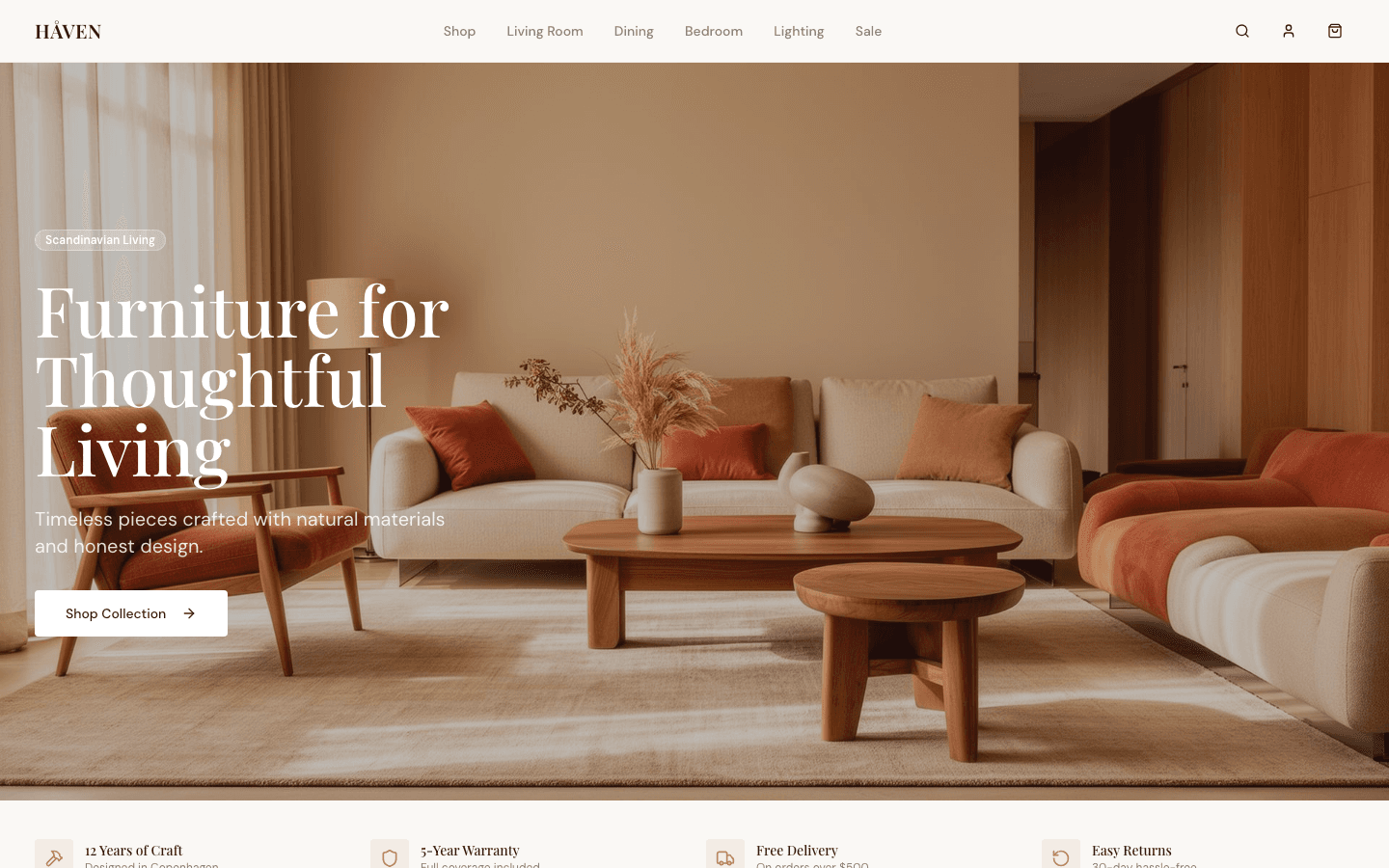
Furniture Store is a warm, light storefront with serif headings, built for furniture and home brands. The demo brand, HÅVEN, sells living room, dining, bedroom, storage and lighting pieces.
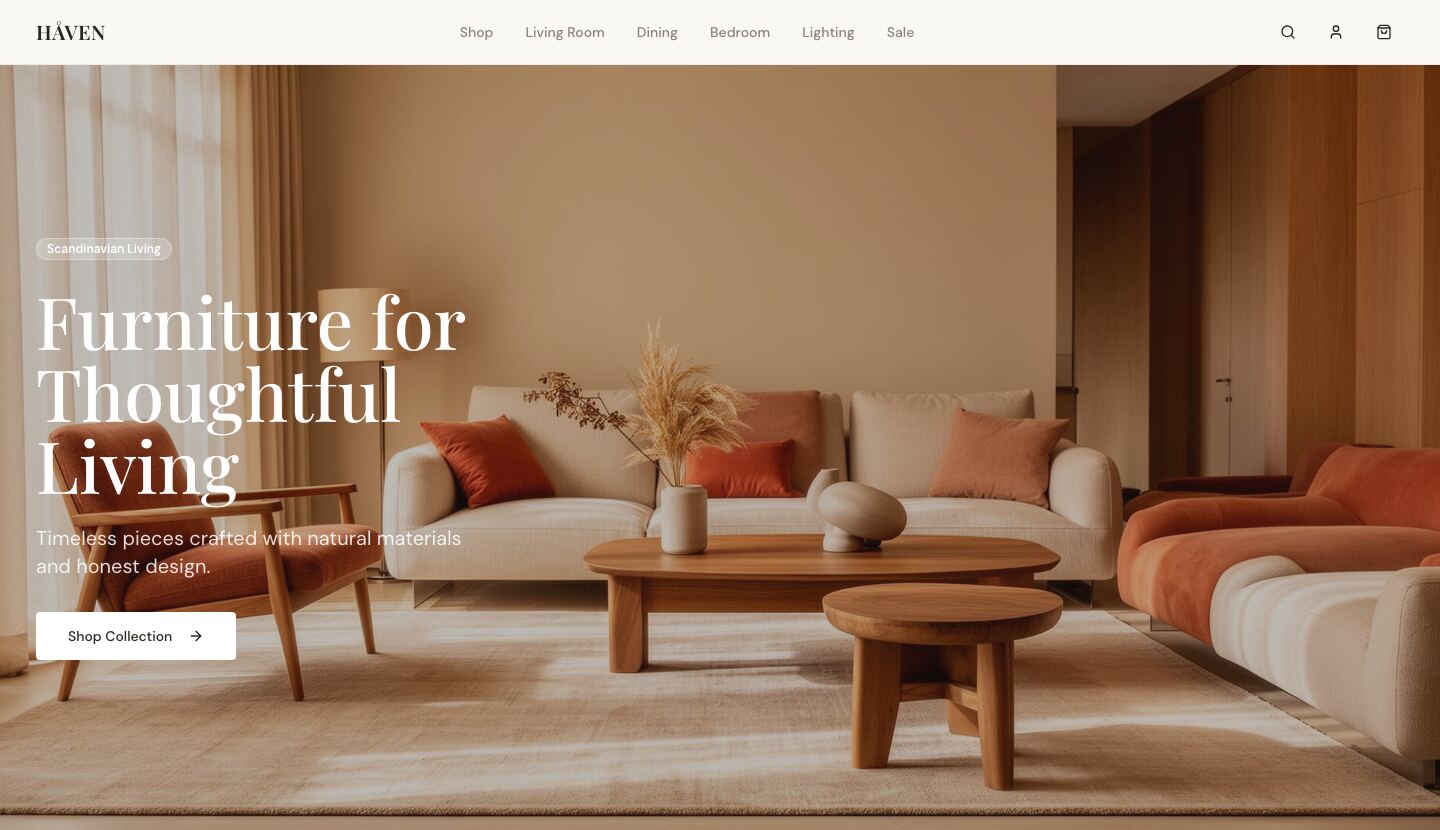
What's inside:
- A home page with a full-width hero, trust signals (craft, warranty, free delivery, returns), room tiles and featured furniture
- Room landing pages for living room, dining, bedroom, storage and lighting, plus a sale page
- Search and filters with live suggestions, price range, collections, categories and highlights, plus sorting and grid or list views
- Product pages with a gallery, options for fabric, finish or size (each with its own price and stock), ratings and reviews, related products and Product structured data
- A cart built for furniture: a presentation service add-on, delivery notes for access and placement, promo codes, a free-delivery progress bar and "complete the room" suggestions
- Step-by-step checkout with a delivery method step and Stripe card payments when you add your keys
- Content pages: blog, care guide, shipping, returns, sustainability, about and contact
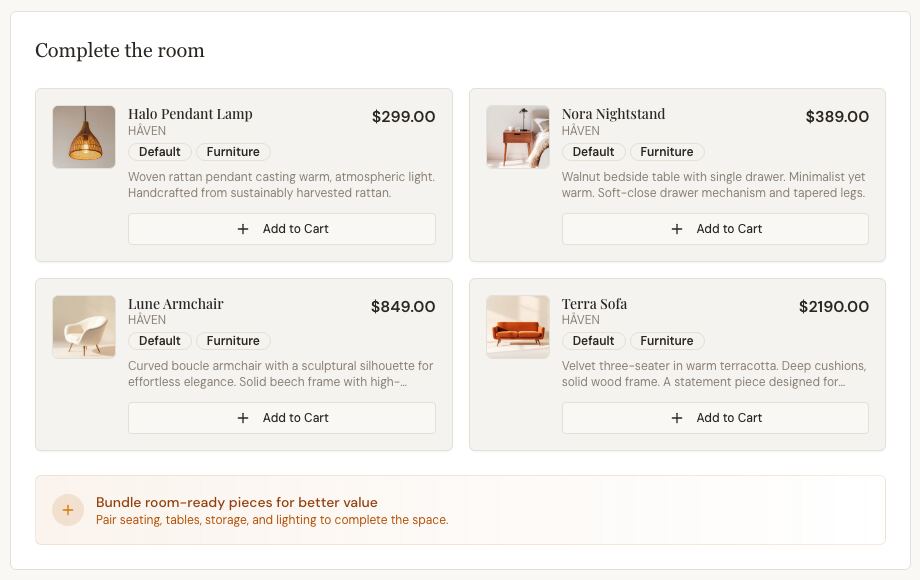
It runs straight away on a built-in demo catalogue, with no database. For real orders, connect the open-source commerce backend it is built for, which is included and you host yourself. You get an admin dashboard for products, orders, customers, inventory and promotions, plus order look-up, return and replacement requests and low-stock alerts. The setup guide walks through each step.
| Stack | Next.js 16, React 19, TypeScript, Tailwind CSS, shadcn/ui |
| Live demo | furniture-store.mvp.sale |
| Price | $39, one-time, for the Next.js Storefront with full source code |
| Get it | Furniture Store |
A mobile app and versions for other frameworks are available on request.
Your First 30 Days
| Week | Do this |
|---|---|
| 1 | Choose your model and your first 10–20 pieces. Confirm lead times, packaged sizes and delivery partners. |
| 2 | Photograph every piece and option. Write full dimensions, materials, care and assembly notes. |
| 3 | Rebrand the storefront, set delivery prices and your returns policy, connect payments and go live. |
| 4 | Offer swatches, post room photos on social media, contact local interior designers and ask first buyers for photos. |
FAQ
Can I sell furniture online without a warehouse? Yes. Made-to-order and dropship models need little or no storage. You still need a reliable delivery partner and clear lead times.
How do I price delivery for large items? Start with size bands or zones based on your carrier's quotes, and set a free-delivery threshold that matches your typical order. Keep white glove as a paid upgrade.
How do I reduce furniture returns? Publish full dimensions and packaged sizes, show every fabric in true colour, offer swatches, and ask customers to inspect deliveries before signing.
Start Selling Furniture Online
Great furniture sells online when the page answers every showroom question and the delivery feels as considered as the design. Start with a small range, get the details right, and grow room by room.
See Furniture Store or browse all ecommerce apps on MVPHub.
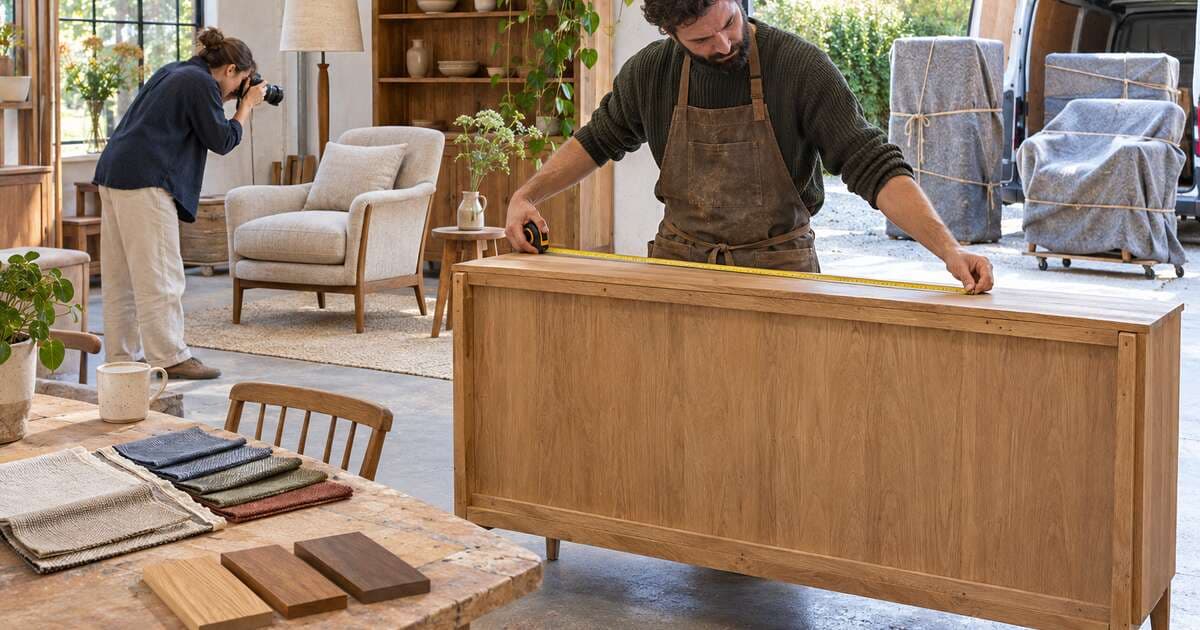
The cover image was created with AI image generation. The screenshots are from the Furniture Store demo.