How to Start an Online Plant Shop and Sell Plants Online
How to Start an Online Plant Shop and Sell Plants Online
Selling plants is different from selling almost anything else online: your products are alive. They need water, light and the right temperature, and they can arrive in perfect shape or as a box of broken stems. If you're learning how to start an online plant shop, most of the work is about keeping plants healthy from your shelf to the customer's windowsill, then helping them stay that way.
This guide covers what to sell, where to source it, the rules to check, pot sizes and product data, packing and shipping live plants, seasons, local delivery, and the care content that brings in search traffic.
Decide What Kind of Plant Shop You Are
"Plants" covers very different businesses. Choose a focus before you buy stock:
| Shop type | Ships well? | Who buys | Things to watch |
|---|---|---|---|
| Easy houseplants | Yes, in small and medium pots | First-time plant owners, gift buyers | Competition on price, so service and care advice matter |
| Succulents and cacti | Very well | Collectors and beginners | Rot from overwatering before dispatch |
| Rare and collector plants | Yes, with care | Enthusiasts who pay more | Accurate naming and honest photos of the exact plant |
| Large statement plants | Hard | Homes, offices, cafes | Better suited to local delivery |
| Herbs and edible plants | Seasonal | Home cooks and gardeners | Short selling season |
| Pots, soil and plant care only | Easily | Every plant owner | No live stock risk, but less unique |
Many successful shops pair a small range of plants with pots and care products. The non-living products ship easily, sell all year and lift the order value.
Where Your Plants Come From
You can grow your own, propagate from mother plants, or buy from wholesale nurseries. Most new shops start with wholesale and add their own propagation later.
- Visit growers if you can. Look for clean, pest-free plants, consistent sizes and healthy roots.
- Quarantine new stock. Keep new arrivals apart for a week or two and check for pests before they join your main stock.
- Set a quality standard. Decide what "good enough to ship" means: no pests, no yellowing, roots established in the pot.
- Name plants correctly. Use the botanical name as well as the common name. Collectors care, and it avoids confusion between similar plants.
Plant Health Rules: Check Them Where You Sell
Plants can carry pests and diseases, so many places regulate how they are sold and moved. Before you launch, check the rules where you sell and ship for:
- whether you need to register as a plant seller or nursery
- moving plants between regions or across borders, which can need plant health certificates or inspections
- species that are restricted or banned because they are invasive
- soil, which some destinations restrict entirely
- labelling requirements and any rules on pesticides you use
Rules can differ between regions within the same country, so check each destination you plan to ship to. If an area is off limits, block it at checkout instead of cancelling orders later.
Pot Sizes and Product Data
Shoppers can't judge size from a studio photo. Make size and care information impossible to miss:
| Detail | Why it matters |
|---|---|
| Pot size (for example a 14 cm or 17 cm nursery pot) | The clearest way to compare sizes, and a natural variant |
| Plant height including the pot | Stops "it's smaller than I expected" reviews |
| Light needs | Low, medium or bright indirect light |
| Watering | A simple rule, such as "when the top few centimetres of soil are dry" |
| Difficulty | Beginner, easy, needs attention |
| Pet information | If you include it, use trusted sources and keep it factual |
Offer each plant in two or three pot sizes as variants, each with its own price and stock. Show at least one photo of the plant next to something familiar, like a hand or a chair, so people can judge scale.
Shipping Live Plants Without Losing Them
Shipping is where plant shops win or lose reviews. A simple packing routine:
- Water a day or two before, so the soil is moist, not wet.
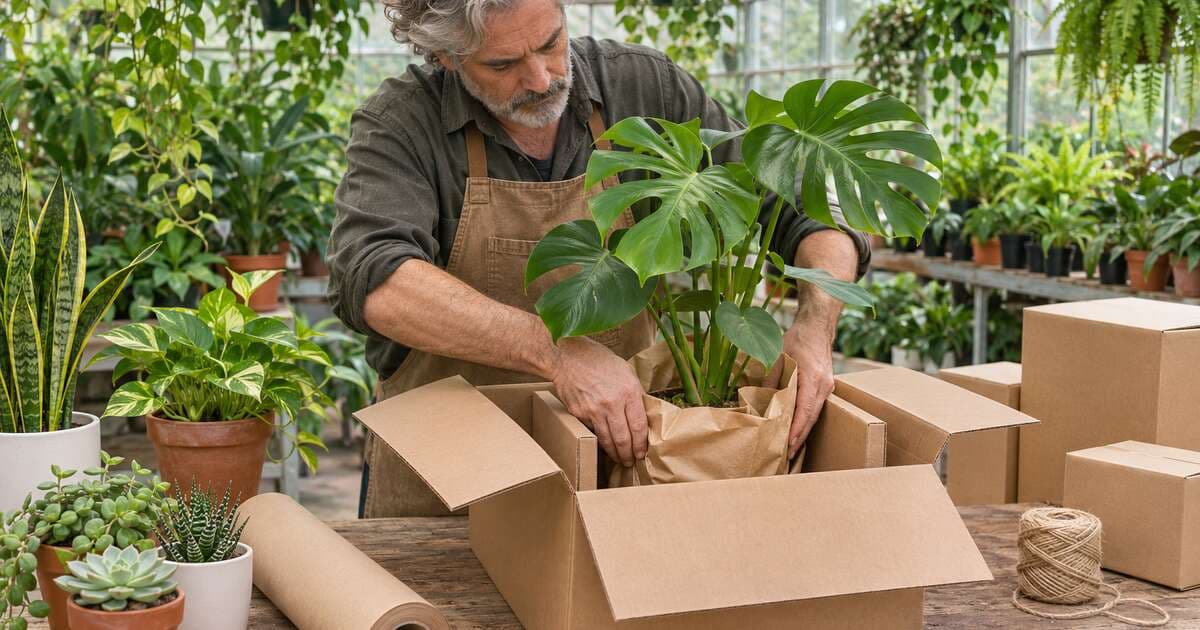
- Secure the soil. Wrap the pot and soil in paper or a bag tied around the stem so nothing spills.
- Support the plant. Stake tall stems and wrap foliage loosely in paper.
- Box it upright and snug. Use cardboard inserts or paper so the pot can't move, and mark the box to stay upright.
- Add a care card with what to do on arrival: unpack, check the soil, don't repot straight away.
Then plan the journey:
- Ship early in the week so parcels don't sit in a depot over the weekend.
- Use your fastest affordable service and check your carrier's rules for live plants.
- Use heat or cold packs in extreme weather, or pause shipping.
- Write an arrival policy. Many shops replace plants that arrive damaged if the customer sends photos within a few days of delivery. State it clearly.
For choosing between flat rates, live rates and fulfilment partners, see Shipping for eCommerce MVPs.
Seasons and Weather
Plant sales and plant shipping both follow the weather.
- Plan a seasonal calendar. Spring is usually busy, and gift seasons bring a second peak. Herbs, bulbs and outdoor plants have short windows.
- Hold orders in extreme weather. Tell customers why and give them a date. Most would rather wait than receive a frozen or cooked plant.
- Sell pots and care products year-round to keep revenue steady in the quiet months.
- Adjust your range. Push hardier plants when shipping conditions are tough.
Local Delivery and Pickup
Local customers are a plant shop's secret weapon. Big statement plants and fragile species that can't survive a courier can still be delivered across town in your own car or van.
- Offer local delivery on certain days, with a delivery zone and a simple flat fee.
- Offer pickup from your greenhouse, home or a partner cafe.
- Sell at markets and plant swaps and send people to your online shop for reorders.
- Approach offices, cafes and shops that want plants delivered and set up.
If a local plant business appeals to you, How to Survive the AI Era: Start a Small Local Business Online covers why local service businesses are hard to replace.
Care Guides Are Your Best SEO
People search for plant care far more than for plant shops: "how often to water a snake plant", "why are my leaves turning yellow". Each of those questions is a chance to be found.
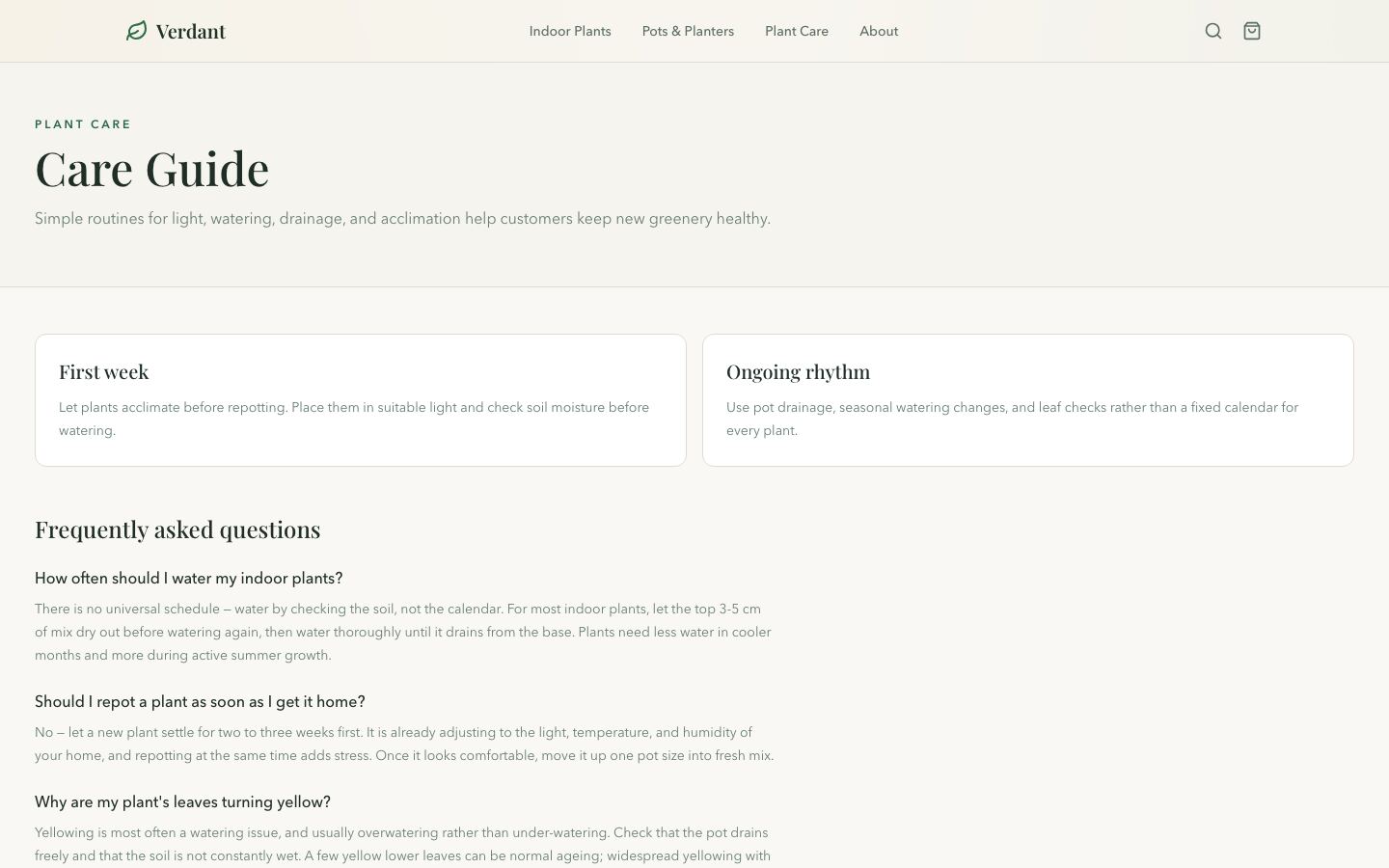
- Write a care guide for every plant you sell, covering light, water, soil, repotting and common problems, and link it to the product.
- Answer problem questions such as yellow leaves, drooping and pests in short, clear posts.
- Add a FAQ section to care pages. It answers buyers before they ask, and it can appear in search results.
- Send care emails after delivery: day one (unpacking), week two (first watering check) and month two (repotting advice).
Customers who keep their first plant alive come back for a second.
Pricing and Add-Ons
Price each plant to cover the plant, pot, growing time, packaging, shipping materials and losses. Plants that die before sale are a real cost, so build that in.
Then raise the order value with add-ons that make sense: a decorative pot that fits the nursery pot, a care kit with fertiliser and a moisture meter, gift wrap and a message card, or a "starter trio" of easy plants. Matching pots to plants by size is especially useful, because it saves customers from guessing.
Launch Faster With the Plant Store
We built the Plant Store for plant shops that want a calm, botanical storefront without designing one from scratch.
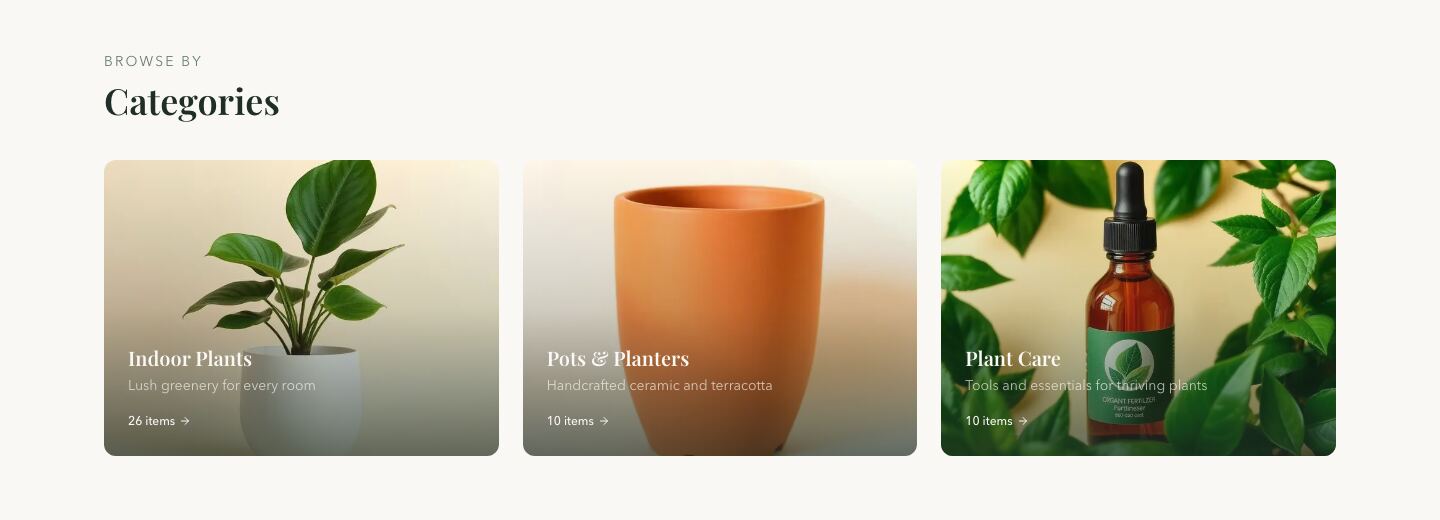
What's inside:
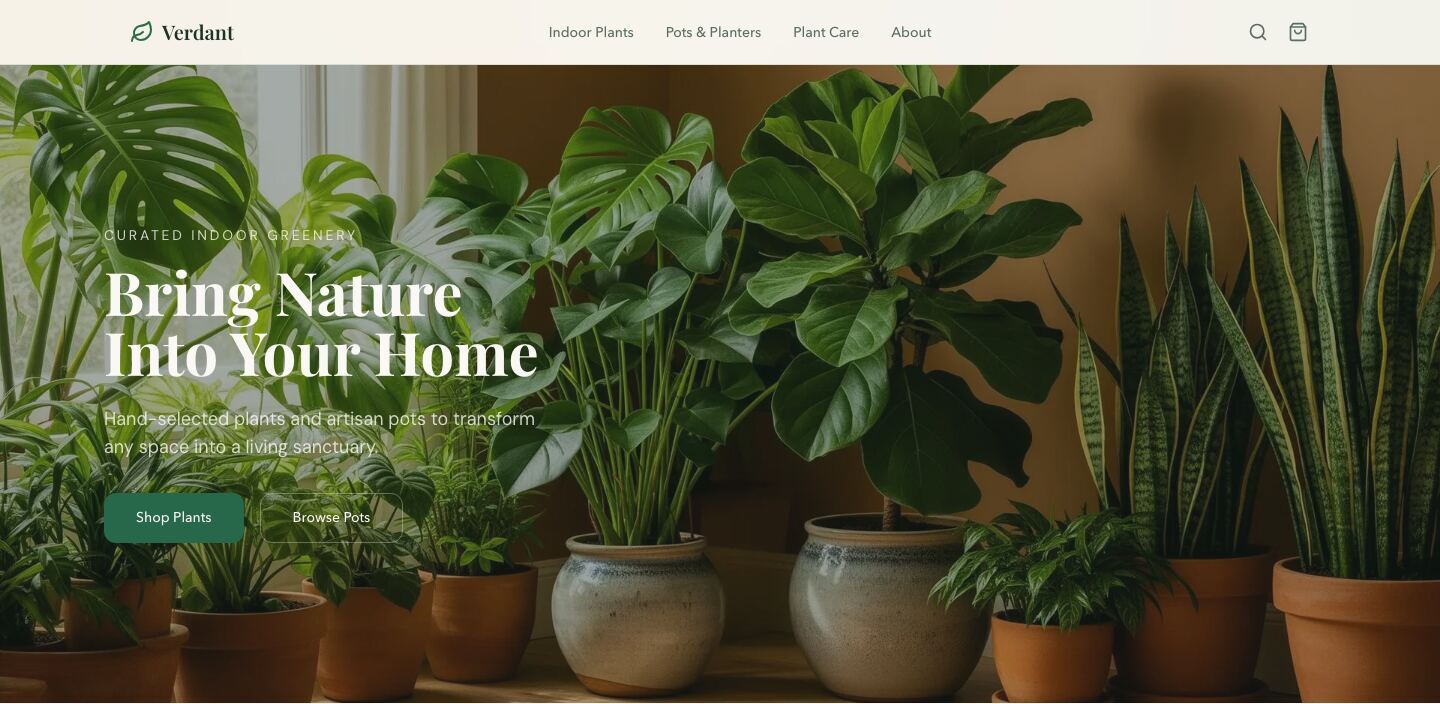
- A cream-and-forest-green design with serif headings, a full-width hero, featured plants and category tiles
- A demo catalogue for a fictional shop, Verdant: 46 products in the built-in catalogue across indoor plants, pots and planters, and plant care, and 126 in the catalogue file the backend loads
- Category pages for indoor plants, pots, plant care, outdoor pots and sale, with sub-categories such as tropical plants, and best-seller and new-arrival collections
- Search with filters for category, collection, price and highlights, sorting, grid or list views and a compare bar
- Product pages with options such as pot size, stock levels, a low-stock notice, reviews, highlights and related products
- A wishlist and cart with a presentation wrap option, promo codes and a free-shipping progress bar, then a step-by-step checkout with standard and express delivery
- Content and SEO: a care guide with FAQs, a blog, shipping, returns and gift card pages, plus metadata, a sitemap and product, breadcrumb, article and FAQ structured data
It runs straight away on its built-in demo catalogue, with no database. When you're ready for real orders, connect the open-source commerce backend it is built for, which you host yourself. One command loads the catalogue with stock across two stock locations, and its admin dashboard covers products, orders, customers, inventory and promotions. Customers can track orders and request returns or replacements, and card payments work through Stripe once you add your keys. The setup guide in the download covers every step.
| Stack | Next.js 16, React 19, TypeScript, Tailwind CSS |
| Live demo | plant-store.mvp.sale |
| Price | $39, one-time, with the full source code (a Shopify theme, a Flutter app and other framework versions are available on request) |
| Get it | Plant Store |
Your First 30 Days
| Week | Do this |
|---|---|
| 1 | Pick your shop type, find one or two growers, and check plant health and shipping rules for your area. |
| 2 | Photograph plants with a sense of scale, record pot sizes, write care notes and test-pack a few plants to a friend. |
| 3 | Rebrand the store, load 20 to 40 products, set shipping zones and local delivery, connect payments and go live. |
| 4 | Publish care guides for your top sellers, sell at a local market, and email every buyer care tips after delivery. |
FAQ
Can I sell plants online from home? Many shops start at home or in a small greenhouse. Check local rules for selling and moving plants, and whether you need to register.
What are the easiest plants to ship? Small and medium plants in nursery pots, succulents and other hardy foliage plants travel best. Large plants are better delivered locally.
What if a plant arrives damaged? Have a clear arrival policy, such as a replacement if the customer sends photos within a few days. It builds trust and keeps reviews positive.
Start Your Plant Shop
A good plant shop sells healthy plants, packs them with care and teaches customers how to keep them alive. Get those three right and your customers will keep coming back for more greenery.
See the Plant Store or browse all ecommerce apps on MVPHub.
The cover image was created with AI image generation. The screenshots are from the Plant Store demo.