Multi-Purpose Ecommerce MVP: How to Launch an Everything Store
Multi-Purpose Ecommerce MVP: How to Launch an Everything Store
Most store templates assume you sell one thing: a fashion theme, a furniture theme, a beauty theme. The fastest-growing online stores of the last few years did the opposite. Temu and Shein sell almost everything, from dresses and phone cases to kitchen tools and pet beds, and they built their apps around deals, low price points and an endless scroll of products.
You don't need their factories or their ad budgets to use the same storefront ideas. A multi-purpose ecommerce MVP gives you a store that can sell across many categories on day one, so you can test what sells, keep the winners and grow from there.
This guide explains what a multi-purpose MVP is, which business models fit it, the features it needs on launch day, and how to get one live this week.
What Is a Multi-Purpose MVP?
A multi-purpose MVP is a ready-made store built to sell many kinds of products from one codebase. It means two things in practice:
- An everything store. One brand that sells fashion, beauty, electronics, home, kids, pets and groceries side by side, with departments, sub-categories and deals that work across all of them.
- A template for any niche. Because it already handles sizes, shades, pack sizes and very different product types, you can trim it down to the three departments you actually sell and it still works.
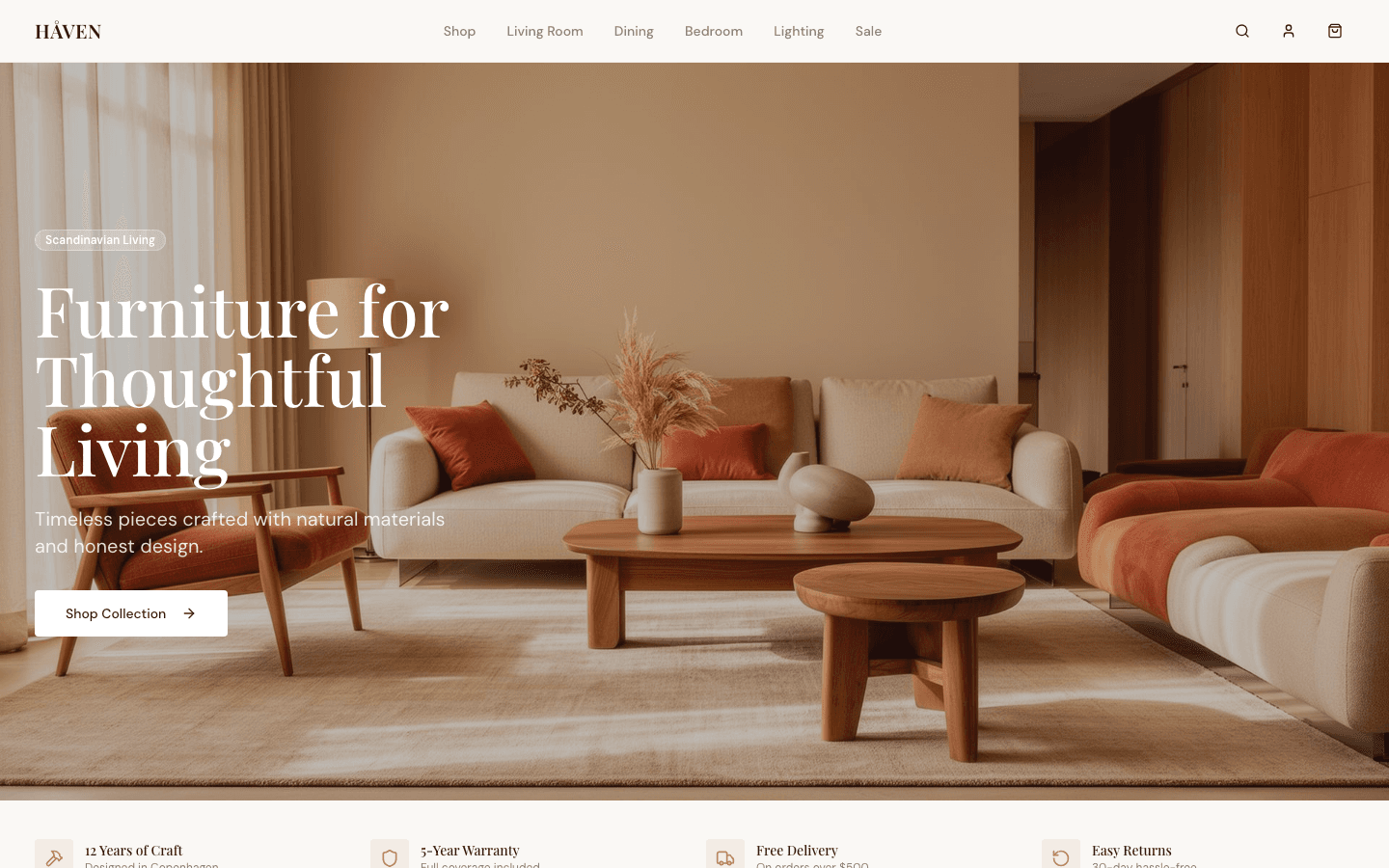
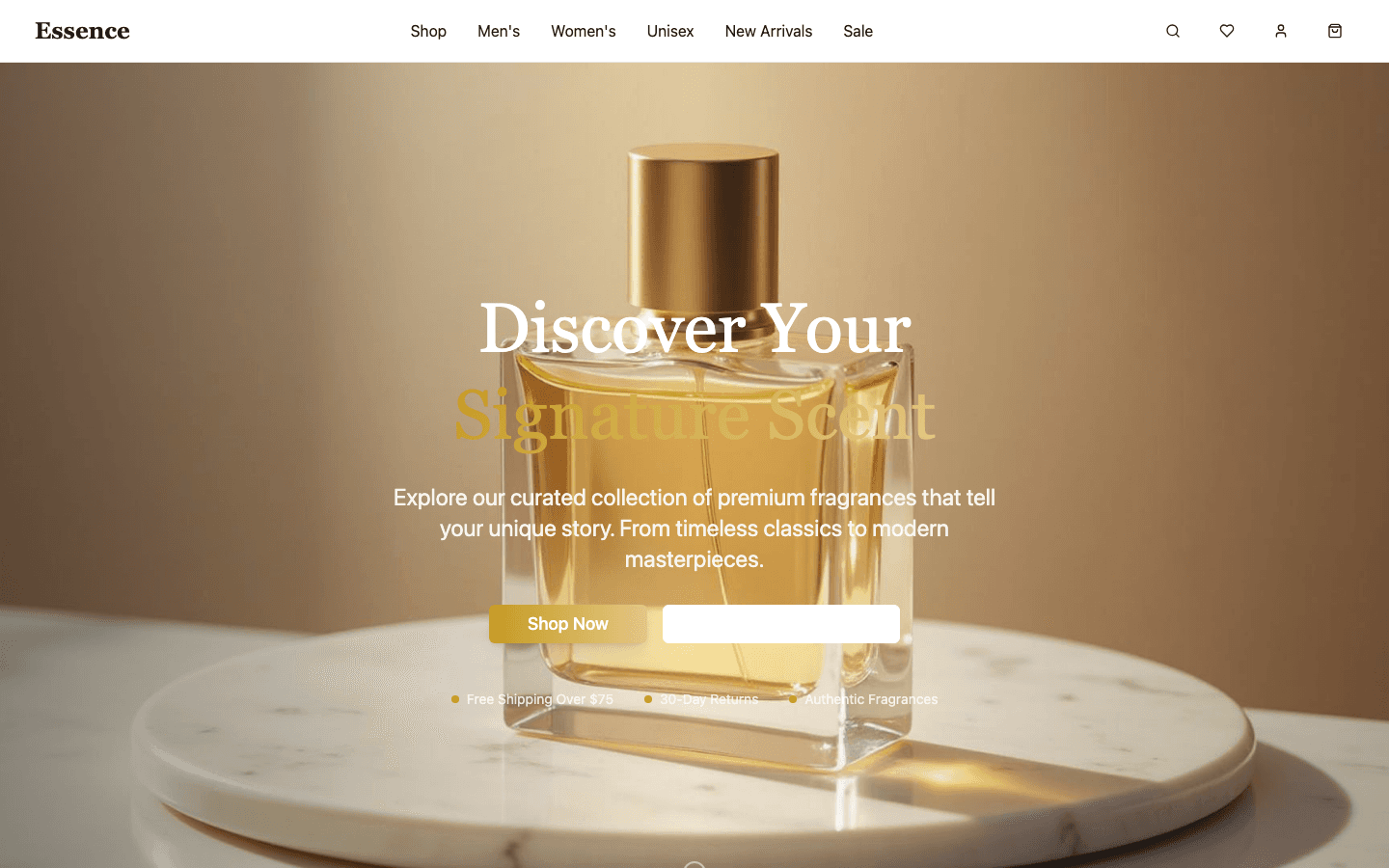
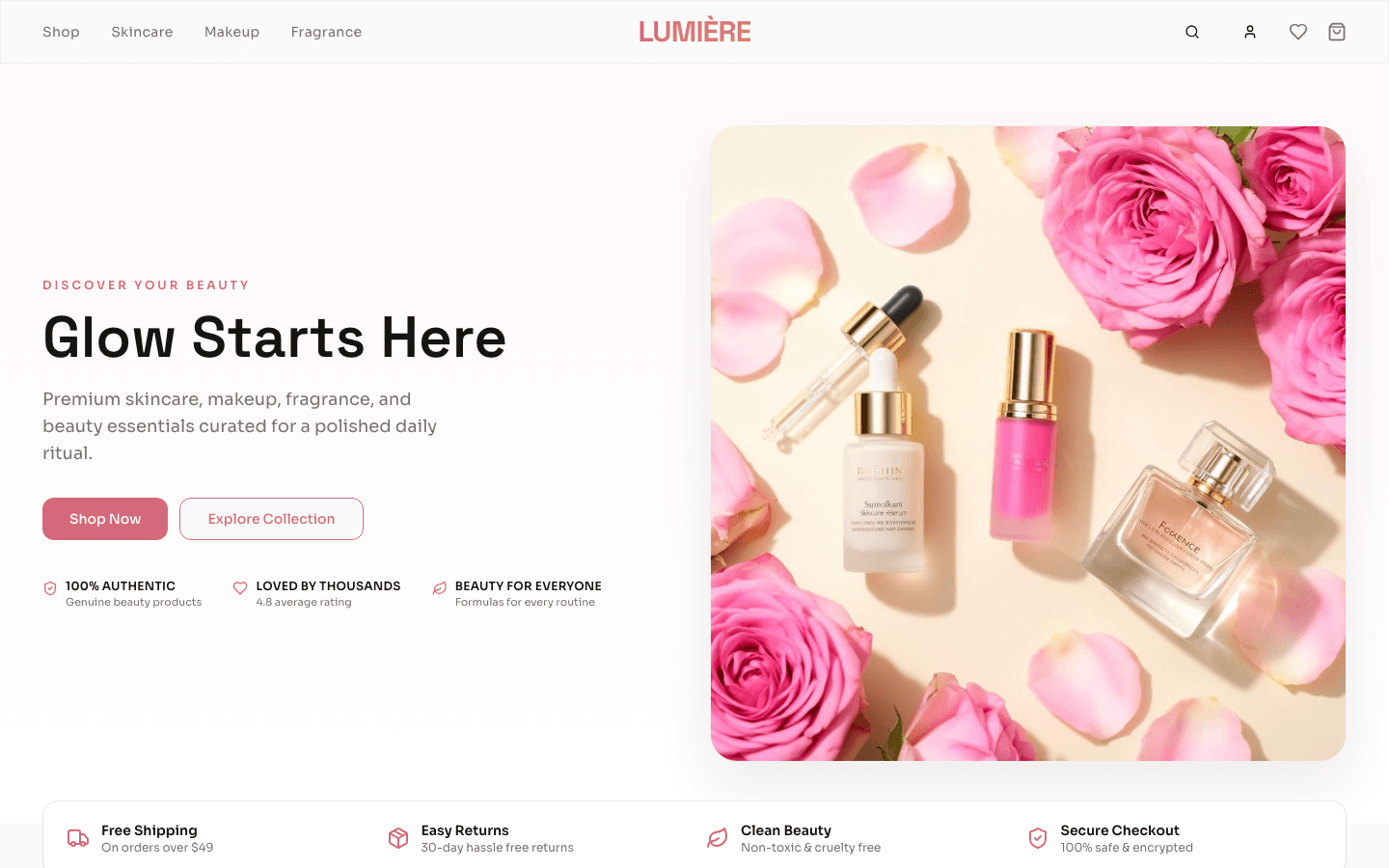
Compare that with a niche template, which looks great for one product type but needs real work the day you add a second one:
| Niche store template | Multi-purpose store MVP | |
|---|---|---|
| Product types | One (e.g. furniture) | Many: clothing with sizes, beauty with shades, food with pack sizes |
| Navigation | A few categories | Departments, sub-categories and a mega menu |
| Merchandising | Hero banner and featured products | Deals, price-point tiles, bestseller rankings, endless feed |
| Testing new categories | New pages and new code | Add products to a department |
| Best for | A brand with one product line | General stores, dropshipping, testing, agencies |
Why the Everything-Store Model Works
Discovery beats search. Shoppers on a value marketplace often arrive for one cheap item and leave with five. Every extra department is another chance to add something to the bag.
Bigger baskets. A free-shipping threshold works better when shoppers can top up with a $4 phone stand or a $6 kitchen gadget instead of a second dress.
More reasons to come back. Fashion one week, a birthday gift the next, dog treats the week after. A broad catalogue gives people more reasons to return than a single niche does.
You find out what sells. Start wide, watch which departments convert, and put your money behind the winners. A niche store makes you guess first.
What Temu- and Shein-Style Stores Get Right
You don't have to copy anyone's brand to learn from how value marketplaces sell. These storefront patterns work for any multi-category store:
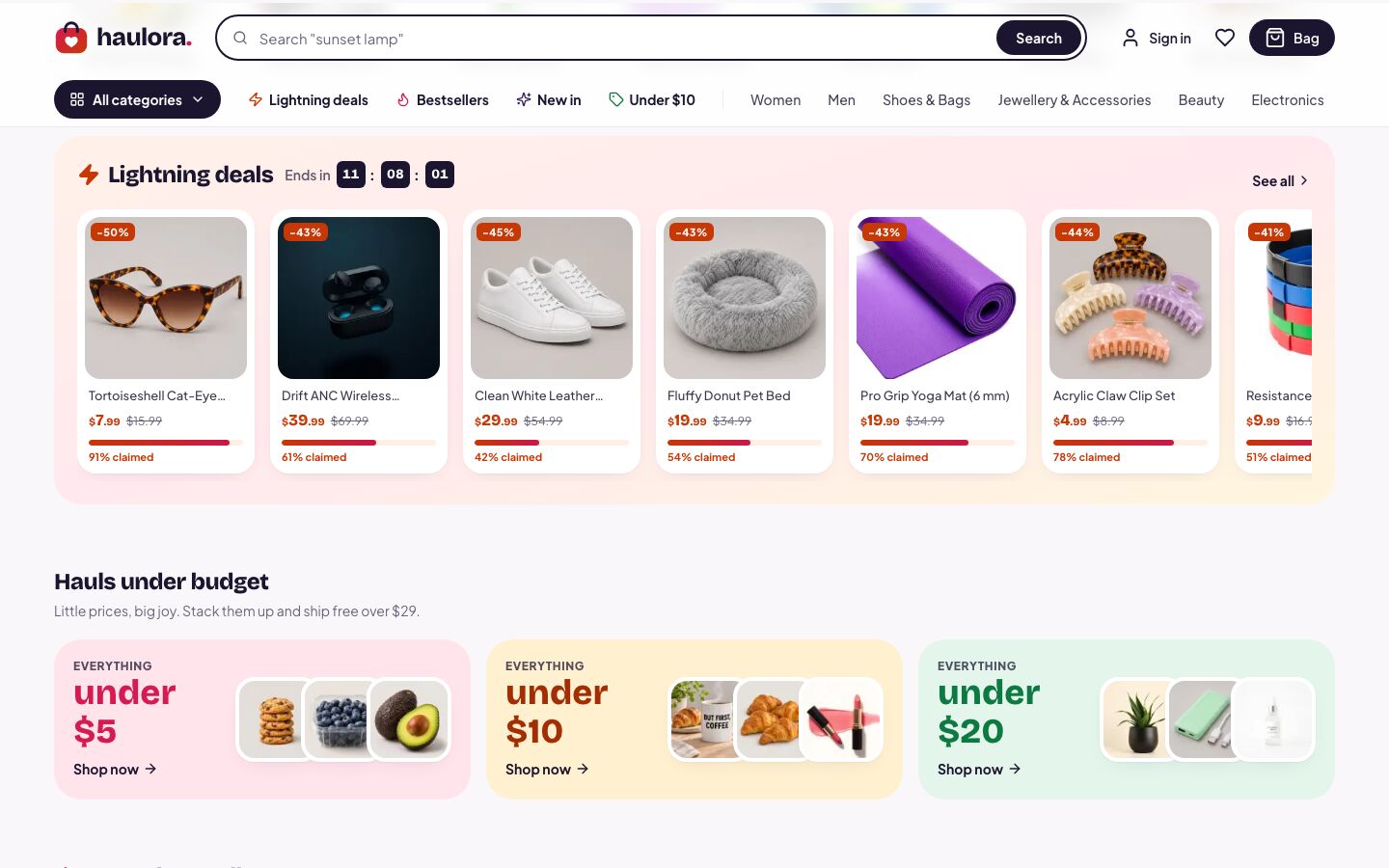
- Deals with a clock. Lightning deals with a countdown and a "% claimed" bar create urgency without permanent discounts.
- Shopping by price point. "Under $5", "Under $10" and "Under $20" tiles let bargain hunters skip straight to what they can afford.
- Social proof on every card. Star ratings, review counts and "sold" numbers right on the product card, not hidden on the product page.
- Rankings. A "Top 10 bestsellers" rail answers "what should I buy?" in one glance.
- An endless feed. A "Just for you" grid at the bottom of the home page keeps people scrolling.
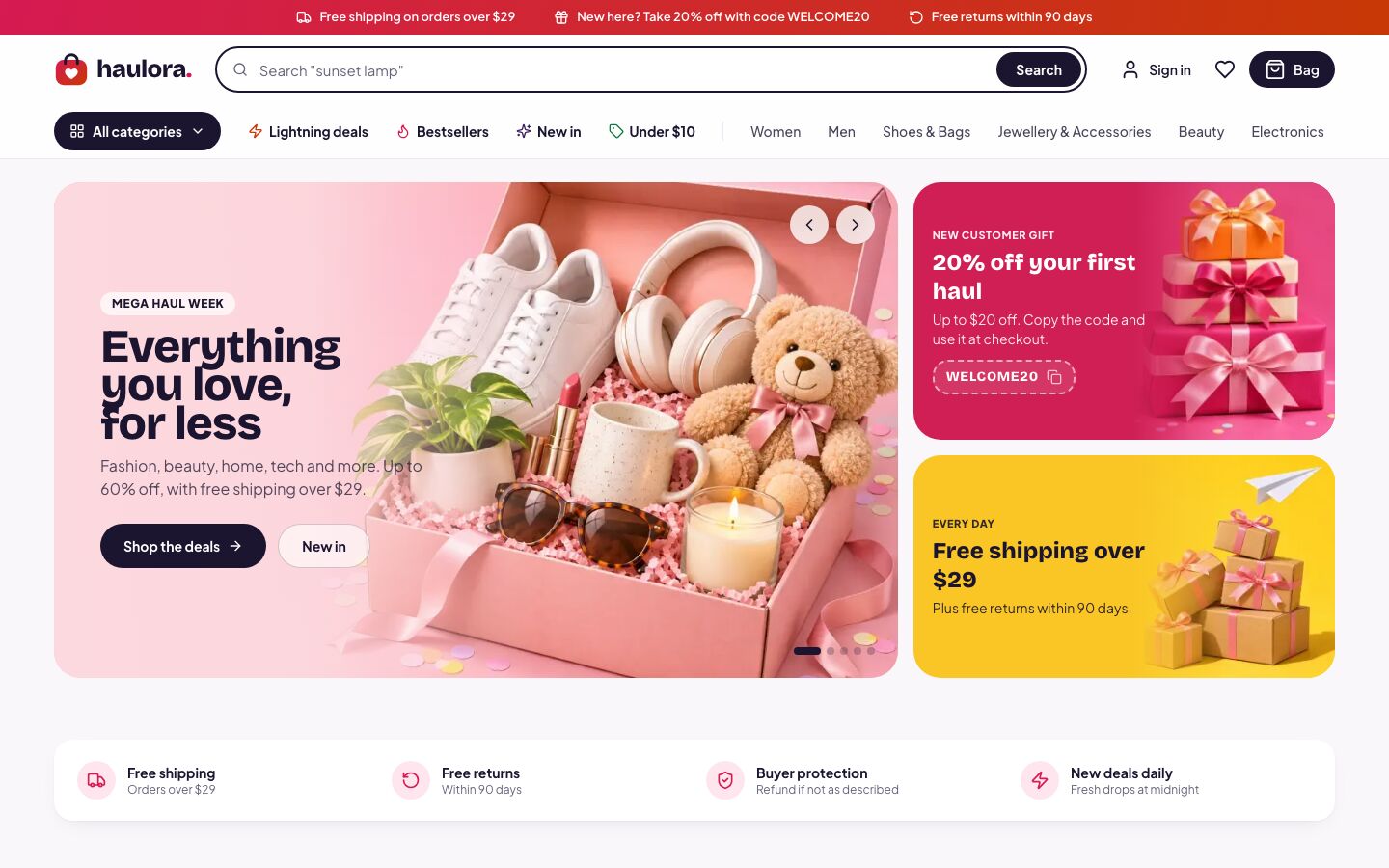
- Coupons up front. A visible new-customer code and a free-shipping meter in the bag nudge the first order over the line.
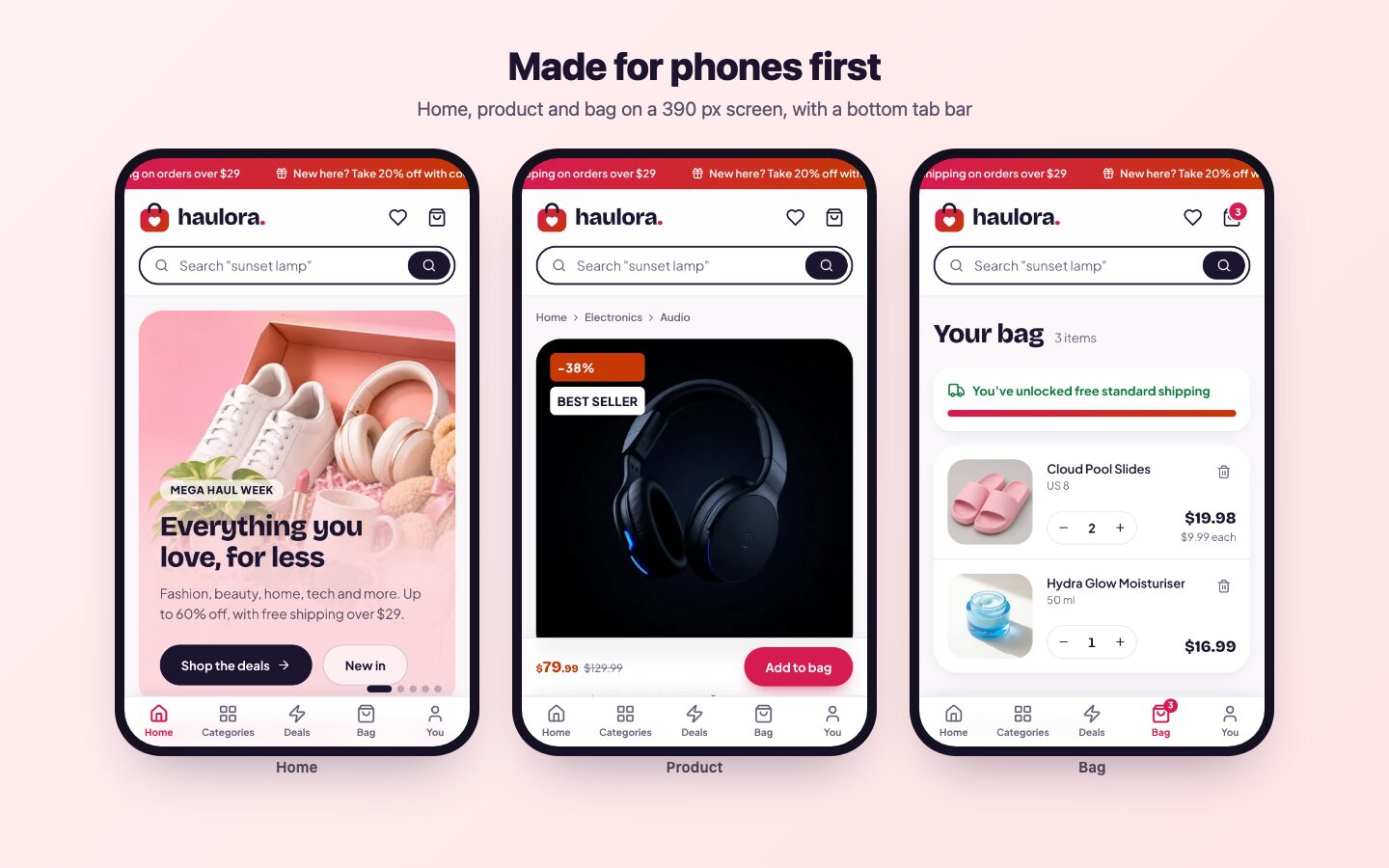
- Phones first. Most of this traffic is mobile, so a bottom tab bar, big tap targets and quick add from any card matter more than a wide desktop layout.
Pick Your Business Model First
The same multi-purpose storefront can run very different businesses. Decide which one you are before you load products:
- Curated general store. You buy small batches across several categories and ship them yourself. Highest margins, most control over quality.
- Dropshipping across categories. Suppliers ship for you, so you can list hundreds of products without stock. Margins are thinner, and delivery times and quality checks are your main risks.
- Local everything store. Sell to your own city with same-day delivery or pickup: gifts, kids' items, home goods and snacks. Big national stores can't match "ordered at lunch, at the door by dinner."
- Start wide, then niche down. Launch with 10 or more departments, run small ads to each, and narrow the store to the two or three that sell.
- Agency or freelancer. One codebase, rebranded for several clients who each sell across a few categories.
One thing a multi-purpose store is not: a multi-vendor marketplace where outside sellers sign up, list their own products and get paid out. That needs seller accounts, commissions and payouts. If that's your plan, read How to Build a Multi-Vendor eCommerce Marketplace first.
The Features an Everything Store Needs on Day One
Keep the first version small, but don't skip the parts that make a broad catalogue usable:
| Must have at launch | Can wait until it sells |
|---|---|
| Departments, sub-categories and a mega menu | Personalised recommendations |
| Filters (price, rating, on sale, in stock) in shareable URLs | Loyalty points and referral rewards |
| Search with suggestions as you type | Live chat |
| Product options: size, shade, pack size, with stock per option | Multi-vendor seller accounts and payouts |
| Quick add from product cards | Native iPhone and Android apps |
| Bag with promo codes and a free-shipping meter | Subscriptions |
| One-page checkout, order confirmation and order history | Advanced analytics dashboards |
| Product, category and breadcrumb structured data, plus a sitemap | Multi-currency and multiple languages |
If your checkout, product options and mobile layout are solid, everything in the right-hand column can be added once you know which customers you are serving.
SEO for a Multi-Category Store
An everything store has a big advantage in search: every department and category page is a landing page. "Pet beds", "under $10 kitchen gadgets" and "women's activewear" are all separate searches you can rank for.
- Give each department and category page a unique title, a short intro and a banner, not just a grid.
- Keep filters and sort orders in clean URLs so shoppers can share them, and point canonical links at the main category page.
- Prerender product pages and add Product and BreadcrumbList structured data so prices and ratings can show in search results.
- Link departments to each other: "Complete the look", "Goes well with" and related products help both shoppers and crawlers.
For the full playbook, see Marketplace SEO Strategy: How to Rank Your Category Pages.
Launch Faster With Haulora, a Ready-Made Multi-Purpose Store
We built Haulora for exactly this: a bright, mobile-first everything store you can download, rebrand and launch, instead of designing one from scratch.
What's inside:
- 208 products and 387 variants in 14 departments: women's and men's fashion, shoes and bags, jewellery, beauty, electronics, home, kitchen, bath, plants, sports, kids, pets, and groceries
- The merchandising described above: lightning deals with countdowns, under-$5/$10/$20 tiles, a ranked Top 10, themed edits, coupons, a free-shipping meter and an endless "Just for you" feed
- Department pages with banners, sub-category chips, filters, six sort orders and paging, all in crawlable URLs
- Product pages with sizes, shades and pack options, delivery dates, reviews, related products and a sticky Add to bag bar on phones
- Bag, one-page checkout and accounts with order history, wishlist and order tracking
- SEO and accessibility built in: structured data, sitemap, Open Graph images and WCAG AA colour contrast
It runs straight away on its built-in demo catalogue, with no database or backend. When you're ready for real orders, switch it to live mode and connect the open-source commerce backend it is built for, which you host yourself. One command imports the whole catalogue, and card payments work through Stripe or PayPal. The setup guide in the download walks through every step.
| Stack | Next.js 16, React 19, TypeScript, Tailwind CSS |
| Live demo | haulora.mvp.sale (sign in with demo@haulora.example / haulora-demo) |
| Price | $49, one-time, with the full source code |
| Get it | Haulora – Multi-Purpose Marketplace Store |
Haulora is an original storefront. It isn't affiliated with Temu or Shein; we mention them only as well-known examples of the everything-store model.
Your First 30 Days
| Week | Do this |
|---|---|
| 1 | Choose your business model and 3–5 departments to start with. Find suppliers or stock for 30–50 products. |
| 2 | Rebrand the store (name, colours, logo, promo codes), replace the demo products with yours, and connect payments. Go live. |
| 3 | Promote one deal per day on social media and in local groups. Run small test ads to each department. |
| 4 | Look at which departments convert. Add products there, drop the ones that don't sell, and ask your first customers for reviews. |
FAQ
Can I use a multi-purpose store for just one niche? Yes. Hide or delete the departments you don't need. The store keeps working with two departments or twenty.
Do I need a backend to start? Not for a preview. Haulora runs on built-in demo data so you can design and test it. To take real orders you connect the open-source commerce backend it is built for, which you host yourself.
Is it a multi-vendor marketplace? No. It's one store that sells many brands. Outside sellers can't sign up or get paid out. For that model, start with a multi-vendor marketplace MVP instead.
Can I use it for dropshipping? Yes. The store doesn't care where products ship from. Set delivery times and shipping options to match your suppliers.
Start Selling Everything
A multi-purpose store lets you test a dozen product ideas for the price of one. Launch wide, learn fast, and grow the departments your customers love.
See Haulora or browse all ecommerce apps on MVPHub.
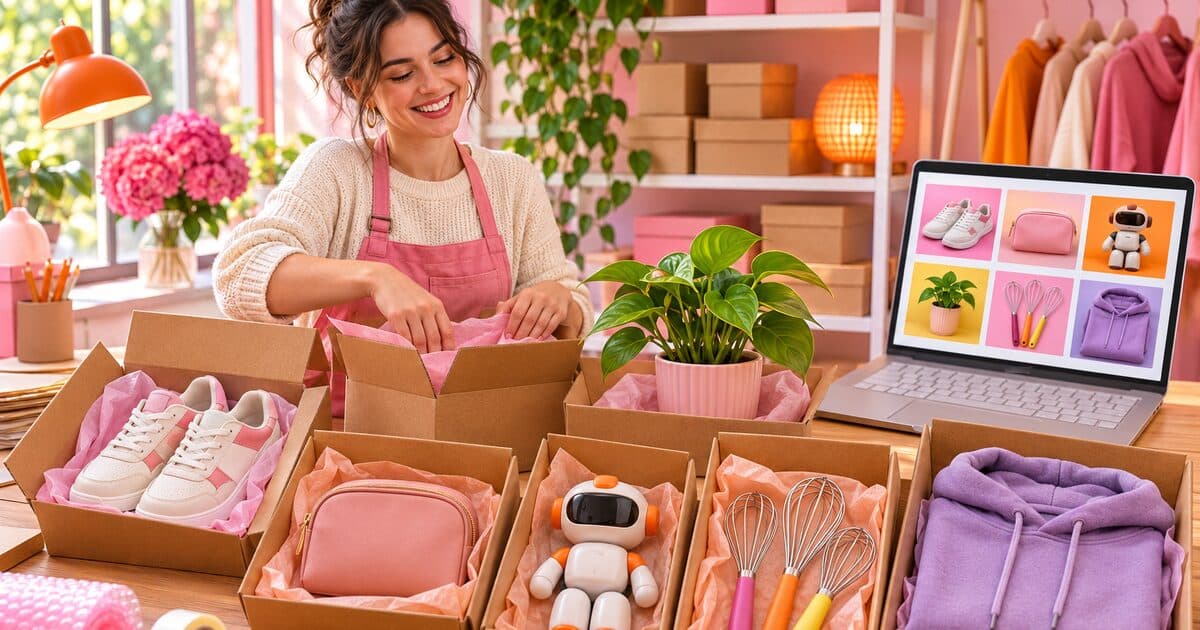
The cover image was created with AI image generation. The screenshots are from the Haulora demo store.