Local Services & Booking
Calendars, deposits, reminders.
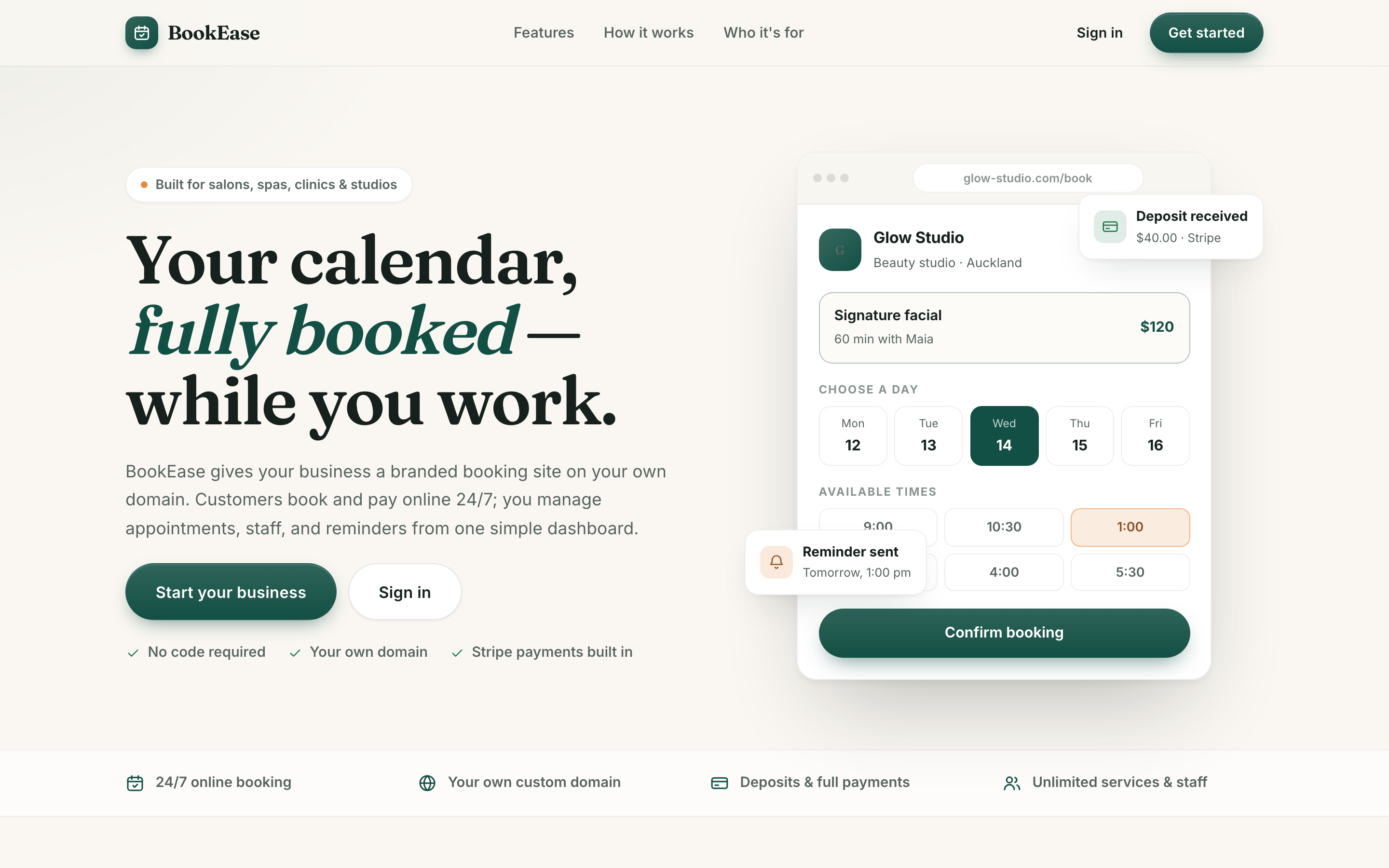
Local service platforms help service-based businesses manage operations, customer relationships, and field workforce through comprehensive booking systems, service management tools, and logistics coordination. The best solutions combine operational efficiency with customer experience optimization to streamline service delivery while growing revenue and customer satisfaction.
Popular subcategories
- Booking & Appointments — Calendar systems with deposits, reminders, and availability management.
- Repairs & Maintenance — Service ticket management with quotes, schedules, and work order tracking.
- Delivery & Logistics — Route optimization with tracking, dispatch, and fleet management capabilities.
Who uses local service platforms?
- Home service providers managing appointments, dispatching technicians, and coordinating repairs and maintenance
- Healthcare practitioners scheduling patient appointments, managing treatments, and coordinating care delivery
- Beauty and wellness businesses booking appointments, managing client preferences, and optimizing service schedules
- Delivery and logistics companies coordinating routes, tracking shipments, and managing driver workflows
- Professional service providers scheduling consultations, managing client relationships, and delivering field services
Core local service mechanics
- Appointment scheduling: Manage availability, bookings, and customer preferences with automated scheduling optimization
- Field service dispatch: Coordinate field workers, assign jobs, and optimize routes for maximum efficiency
- Customer communication: Maintain customer relationships through automated reminders, updates, and follow-up
- Service delivery tracking: Monitor service progress, quality, and completion with real-time updates
- Payment and billing: Process payments, manage invoicing, and handle deposits and recurring charges
- Performance analytics: Track business metrics, service quality, and operational efficiency for continuous improvement
Key features to evaluate
- Scheduling capabilities: Comprehensive appointment and job scheduling with availability management and optimization
- Mobile functionality: Full-featured mobile apps for field workers with offline capabilities and real-time sync
- Customer management: Complete customer relationship management with service history and communication tools
- Payment processing: Integrated payment solutions with multiple methods, deposits, and automated billing
- Route optimization: Intelligent routing and dispatch capabilities for field service efficiency
- Integration ecosystem: Connectivity with accounting, marketing, and business management platforms
- Analytics and reporting: Detailed insights into business performance, customer satisfaction, and operational metrics
Online booking and appointment management
Customer-facing booking:
- Online booking portals: Professional booking websites with real-time availability and service selection
- Mobile booking apps: Native mobile applications for convenient customer booking and management
- Social media integration: Book appointments directly through Facebook, Instagram, and other social platforms
- Embedded widgets: Booking widgets that integrate seamlessly into existing business websites
Availability and scheduling:
- Real-time availability: Dynamic availability management that updates instantly across all booking channels
- Staff scheduling: Coordinate multiple staff members with individual calendars and availability preferences
- Service duration management: Flexible service timing with buffer periods and travel time calculations
- Recurring appointments: Automated scheduling for regular customers and subscription-based services
Service request and work order management
Request intake and processing:
- Multi-channel requests: Accept service requests through phone, web, mobile, and walk-in channels
- Request categorization: Organize requests by service type, urgency, and complexity for efficient processing
- Customer information capture: Comprehensive customer data collection with service history and preferences
- Priority management: Prioritize requests based on urgency, customer tier, and business rules
Work order lifecycle:
- Automated work order creation: Generate detailed work orders with customer information, service requirements, and special instructions
- Technician assignment: Intelligent assignment based on skills, location, availability, and workload
- Status tracking: Real-time tracking of work order progress from creation to completion
- Quality control: Built-in quality checks and customer approval processes for completed work
Field service dispatch and coordination
Dispatch management:
- Intelligent routing: Optimize technician routes based on location, traffic, and appointment priorities
- Real-time dispatch: Dynamic job assignment and reassignment based on changing conditions
- Emergency handling: Fast-track emergency requests with priority dispatch and communication
- Multi-day scheduling: Coordinate complex jobs that span multiple days or require multiple visits
Mobile workforce management:
- GPS tracking: Real-time location tracking for technicians and service vehicles
- Time tracking: Accurate time tracking for jobs, travel, and administrative tasks
- Offline capabilities: Full mobile functionality that works without internet connectivity
- Communication tools: Direct communication between dispatch, technicians, and customers
Customer relationship and communication management
Customer profiles and history:
- Comprehensive profiles: Detailed customer profiles with contact information, service history, and preferences
- Service history tracking: Complete record of all services provided with dates, technicians, and outcomes
- Customer preferences: Track customer preferences for scheduling, communication, and service delivery
- Account management: Manage customer accounts with billing history, payment methods, and special arrangements
Automated communication:
- Appointment reminders: Automated SMS, email, and phone reminders for upcoming appointments
- Service updates: Real-time updates on technician arrival times and service progress
- Follow-up communication: Automated follow-up messages for feedback collection and future service scheduling
- Marketing automation: Targeted marketing campaigns based on service history and customer behavior
Payment processing and financial management
Payment collection:
- Multiple payment methods: Support for credit cards, digital wallets, cash, and check payments
- Mobile payments: Field payment collection through mobile card readers and digital payment apps
- Deposit management: Collect and manage deposits for scheduled services and large projects
- Recurring billing: Automated billing for subscription services and maintenance contracts
Financial tracking:
- Invoice generation: Automated invoice creation with detailed service descriptions and pricing
- Payment tracking: Monitor payment status, overdue accounts, and collection activities
- Revenue analytics: Track revenue by service type, technician, and time period
- Expense management: Track business expenses, material costs, and operational overhead
Route optimization and logistics
Intelligent routing:
- Dynamic route optimization: Real-time route optimization based on traffic, appointments, and priorities
- Multi-stop planning: Efficient planning for technicians with multiple appointments per day
- Territory management: Organize service territories for optimal coverage and response times
- Travel time calculation: Accurate travel time estimates with traffic and road condition considerations
Fleet and vehicle management:
- Vehicle tracking: GPS tracking for service vehicles with maintenance scheduling and fuel monitoring
- Inventory management: Track tools, parts, and supplies across vehicles and technicians
- Maintenance scheduling: Automated vehicle maintenance scheduling and service reminders
- Driver performance: Monitor driver performance, safety, and efficiency metrics
Customer feedback and reputation management
Review and rating systems:
- Post-service surveys: Automated customer satisfaction surveys after service completion
- Online review management: Monitor and respond to reviews across Google, Yelp, and other platforms
- Internal quality tracking: Track service quality metrics and technician performance ratings
- Improvement identification: Identify areas for service improvement based on customer feedback
Reputation enhancement:
- Review generation: Encourage satisfied customers to leave positive reviews on key platforms
- Social proof display: Showcase positive reviews and testimonials on websites and marketing materials
- Complaint resolution: Structured processes for handling complaints and service recovery
- Customer loyalty programs: Reward programs for repeat customers and referrals
Multi-location and franchise management
Centralized management:
- Multi-location oversight: Manage multiple service locations from a centralized dashboard
- Standardized processes: Ensure consistent service delivery across all locations and franchises
- Performance comparison: Compare performance metrics across different locations and regions
- Brand consistency: Maintain consistent branding and service standards across all locations
Franchise-specific features:
- Territory management: Define and manage exclusive service territories for franchise locations
- Royalty tracking: Automated calculation and tracking of franchise fees and royalties
- Training and certification: Manage franchise training programs and certification requirements
- Support systems: Provide ongoing support and resources for franchise operations
Analytics and business intelligence
Operational analytics:
- Service metrics: Track key performance indicators including response time, completion rate, and customer satisfaction
- Technician performance: Analyze individual and team performance with productivity and quality metrics
- Revenue analysis: Understand revenue trends, profitability by service type, and growth opportunities
- Customer analytics: Analyze customer behavior, retention rates, and lifetime value
Predictive insights:
- Demand forecasting: Predict service demand patterns for better resource planning and scheduling
- Maintenance predictions: Predict when customers will need follow-up services based on service history
- Capacity planning: Optimize staffing and resource allocation based on demand forecasts
- Market opportunity identification: Identify new service opportunities and market expansion possibilities
Integration and ecosystem connectivity
Business system integration:
- Accounting software: Connect with QuickBooks, Xero, and other accounting platforms for financial management
- CRM integration: Sync customer data with Salesforce, HubSpot, and other customer relationship management systems
- Marketing platforms: Integrate with email marketing, social media, and advertising platforms
- E-commerce integration: Connect with online stores for service-related product sales
Third-party service integration:
- Payment processors: Integration with Stripe, PayPal, Square, and other payment processing services
- Communication services: Connect with Twilio, SendGrid, and other communication service providers
- Mapping services: Integration with Google Maps, Mapbox, and other mapping and routing services
- Review platforms: Sync with Google My Business, Yelp, and other review and rating platforms
Mobile-first design and functionality
Technician mobile apps:
- Job management: Complete job management capabilities including scheduling, customer information, and service history
- Photo and documentation: Capture before/after photos, customer signatures, and service documentation
- Inventory tracking: Track parts usage, inventory levels, and reorder notifications
- Time and expense tracking: Accurate tracking of work time, mileage, and expenses for payroll and billing
Customer mobile experience:
- Service tracking: Real-time tracking of service appointments with technician location and estimated arrival
- Communication: Direct communication with service providers through in-app messaging and calling
- Payment processing: Secure mobile payment processing with receipt generation and history
- Service history: Access to complete service history and scheduling for future appointments
Compliance and regulatory management
Industry compliance:
- Licensing management: Track technician licenses, certifications, and renewal requirements
- Safety compliance: Ensure compliance with workplace safety regulations and industry standards
- Insurance tracking: Monitor insurance coverage, claims, and policy renewals
- Regulatory reporting: Generate reports required by industry regulators and government agencies
Data protection:
- Customer data security: Secure handling of customer personal and payment information
- Privacy compliance: GDPR, CCPA, and other privacy regulation compliance for customer data
- Access controls: Role-based access controls for sensitive customer and business information
- Audit trails: Comprehensive logging of all system access and data modifications
Scalability and growth support
Business growth features:
- Multi-service support: Expand service offerings with flexible service catalog management
- Seasonal adjustments: Adapt operations for seasonal demand fluctuations and service variations
- Market expansion: Support for expanding into new geographic markets and service areas
- Partnership management: Manage partnerships with other service providers and vendors
Technology scalability:
- Cloud infrastructure: Scalable cloud-based infrastructure that grows with business needs
- API capabilities: Comprehensive APIs for custom integrations and third-party development
- Data migration: Tools for migrating data from legacy systems and spreadsheets
- Performance optimization: Optimized performance for high-volume operations and large customer bases
Training and support services
User training:
- Comprehensive training programs: Training for administrators, technicians, and customer service staff
- Best practices guidance: Industry best practices for service delivery and business operations
- Certification programs: Professional certification programs for service management
- Resource libraries: Extensive libraries of training materials, guides, and documentation
Implementation support:
- Setup and configuration: Professional setup services for complex business requirements
- Data migration: Migration services for moving from legacy systems and manual processes
- Change management: Support for organizational change management and user adoption
- Ongoing support: Comprehensive support services including technical support and business consulting
Innovation and emerging technologies
AI and automation:
- Predictive scheduling: AI-powered scheduling optimization based on historical data and patterns
- Automated dispatching: Machine learning algorithms for optimal technician assignment and routing
- Customer service chatbots: AI chatbots for handling common customer inquiries and booking requests
- Predictive maintenance: AI-driven predictions for when customers will need follow-up services
Future-ready capabilities:
- IoT integration: Connect with smart devices and sensors for proactive service delivery
- Augmented reality: AR tools for remote assistance and enhanced service delivery
- Voice interfaces: Voice-activated scheduling and service management capabilities
- Blockchain integration: Explore blockchain for service verification and customer trust
Related categories
- Customer Support — Support platforms that complement local service customer communication
- SaaS Tools — Business software that integrates with local service management platforms
- Marketplaces — Service marketplaces that connect local service providers with customers
- Real Estate & Property — Property management tools that work with local service providers
Tip: Successful local service platforms focus on mobile-first design and operational efficiency. Prioritize tools that provide excellent mobile experiences for both technicians and customers, offer robust scheduling and dispatch capabilities, and integrate seamlessly with existing business processes to maximize productivity and customer satisfaction.
Key Features
- Online booking and appointment scheduling with calendar integration and availability management
- Service request management with ticketing, quotes, and customer communication
- Delivery and logistics coordination with route optimization and real-time tracking
- Customer relationship management with service history and automated follow-up
- Mobile-first solutions optimized for field workers and on-the-go service delivery
- Payment processing with deposits, invoicing, and multiple payment method support
- Review and rating systems for reputation management and customer feedback
- Multi-location support for franchises and service chains with centralized management
Frequently Asked Questions
How do modern local service platforms compete with established tools like ServiceTitan and Jobber?
Through better pricing models, simplified user interfaces, mobile-first design, specialized industry features, faster implementation, and innovative approaches to customer engagement and operational efficiency.
What's the difference between local service software and general business management tools?
Local service software is specifically designed for field service operations with features like scheduling, dispatch, route optimization, and mobile workforce management, while general tools lack these specialized capabilities.
Should local service platforms prioritize scheduling or customer management?
Both are essential for service business success. Efficient scheduling maximizes productivity and revenue, while customer management drives retention and referrals. The best platforms excel at both with integrated workflows.
How do local service platforms handle mobile workforce management?
Through mobile apps with offline capabilities, GPS tracking, real-time communication, job assignment, time tracking, and integration with scheduling and customer management systems.
What makes local service tools effective for different business types?
Home services need scheduling and route optimization, healthcare requires appointment management and compliance, beauty services benefit from booking and customer preferences, while repair services need inventory and parts management.