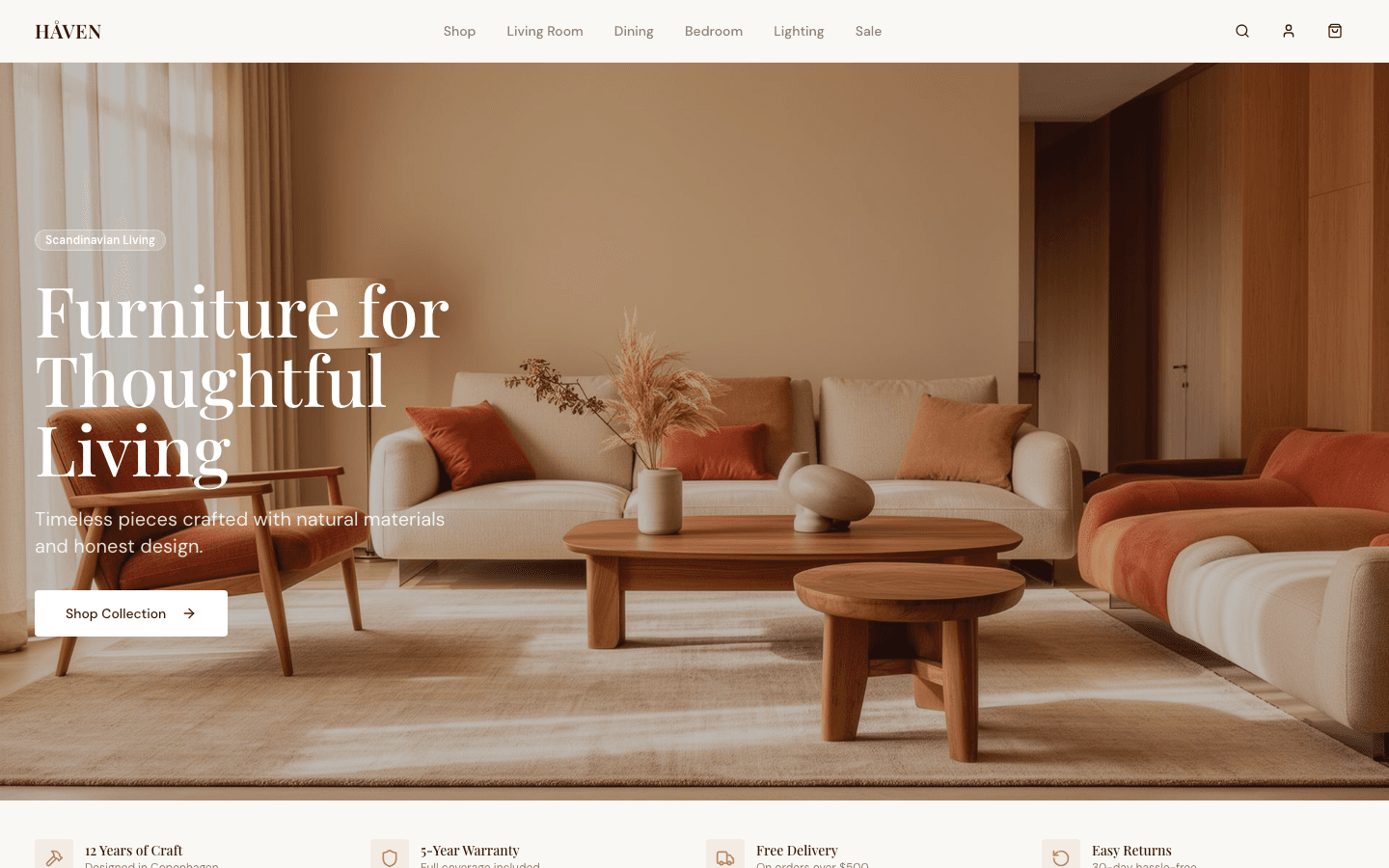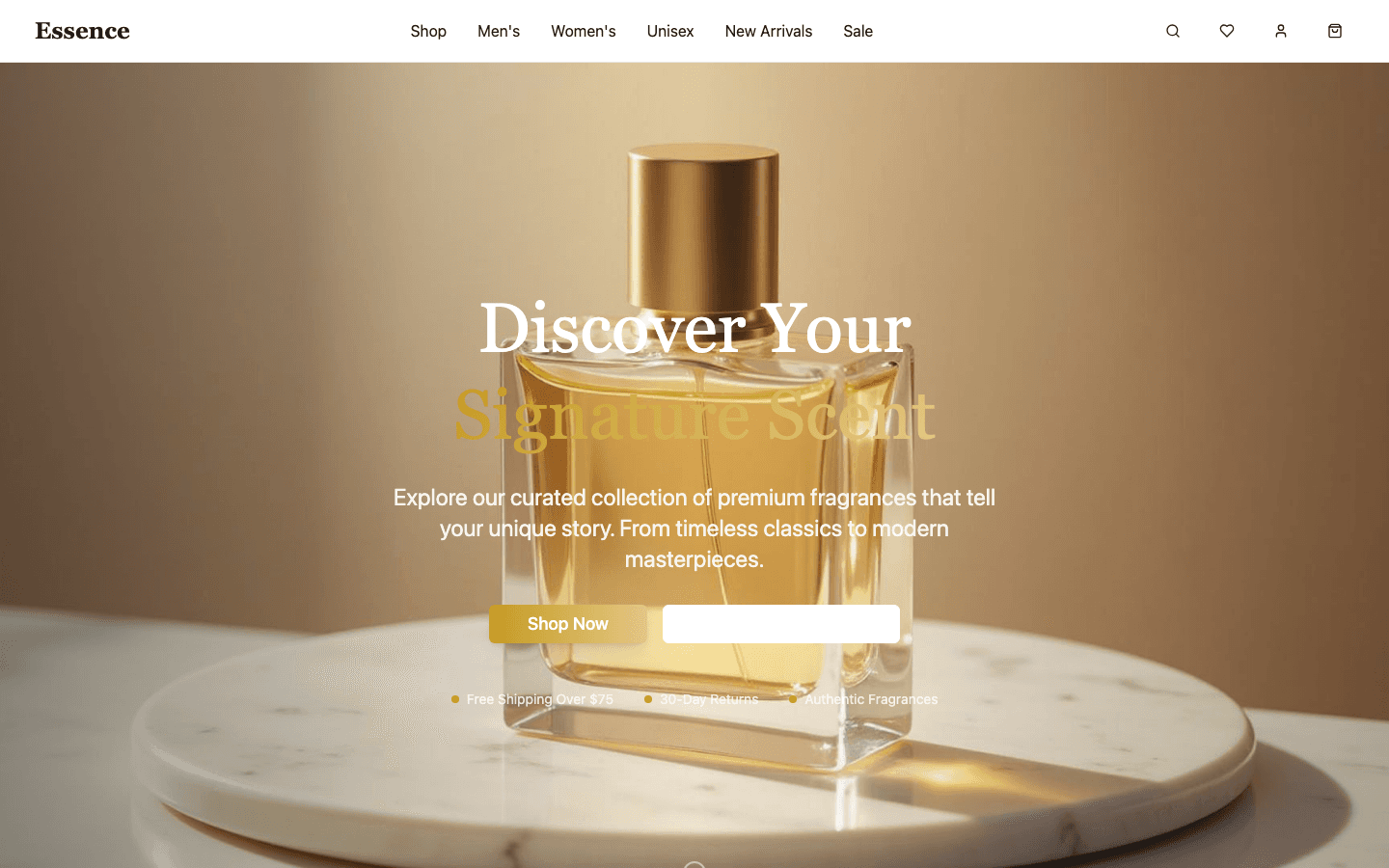
Photo by Tech Daily on Unsplash
Shopify vs Custom eCommerce MVP: Which Should You Choose?
Shopify vs Custom eCommerce MVP: Which Should You Choose?
When you're ready to launch an online store, the first big decision is: Shopify or custom-built?
Shopify is the world's most popular eCommerce platform for a reason — it handles everything out of the box. But a custom-built store gives you full control and zero platform dependencies.
This guide compares both approaches honestly across every dimension that matters for an MVP.
The Quick Comparison
| Factor | Shopify | Custom eCommerce |
|---|---|---|
| Time to launch | 1-2 weeks | 4-8 weeks |
| Monthly cost | $39-$399/mo + transaction fees | $0-$25/mo (hosting + services) |
| Transaction fees | 0.5-2% (on top of Stripe) | Stripe only (2.9% + 30¢) |
| Customization | Limited by themes and apps | Unlimited |
| Ownership | Shopify owns the platform | You own everything |
| Scaling | Shopify handles it | Your responsibility |
| SEO control | Moderate | Full |
| Technical skill needed | Low | High |
| Vendor lock-in | High | None |
| App ecosystem | 8,000+ apps | Build what you need |
When to Choose Shopify
Scenario 1: Non-Technical Founder
You can't code (or don't want to for this project). Shopify's drag-and-drop editor and app marketplace let you build a store without writing a single line of code.
Scenario 2: Validating a Product Idea Fast
You have a physical product and want to test demand before investing in custom development. Shopify gets you selling in days, not weeks.
Scenario 3: Standard eCommerce
You're selling physical products with standard variations (size, color), need basic inventory management, and don't need custom functionality. Shopify handles this perfectly.
Scenario 4: Focus on Marketing, Not Development
Your competitive advantage is the product or brand, not the technology. You'd rather spend time on marketing, content, and customer experience than code.
Shopify strengths:
- Fastest path to a working store
- Built-in payment processing, shipping, tax, and inventory
- Theme marketplace for professional design
- App ecosystem for nearly any feature
- Handles hosting, security, and uptime
- 24/7 support
Shopify weaknesses:
- Monthly fees add up ($39-$399/mo + apps at $10-$100+/mo each)
- Transaction fees on every sale (unless using Shopify Payments)
- Limited customization without Liquid (Shopify's template language)
- URL structure restrictions (impacts SEO)
- Data portability concerns (switching is painful)
- Performance dependent on theme and app bloat
When to Choose Custom eCommerce
Scenario 5: Technical Founder Who Wants Full Control
You're a developer who wants to own every pixel and every line of code. Custom gives you zero limitations.
Scenario 6: Unique Shopping Experience
Your product requires a custom UI that Shopify themes can't provide — interactive product builders, 3D visualization, or a non-standard checkout flow.
Scenario 7: Building a Platform (Not Just a Store)
You're building an eCommerce SaaS, a marketplace, or a product that happens to sell things online. Shopify is a store; custom code is a platform.
Scenario 8: Cost Optimization at Scale
At $100K+/year in revenue, Shopify's percentage-based fees and app costs add up. A custom store with Stripe-only processing costs significantly less.
Scenario 9: Content-Commerce Hybrid
You're building a content-driven brand where the blog, community, and store are deeply integrated. Custom gives you seamless integration that Shopify's blog can't match.
Custom strengths:
- Full ownership — no platform dependency
- No monthly platform fees or transaction fees beyond Stripe
- Unlimited customization and unique UX
- Full SEO control
- Integrates with any API or service
- Can evolve into a platform, marketplace, or SaaS
Custom weaknesses:
- Longer development time (4-8 weeks vs 1-2 weeks)
- You're responsible for hosting, security, and uptime
- Need to build or integrate: inventory, shipping, tax, email
- Ongoing maintenance is your responsibility
- Bug fixes are your problem, not Shopify's
Cost Comparison (First Year)
Shopify
| Cost | Amount |
|---|---|
| Shopify Basic plan | $39/mo × 12 = $468 |
| Theme (one-time) | $0-$350 |
| Essential apps (3-5 apps avg $20/mo each) | ~$80/mo × 12 = $960 |
| Transaction fees (assuming $50K revenue at 2%) | $1,000 |
| Year 1 total | ~$2,778 |
Custom (Using a Template)
| Cost | Amount |
|---|---|
| eCommerce template | $0-$300 (one-time) |
| Hosting (Vercel) | $0-$20/mo × 12 = $0-$240 |
| Database (Supabase) | $0-$25/mo × 12 = $0-$300 |
| Email (Resend) | $0-$20/mo × 12 = $0-$240 |
| Domain | ~$12/year |
| Stripe fees (2.9% + 30¢ on $50K) | ~$1,480 |
| Year 1 total | ~$1,792-$2,572 |
At similar revenue levels, costs are comparable. But as revenue grows, the custom approach becomes significantly cheaper because there are no percentage-based platform fees.
The Hybrid Approach
Some founders start with Shopify for speed, then migrate to custom when they need more control:
Phase 1 (Months 1-6): Shopify
- Validate product-market fit
- Learn what features customers actually need
- Generate revenue
Phase 2 (Months 6-12): Custom migration
- Build a custom store with the features you've validated
- Migrate products, customers, and orders
- Reduce ongoing costs
The risk: Shopify migration is painful. Product data, customer accounts, and SEO rankings don't transfer cleanly. Plan for 2-4 weeks of migration work.
Decision Framework
| Question | Shopify | Custom |
|---|---|---|
| Can you code? | No → Shopify | Yes → Either |
| Is speed critical? | Yes → Shopify | No → Either |
| Is your UX standard? | Yes → Shopify | No → Custom |
| Budget constrained? | Short-term: Shopify | Long-term: Custom |
| Building a platform? | No → Shopify | Yes → Custom |
| Want full ownership? | Not critical → Shopify | Yes → Custom |
Final Thoughts
There's no universally right answer. Shopify is better for speed and simplicity. Custom is better for control and long-term cost efficiency.
If you're validating a product idea and aren't technical, start with Shopify. If you're a developer building a unique commerce experience, go custom from the start.
Either way, launch fast and let customers guide your next move.
Going custom? Read How to Build an eCommerce MVP.
Need a template? Browse eCommerce templates on MVPHub.
Want a full checklist? See eCommerce App MVP Checklist.