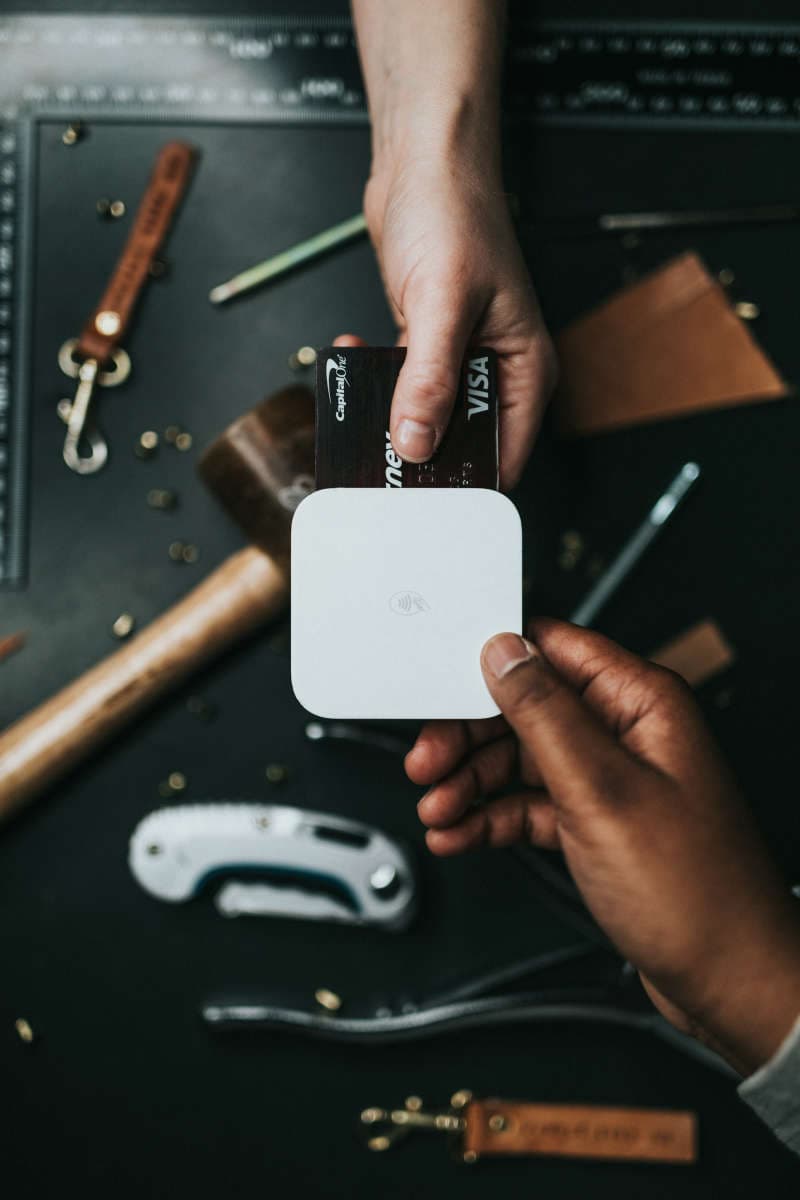
Photo by Carlos Muza on Unsplash
SaaS MVP: The Best Features to Build First (Avoid Overbuilding)
SaaS MVP: The Best Features to Build First (Avoid Overbuilding)
Here's the most expensive mistake in SaaS: building features nobody uses.
Studies consistently show that 60-80% of features in the average software product are rarely or never used. That's months of development time, thousands of dollars, and untold cognitive overhead—wasted on things users don't care about.
For an MVP, this ratio is catastrophic. You don't have months. You don't have a large team. You have a window of 4-8 weeks to build something that proves people will pay for your idea.
This guide will help you decide exactly which features belong in your SaaS MVP, which ones to build later, and which ones to skip entirely.
The Overbuilding Trap
Before we talk about what to build, let's understand why founders overbuild:
The psychology of overbuilding
- Fear of judgment — "Users will think the product is incomplete"
- Competitor anxiety — "Product X already has this feature, so we need it too"
- Perfectionism — "It doesn't feel ready without [feature]"
- Builder's bias — "This would be fun to build" (most dangerous one)
- Kitchen sink thinking — "What if someone needs this?"
The cost of overbuilding
| Extra Feature | Dev Time | Real Impact |
|---|---|---|
| Dark mode | 2-3 days | 0 users gained |
| Activity feed | 5-7 days | 0 users gained |
| Advanced filtering | 3-5 days | 0 users gained |
| Team permissions (before you have team users) | 5-8 days | 0 users gained |
| Custom reporting | 7-10 days | 0 users gained |
| Total wasted | 22-33 days | 5+ weeks lost |
Those 5 weeks could have been spent launching, getting feedback, and iterating on what users actually want.
The golden rule
Build only what's needed for a user to experience your core value proposition, pay for it, and come back.
Everything else is a guess. And guesses should be validated, not built.
The Three Tiers of SaaS MVP Features
Every feature in a SaaS MVP falls into one of three categories:
Tier 1: Infrastructure Features (Build All of These)
These aren't your product—they're the foundation every SaaS needs to function. Without them, users can't sign up, can't pay, and can't trust you with their data.
Tier 2: Core Value Features (Build 1-3 of These)
These are the features that make your product unique. This is what users are paying for. Your MVP lives or dies on these.
Tier 3: Enhancement Features (Build None of These... Yet)
These make a good product better but don't create value on their own. They're the #1 source of overbuilding.
Let's break down each tier.
Tier 1: Infrastructure Features (The Non-Negotiables)
These features are required for every SaaS MVP. The good news: you can get most of them from a boilerplate or third-party service, so they shouldn't consume your development time.
Authentication
What to build:
- Email/password sign up
- Sign in
- Password reset
- Session management
- Protected routes
What to defer:
- Social login (Google, GitHub, etc.) — Nice to have, not required
- Two-factor authentication — Add when you have sensitive data or enterprise users
- SSO/SAML — Enterprise feature, not MVP
Build or buy? Buy. Use Clerk, NextAuth, Auth0, or Supabase Auth. Building auth from scratch is the #1 time waster in MVP development.
Time if using a service: 1 day Time if building from scratch: 5-10 days
Billing and Payments
What to build:
- One pricing tier (two at most)
- Checkout flow
- Subscription management (if recurring)
- Webhook handling for payment events
- Access control based on payment status
What to defer:
- Multiple pricing tiers — Start with one plan. Add tiers after you understand willingness to pay.
- Annual billing toggle — Add when you have enough subscribers to justify the discount.
- Coupon codes and promotions — Manual discounts via Stripe dashboard are fine initially.
- Usage-based billing — Complex to implement, start with flat pricing.
- Invoicing — Stripe handles this automatically.
- Tax calculation — Use Stripe Tax when needed.
Build or buy? Buy. Stripe handles 95% of this. Your job is to wire up the checkout flow and webhooks.
Time with Stripe: 2-3 days Time building custom: 2-3 weeks
Pricing strategy for MVPs:
| Approach | When to Use |
|---|---|
| Single plan ($X/month) | When you're unsure of pricing — simplest to implement and test |
| Free + Paid | When you need volume for network effects or marketplace dynamics |
| Free trial (14 days) | When the product needs time to demonstrate value |
| Pay once (lifetime) | When launching to early adopters who want a deal |
Start with a single plan. You can always add tiers later based on what users tell you they'd pay more for.
User Settings and Profile
What to build:
- Edit name and email
- Change password
- Delete account (GDPR compliance)
- Manage subscription (link to Stripe customer portal)
What to defer:
- Profile photos/avatars — Use initials-based avatars
- Notification preferences — You barely send notifications yet
- Timezone and locale settings — Use browser defaults
- Theme customization — One theme is enough
Time: 1-2 days
Landing Page
What to build:
- Clear headline stating the value proposition
- 3-5 feature/benefit highlights
- One clear CTA (sign up / start free trial)
- Pricing section
- Basic footer (links, legal pages)
What to defer:
- Customer testimonials — You don't have customers yet (add social proof as you get it)
- Comparison tables — Build when you have competitors worth comparing against
- Feature tours and animations — Conversion comes from clarity, not motion
- Blog — Good for SEO long-term, but not needed for launch
Time: 1-2 days (using a component library)
Legal and Trust
What to build:
- Privacy Policy page (use a generator like Termly)
- Terms of Service page
- Cookie notice (if EU audience)
- Contact email or form
What to defer:
- SOC 2 compliance — Only when targeting enterprise
- HIPAA compliance — Only for health data
- Dedicated security page — Add when you have a security story to tell
Time: 0.5-1 day
What to build:
- Welcome email after sign up
- Password reset email
- Payment confirmation email
What to defer:
- Onboarding email sequence — Nice to have, not launch-critical
- Weekly digests — Build when you have enough data to summarize
- Marketing emails — Focus on product, not nurture sequences
- In-app notifications — Email is enough for now
Time with a service (Resend, SendGrid): 1 day Time building custom: 3-5 days
Infrastructure Feature Total
| Feature | Time (with services/boilerplate) | Time (from scratch) |
|---|---|---|
| Authentication | 1 day | 5-10 days |
| Billing/Payments | 2-3 days | 10-15 days |
| User settings | 1-2 days | 1-2 days |
| Landing page | 1-2 days | 3-5 days |
| Legal pages | 0.5-1 day | 0.5-1 day |
| 1 day | 3-5 days | |
| Total | 6.5-10 days | 22.5-38 days |
Using a boilerplate or third-party services, your entire infrastructure is done in under 2 weeks. Building from scratch? You've burned 4-8 weeks before touching your actual product.
This is why starting with a boilerplate is the fastest path to launch.
Tier 2: Core Value Features (Your Product's Reason to Exist)
This is what makes your SaaS different. It's the reason someone would choose your product over a spreadsheet, a competitor, or doing nothing.
The rule: Build 1-3 core features. No more.
How to identify your core features
Answer these questions:
1. What is the one job your user is hiring this product to do?
Not three jobs. Not five. One.
- Calendly: Schedule meetings without back-and-forth emails
- Notion: Organize work and knowledge in one flexible tool
- Loom: Record and share video messages quickly
- Plausible: See website analytics without complexity
2. What's the minimum workflow to deliver that job?
Map out the steps:
User creates [thing] → User configures [thing] → User gets [result]
Every step that isn't in this chain is a candidate for cutting.
3. What would make a user say "This is better than what I'm using now"?
Your MVP doesn't need to be better at everything—just one thing that matters enough to switch.
Core Feature Examples by SaaS Type
Here's what "core features only" looks like for common SaaS categories:
Project Management SaaS
| Build in MVP | Defer to v2+ |
|---|---|
| Create projects and tasks | Gantt charts |
| Assign tasks to users | Time tracking |
| Mark tasks complete | Automations |
| Basic kanban board | Resource management |
| Custom fields | |
| Reporting and analytics | |
| Integrations |
CRM SaaS
| Build in MVP | Defer to v2+ |
|---|---|
| Add and manage contacts | Email sequences |
| Log interactions/notes | Pipeline automation |
| Basic deal pipeline | Reporting dashboards |
| Search and filter contacts | Lead scoring |
| Territory management | |
| Forecasting | |
| API and integrations |
Email Marketing SaaS
| Build in MVP | Defer to v2+ |
|---|---|
| Import subscriber list | Automation workflows |
| Create and send campaign | A/B testing |
| Basic email template editor | Advanced segmentation |
| View open/click rates | Landing page builder |
| Dynamic content | |
| Multi-channel (SMS, push) |
Analytics SaaS
| Build in MVP | Defer to v2+ |
|---|---|
| Install tracking snippet | Funnels |
| Page view dashboard | Cohort analysis |
| Top pages and referrers | Custom events |
| Visitor count and trends | Goal tracking |
| Heatmaps | |
| Session recordings | |
| A/B testing |
Scheduling SaaS
| Build in MVP | Defer to v2+ |
|---|---|
| Set available time slots | Group scheduling |
| Share booking link | Round-robin assignment |
| Calendar integration (Google) | Custom branding |
| Email confirmations | Payment collection |
| Multiple event types | |
| Team calendars | |
| Routing forms |
The "One Core Feature" Challenge
If you're struggling to narrow down, try this exercise:
Imagine your product has ONE screen. What's on it?
- For a CRM: A list of contacts with the ability to add notes
- For a scheduler: A calendar with bookable slots
- For an analytics tool: A dashboard showing visitor counts
- For a project tool: A kanban board with tasks
That one screen is your MVP. Everything else is v2.
Tier 3: Enhancement Features (The Overbuilding Zone)
These are the features that feel important but aren't. They make a good product better, but they don't make a non-existent product viable.
Features That Feel Essential but Aren't
Team and collaboration features
Unless your product is inherently collaborative (like Figma or Slack), team features can wait.
- Multi-user accounts → Build when you get requests for it
- Roles and permissions → Start with one role (admin = everyone)
- Activity logs → Nobody reads these at MVP scale
- Comments and mentions → Use email for communication initially
Advanced search and filtering
- Full-text search → Basic filtering is enough at MVP scale
- Saved filters → Users can re-filter each time
- Advanced query builder → Way too complex for an MVP
- Search suggestions → Unnecessary until you have lots of data
Reporting and analytics dashboards
- Custom reports → Offer 1-2 pre-built views
- CSV/PDF export → Users can screenshot (seriously)
- Charts and graphs → Simple numbers are fine
- Date range comparisons → Show current data only
- Scheduled reports → Manual refresh is fine
Notifications system
- In-app notification center → Email is sufficient
- Push notifications → Way too early
- Notification preferences → You have 3 notifications, not 30
- Real-time updates → Refresh the page
Integrations
- Zapier/Make integration → Build after launch
- Native integrations → One or two max (usually calendar or email)
- API for developers → Build when developers ask for it
- Webhooks → Enterprise feature
- Import/export → Manual CSV upload is fine for MVP
Customization
- Custom fields → Use fixed fields first
- Custom workflows → Offer one workflow that works
- Branding/white-label → Enterprise feature
- Themes and personalization → One good theme is enough
- Custom domains → Way too early
Social and community features
- User profiles visible to others → Only if your product is inherently social
- Activity feeds → Nobody checks these
- Leaderboards or gamification → Premature optimization of engagement
- Forums or comments → Use a Discord or Slack community instead
The Deferral Test
For every feature you're considering, ask these 5 questions:
| Question | If "No" → |
|---|---|
| Does a user need this to get core value? | Defer it |
| Would removing this prevent someone from paying? | Defer it |
| Have 5+ people specifically requested this? | Defer it |
| Can I build this in under 1 day? | Consider deferring |
| Does this directly affect retention in the first week? | Defer it |
If a feature gets "No" on all five questions, it's a hard cut. Don't build it, don't put it on the roadmap, and don't think about it until after launch.
The Feature Prioritization Framework
Here's a systematic way to decide what makes it into your MVP:
Step 1: List Everything
Write down every feature you've imagined, every request from validation interviews, and every "what if" that's crossed your mind. Get it all out of your head.
Step 2: Score Each Feature
Rate each feature on two axes:
Impact (1-5): How much does this feature contribute to the user experiencing core value?
- 5 = Users can't get value without it
- 4 = Significantly improves the core experience
- 3 = Nice improvement, not critical
- 2 = Minor convenience
- 1 = No impact on core value
Effort (1-5): How long will this take to build properly?
- 1 = Under 1 day
- 2 = 1-2 days
- 3 = 3-5 days
- 4 = 1-2 weeks
- 5 = More than 2 weeks
Step 3: Plot on a 2x2 Matrix
| Low Effort | High Effort | |
|---|---|---|
| High Impact | BUILD NOW — Quick wins that drive value | BUILD CAREFULLY — Core features worth the investment |
| Low Impact | MAYBE LATER — Easy but not important | NEVER — Expensive and unimportant |
Step 4: Select Your MVP Feature Set
Your MVP should contain:
- All infrastructure features (Tier 1)
- 1-3 features from the "Build Now" and "Build Carefully" quadrants (Tier 2)
- Zero features from "Maybe Later" and "Never" (Tier 3)
Example Scoring: Invoice Management SaaS
| Feature | Impact | Effort | Decision |
|---|---|---|---|
| Create and send invoices | 5 | 3 | BUILD — Core value |
| Mark invoices as paid | 5 | 1 | BUILD — Essential for workflow |
| Automatic payment reminders | 4 | 2 | BUILD — Key differentiator |
| Client management (basic) | 4 | 2 | BUILD — Needed for invoicing |
| Dashboard with totals | 3 | 1 | BUILD — Quick win |
| Recurring invoices | 3 | 3 | DEFER — Nice but not launch-critical |
| Multi-currency support | 2 | 3 | DEFER — Niche need |
| Custom invoice templates | 2 | 4 | DEFER — One template is fine |
| Expense tracking | 2 | 4 | DEFER — Different feature set |
| Tax report generation | 1 | 4 | CUT — Not core value |
| Team permissions | 1 | 4 | CUT — No teams at MVP stage |
| QuickBooks integration | 2 | 5 | CUT — Build after launch if demanded |
MVP result: 5 features. Deferred: 3 features. Cut: 3 features.
Feature Scope: How Deep to Build Each Feature
Even within your selected features, you can overbuild. Here's how to scope each feature to MVP level:
The "Good Enough" Spectrum
For each feature, there's a spectrum from minimal to complete:
Example: Task Management Feature
| Level | What It Includes | Build Time |
|---|---|---|
| Minimal | Create task, mark complete, delete | 1 day |
| Good enough (MVP) | + Edit task, assign to user, due date, basic list view | 3 days |
| Complete | + Priorities, labels, subtasks, recurring, drag-and-drop, filters, search | 2-3 weeks |
| Over-engineered | + Custom fields, automations, dependencies, Gantt view, time tracking | 2-3 months |
Your MVP should be at "Good enough." Not minimal (too bare to be useful), not complete (too much for launch).
Scoping rules:
For data input features (forms, editors):
- Support the 3-5 most important fields
- Use standard input types (text, number, date, dropdown)
- Skip rich text editors — plain text or basic markdown is fine
- Skip file attachments unless they're core to your value
For data display features (lists, dashboards):
- Show the most recent items first
- Include basic pagination or infinite scroll
- One view is enough (list OR kanban OR table, not all three)
- 1-2 filters maximum
- Skip sorting options — use a sensible default
For workflow features (multi-step processes):
- Support the happy path (everything goes right)
- Handle the 2-3 most common error cases
- Skip undo/redo
- Skip bulk operations
- One way to do each thing (not three different ways)
The Anti-Feature Checklist
Before shipping, review this list and confirm you are NOT building any of these for your MVP:
- Dark mode — Nobody ever chose a SaaS product because of dark mode
- Onboarding tour — If your product needs a tour, it's too complex
- Gamification — Badges and points don't retain users; solving problems does
- AI features (unless AI IS your product) — Slapping "AI-powered" on an MVP adds complexity without validation
- Multi-language support — Launch in one language
- Offline mode — Your SaaS is online-only, and that's fine
- Mobile app — A responsive web app covers mobile for now
- Desktop app — The browser is your desktop app
- Browser extension — Add-on, not core
- Public API — Zero developers are integrating with your 0-user product
- Changelog or release notes page — You have no history yet
- Status page — You can post on Twitter if something breaks
- Help center with 50 articles — A single FAQ page is enough
- Community forum — Use a free Discord server
- Referral program — You need users before you need referrals
- Affiliate system — Same as above, but more complex
- Annual report or wrapped feature — You need 12 months of data first
- Admin dashboard — Query the database directly for now
What to Build After Launch (Your v2 Roadmap)
Once your MVP is live and you have real users, here's how to decide what to build next:
Week 1-2 after launch: Listen
- Track which features users actually use (analytics)
- Read every piece of feedback
- Note what users ask for most
- Identify the biggest drop-off point in your funnel
Week 3-4: Fix and Optimize
- Fix bugs reported by users
- Improve the features you already have (before adding new ones)
- Optimize the activation flow (getting users to experience core value)
- Improve loading speed and reliability
Month 2: Add the Next Feature
Choose based on this priority order:
- Features users are asking for repeatedly (demand-driven)
- Features that improve retention (users coming back)
- Features that improve activation (users experiencing value faster)
- Features that enable growth (referrals, sharing, virality)
- Features that increase revenue (upsells, new pricing tiers)
Month 3+: Build Your Moat
Now you can start adding the features that differentiate you from competitors:
- Integrations with popular tools
- Advanced analytics and reporting
- Team and collaboration features
- API and developer tools
- Custom branding and white-label
Real-World MVP Feature Lists
Here are actual feature sets from products that launched as MVPs and became category leaders:
Basecamp (Project Management)
MVP features:
- Message boards
- To-do lists
- Milestones
- File sharing
- Time tracking (basic)
What they didn't build: Gantt charts, resource management, custom fields, automations, integrations, mobile apps, reporting.
Result: Became profitable within months, now serves millions of users.
Mailchimp (Email Marketing)
MVP features:
- Import email list
- Create campaign with templates
- Send emails
- View open rates
What they didn't build: Automation, segmentation, A/B testing, landing pages, social ads, CRM features, e-commerce integrations.
Result: Grew to $700M+ revenue before being acquired by Intuit for $12B.
Trello (Task Management)
MVP features:
- Boards, lists, and cards
- Drag-and-drop between lists
- Card descriptions
- Member assignment
What they didn't build: Power-ups, automations, templates, timeline view, calendar view, dashboards, custom fields.
Result: Acquired by Atlassian for $425M.
Intercom (Customer Communication)
MVP features:
- Live chat widget
- User list
- Manual messaging
- Basic user data
What they didn't build: Bots, product tours, help center, ticketing, reporting, AI features, outbound campaigns.
Result: Now valued at $1.25B+.
The pattern: Every one of these shipped with 4-6 features. Everything they're famous for today was added after they validated core demand.
Final Thoughts
The hardest part of building a SaaS MVP isn't building—it's not building.
Every feature you add delays your launch, increases your surface area for bugs, and makes your product harder to explain. And most of those features won't matter to your first 100 users.
Here's the framework in three sentences:
- Infrastructure features: Use a boilerplate or third-party services. Don't waste your precious development time here.
- Core value features: Build 1-3 features that deliver your unique value. Make them work well.
- Everything else: Don't build it. Not yet. Probably not ever—unless users demand it.
Ship the smallest thing that's useful. Let your users tell you what to build next. That's how every great SaaS started, and it's how yours should too.
Need a step-by-step plan? Follow The MVP Development Checklist: From Idea to Launch.
Want real examples? See Best MVP Examples: What Successful Startups Built First.
Building from a boilerplate? Read The Fastest Way to Launch: Use an MVP Boilerplate.
Budgeting your build? Check How Much Does It Cost to Build an MVP in 2026?.