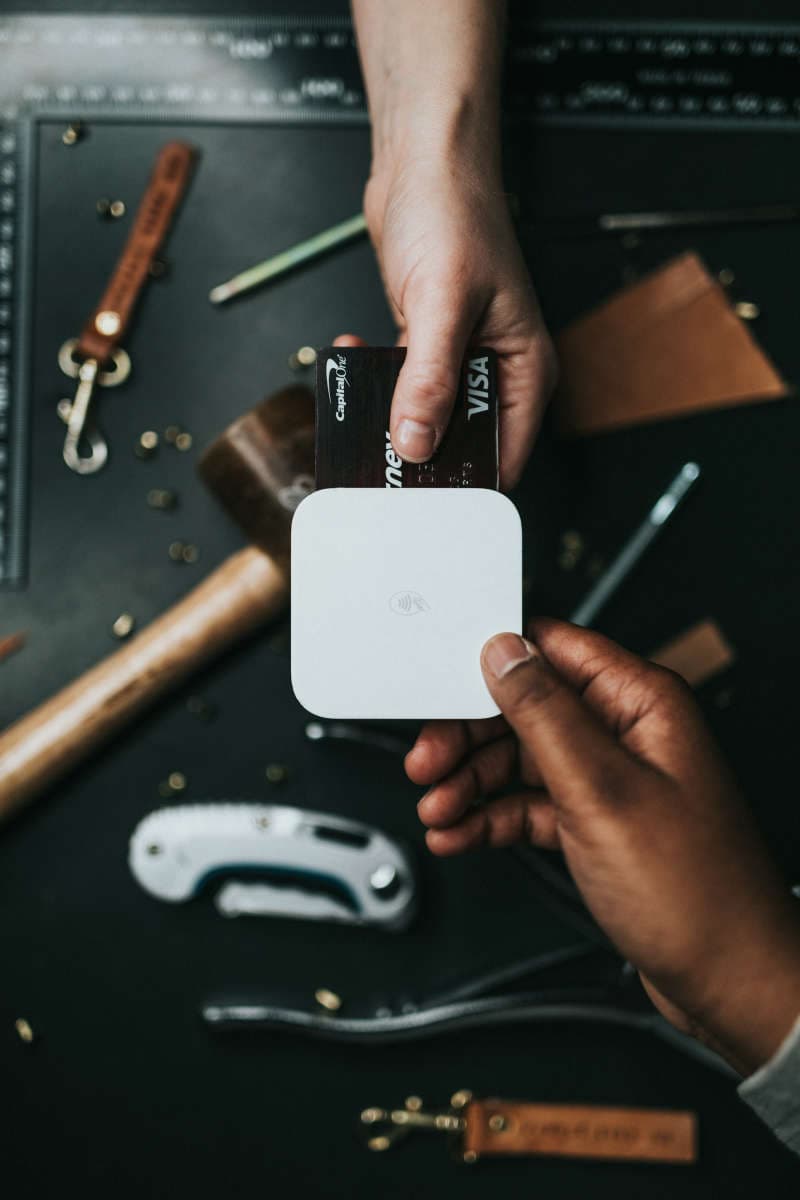
Photo by Clark Tibbs on Unsplash
Best MVP Examples: What Successful Startups Built First
Best MVP Examples: What Successful Startups Built First
Every product you use daily—every app with millions of users, every platform worth billions—started as something embarrassingly simple.
Not a vision deck. Not a 200-page spec. A scrappy, stripped-down version that solved one problem for a small group of people.
These are the real MVP stories. Not the polished origin myths you see in TechCrunch, but what they actually built first, what they left out, and what you can learn from each one.
Quick Reference: 20+ MVP Examples at a Glance
| Company | MVP Type | What They Built First | What They Skipped |
|---|---|---|---|
| Airbnb | Landing page | Simple website listing their own apartment | Search, payments, reviews, maps |
| Dropbox | Explainer video | 3-minute demo video, no working product | The actual product |
| Single-feature app | 140-character status updates | Retweets, hashtags, DMs, media | |
| Stripe | Developer-focused API | Payment API for developers, invite-only | Dashboard, analytics, fraud detection |
| Stripped-down app | Photo sharing with filters | Stories, DMs, Reels, shopping | |
| Slack | Internal tool | Team chat for one company | Integrations, bots, channels marketplace |
| Spotify | Desktop app | Music streaming with a small catalog | Mobile, social, podcasts, playlists |
| Amazon | Single-category store | Online bookstore | Everything else |
| Zapier | Manual integrations | Hand-built integrations for first users | Self-serve, 5000+ app catalog |
| Buffer | Two-page website | Landing page + pricing page | The actual scheduling tool |
| Uber | City-specific app | Black car booking in San Francisco only | UberX, surge pricing, UberEats |
| Figma | Browser-based editor | Collaborative design tool, invite-only | Plugins, FigJam, Dev Mode |
| Notion | Note-taking app | Simple notes and documents | Databases, API, templates gallery |
| Shopify | Single store | Online store for snowboard equipment | Multi-store, themes, app store |
| Basic profiles | Professional profiles with connections | Jobs, content feed, messaging, learning |
Let's dive deeper into each one.
1. Airbnb — A Website With One Listing
The MVP: In 2007, Brian Chesky and Joe Gebbia couldn't afford rent. A design conference was coming to San Francisco and hotels were full. They put an air mattress in their living room, built a simple website called AirBed & Breakfast, and listed it. Three guests paid $80/night each.
What was in the MVP:
- A single web page with photos of their apartment
- A contact form
- Manual payment (PayPal)
- The founders themselves as hosts
What was NOT in the MVP:
- Search functionality
- Multiple listings
- Map view
- User reviews
- Integrated payments
- Messaging system
- Mobile app
- Host verification
- Insurance
The lesson: You don't need a marketplace to validate a marketplace idea. You need one listing and one customer. Airbnb proved demand with a single apartment before building the platform.
"We didn't think of ourselves as building a technology company. We were just trying to pay rent." — Brian Chesky
2. Dropbox — A Video That Went Viral
The MVP: Drew Houston was frustrated by carrying USB drives. He wanted to build a file syncing tool, but the technology was complex. Instead of building the product, he made a 3-minute demo video showing how it would work.
What was in the MVP:
- A screencast video demonstrating the concept
- A landing page with an email signup form
- A waitlist
What was NOT in the MVP:
- Working software
- File syncing
- Desktop app
- Sharing features
- Mobile apps
- Business plans
The result: The video was posted on Hacker News. Overnight, their waitlist went from 5,000 to 75,000 signups. They hadn't written a single line of syncing code.
The lesson: Sometimes the best MVP isn't software at all. If you can demonstrate the value clearly enough, a video or demo is enough to validate demand. Only build after you know people want it.
3. Twitter — Just Status Updates
The MVP: In 2006, Jack Dorsey pitched an idea at a hackathon inside Odeo (a podcasting company): a service where you could send a text message to one number and it would be broadcast to all your friends. The first version, called "twttr," launched internally.
What was in the MVP:
- Post a 140-character status update
- Follow other users
- See a timeline of updates from people you follow
- SMS-based posting
What was NOT in the MVP:
- Retweets (added 3 years later)
- Hashtags (invented by a user, adopted by Twitter later)
- Direct messages
- Photo/video uploads
- Quote tweets
- Threads
- Trending topics
- Verification badges
- Advertising platform
The lesson: Twitter launched with literally one feature—posting short text updates. Everything else was added over years based on how people actually used the platform. Features like hashtags weren't even Twitter's idea—users invented them.
4. Stripe — Invite-Only API for Developers
The MVP: In 2010, Patrick and John Collison were frustrated by how hard it was to accept payments online. PayPal required filling out lengthy applications. Merchant accounts took weeks. Their solution: a simple API that let developers accept payments with just 7 lines of code.
What was in the MVP:
- A payment processing API
- Simple documentation
- Invite-only access
- Basic card processing
- Direct developer support (the founders personally helped integrate)
What was NOT in the MVP:
- Dashboard or analytics
- Fraud detection
- Subscription billing
- Invoicing
- Connect (marketplace payments)
- Terminal (in-person payments)
- Identity verification
- International support
The distribution strategy: The Collison brothers literally sat next to developers at events and offered to integrate Stripe for them on the spot. This became known as the "Collison Install."
The lesson: Stripe's MVP wasn't trying to serve every business. It served one persona (developers) with one use case (accepting online payments) and made it absurdly simple. They expanded from that beachhead.
5. Instagram — Photos and Filters, Nothing Else
The MVP: Instagram started as a location-based check-in app called Burbn (like Foursquare). Kevin Systrom noticed that users weren't checking in—they were uploading photos. So he stripped away everything except photo sharing and added filters to make phone photos look good.
What was in the MVP:
- Take a photo
- Apply a filter
- Share it with followers
- Like photos
- Basic profile
What was NOT in the MVP:
- Video
- Stories
- Reels
- Direct messages
- Shopping
- IGTV
- Live streaming
- Ads
- Business profiles
- Explore page algorithm
The result: 25,000 users signed up on launch day. One million users within two months. Acquired by Facebook for $1 billion 18 months after launch—with only 13 employees.
The lesson: Instagram's pivot from Burbn is one of the best examples of observing user behavior and ruthlessly cutting features to double down on what people actually wanted. The MVP had 5 features. The app that got acquired for $1B still basically did the same 5 things.
6. Slack — A Tool Built for One Team
The MVP: Slack wasn't a startup idea—it was an internal communication tool built by Tiny Speck while they were developing a video game called Glitch. The game failed, but the team realized their chat tool was exceptional.
What was in the MVP:
- Team messaging organized by channels
- File sharing
- Search across message history
- Desktop notifications
What was NOT in the MVP:
- App integrations (now 2,400+)
- Bots and automation
- Slack Connect (cross-company channels)
- Huddles (audio/video calls)
- Workflows
- Enterprise grid
- App marketplace
- Threads
The launch strategy: They released a "preview" to a small group of companies and asked for feedback. Each company was manually onboarded. Within 24 hours of opening the waitlist, 8,000 companies requested access. Within two weeks, 15,000.
The lesson: Slack was built for one specific team (their own) and perfected through daily internal use before anyone else saw it. They didn't guess what teams needed—they experienced it firsthand. By the time they launched publicly, the product was already refined through months of real usage.
7. Spotify — Desktop Only, Limited Catalog
The MVP: When Spotify launched in 2008, it was a desktop-only application available only in Sweden. The music catalog was limited to deals they'd negotiated with a handful of labels.
What was in the MVP:
- Music streaming (desktop app)
- Search for songs and artists
- Basic playlists
- Free tier with ads
What was NOT in the MVP:
- Mobile app (added 2009)
- Social features
- Podcasts (added 2019)
- Personalized playlists (Discover Weekly came in 2015)
- Offline downloads
- Family plans
- Artist tools
- Wrapped year-in-review
- Global availability (limited to select European countries initially)
The lesson: Spotify didn't try to launch globally with every feature. They launched in one market with one platform and proved that streaming could work as a business model before expanding.
8. Amazon — An Online Bookstore
The MVP: Jeff Bezos could have started Amazon as "the everything store" from day one—that was always the vision. Instead, he started with books. Just books.
What was in the MVP:
- Browse and search for books
- Add to cart and purchase
- Shipping to US addresses
- Customer reviews
What was NOT in the MVP:
- Every other product category
- Prime membership
- AWS
- Kindle
- Alexa
- Marketplace (third-party sellers)
- Same-day delivery
- Streaming video
- Grocery delivery
Why books? Books were the perfect MVP category:
- Huge catalog (over 3 million titles)
- Standard product (no sizing, no variations)
- Easy to ship (durable, lightweight)
- Existing demand (people already buy books)
- Commodity pricing (easy to compete on price)
The lesson: Even with unlimited ambition, start with one category, one use case, one audience. Bezos chose books not because they were his passion, but because they were the lowest-risk way to validate online retail. Once that worked, he expanded to everything else.
9. Zapier — Hand-Built Integrations
The MVP: Wade Foster and Bryan Helmig wanted to connect web apps together without coding. But building a self-serve automation platform takes time. So they launched with a small set of integrations and manually built custom connections for their first users.
What was in the MVP:
- A handful of pre-built integrations (around 25 apps)
- Invite-only access
- Basic trigger-action automation
- The founders manually creating integrations users requested
What was NOT in the MVP:
- Self-serve integration builder
- 6,000+ app catalog
- Multi-step Zaps
- Filters and formatting
- Team accounts
- Enterprise features
- AI features
The launch: They posted on Hacker News with "Show HN: Zapier" and described it as "Pipes for the internet." Early users requested specific integrations, and the team built them by hand, learning which connections were most valuable.
The lesson: You don't need to automate everything on day one. Zapier's team did work manually that the product would eventually automate. This concierge approach taught them exactly which integrations to prioritize and how users actually thought about automation.
10. Buffer — A Landing Page Before the Product
The MVP: Joel Gascoigne wanted to build a social media scheduling tool. Before writing any code, he created a two-page website:
- Page 1: Described what Buffer would do, with a "Plans and Pricing" button
- Page 2: Showed pricing tiers, with a "Sign Up" button that led to... an email form saying "We're not ready yet."
What was in the MVP:
- A landing page explaining the concept
- A pricing page with three tiers
- An email collection form
What was NOT in the MVP:
- Working software
- Social media scheduling
- Analytics
- Team features
- Mobile app
The result: People clicked through to pricing and entered their emails. This proved two things: (1) people were interested, and (2) they were willing to consider paying. Only then did Joel build the actual product.
The lesson: Buffer is the textbook example of validating willingness to pay before building. The pricing page MVP is brilliant because it tests not just interest, but the assumption that people will pay—which is the assumption that matters most.
11. Uber — Black Cars in One City
The MVP: UberCab (the original name) launched in 2010 in San Francisco only, connecting riders with black car/limo drivers—not regular people with cars.
What was in the MVP:
- Request a black car via iPhone app
- See estimated arrival time
- Automatic payment via credit card on file
- Email receipt
What was NOT in the MVP:
- UberX (regular cars) — added 3 years later
- Surge pricing
- Driver ratings
- Fare estimates before booking
- Ride splitting
- UberEats
- Android app
- Availability outside San Francisco
The lesson: Uber started as a luxury service in one city. This was strategically brilliant—black car drivers were already licensed and insured (avoiding regulatory battles early), and San Francisco was a tech-savvy market perfect for early adoption. They solved the hardest problem first (real-time car dispatch) in the simplest context possible.
12. Shopify — One Snowboard Store
The MVP: Tobias Lutke wanted to sell snowboards online. Existing e-commerce tools were terrible, so he built his own store using Ruby on Rails. That custom store became Shopify.
What was in the MVP:
- Product listings
- Shopping cart
- Checkout and payment
- Basic store design
What was NOT in the MVP:
- Multi-store support
- Theme marketplace
- App store
- POS (point of sale)
- Shopify Capital
- Shipping and fulfillment
- Shopify Plus (enterprise)
The lesson: Shopify wasn't designed as a platform—it was built to solve one person's problem (Tobias needed a store). Only after it worked for him did he realize other merchants needed the same thing. Building for yourself first is one of the most reliable validation methods.
13. Notion — Simple Notes and Docs
The MVP: Notion launched in 2016 as a note-taking and document tool. It was clean and flexible, but far simpler than what it is today.
What was in the MVP:
- Pages and documents
- Basic text editing
- Simple organization (pages within pages)
- Web-based interface
What was NOT in the MVP:
- Databases
- Kanban boards
- API
- Templates gallery
- Team workspaces
- AI features
- Integrations
- Automations
The journey: Notion actually failed its first launch. The team ran out of money, moved to Japan to reduce burn rate, and rebuilt the product from scratch. The second launch focused on a cleaner, simpler experience—and it worked.
The lesson: Even Notion—now valued at $10B+—failed its first attempt and had to start over. The version that succeeded was simpler and more focused than the one that failed. Also: it's okay to relaunch.
14. Figma — Collaborative Design in the Browser
The MVP: Dylan Field spent 3 years building Figma before launching an invite-only beta in 2015. The MVP focused on one revolutionary concept: real-time collaborative design in a web browser.
What was in the MVP:
- Vector design tools in the browser
- Real-time multiplayer collaboration
- Basic component system
- Cloud-based files (no save button)
What was NOT in the MVP:
- Prototyping
- Design systems
- FigJam (whiteboarding)
- Dev mode
- Plugin ecosystem
- Community file sharing
- Auto Layout
- Variables and design tokens
The lesson: Figma bet everything on one differentiator—real-time collaboration in the browser—and made sure that one thing worked exceptionally well. Everything else came later. When your MVP has one "wow" moment, users will tolerate missing features.
15. LinkedIn — Professional Profiles and Connections
The MVP: LinkedIn launched in 2003 as a simple professional networking site. You created a profile, connected with people you knew, and that was basically it.
What was in the MVP:
- Professional profile (resume-like)
- Connect with people you know
- Search for professionals
- Invitation system
What was NOT in the MVP:
- News feed
- Job postings
- LinkedIn Learning
- InMail messaging
- Company pages
- Content publishing
- Endorsements and recommendations
- Premium subscriptions
- Advertising platform
The launch: Reid Hoffman invited 350 professional contacts to join. Within the first week, the site had 12,500 members—entirely through personal network invitations and word of mouth.
The lesson: LinkedIn's MVP was essentially a digital Rolodex. That's it. The massive platform it is today—jobs, content, advertising, learning—was all added later, feature by feature, over 20+ years. Start with the simplest version that creates a reason for people to sign up.
Patterns Across All 15 MVPs
Looking at these stories together, clear patterns emerge:
Pattern 1: One Feature, Done Well
Every single MVP on this list launched with a single core feature:
- Airbnb: List a room
- Twitter: Post a status
- Instagram: Share a photo
- Stripe: Accept a payment
- Slack: Send a team message
They didn't try to be feature-complete. They tried to be feature-perfect on one thing.
Pattern 2: One Audience, Served Deeply
None of these MVPs tried to serve everyone:
| Company | MVP Audience | Expanded To |
|---|---|---|
| Uber | Tech workers in San Francisco | Everyone, everywhere |
| Amazon | Book buyers | Everyone who buys anything |
| Shopify | One snowboard store | Millions of merchants |
| Spotify | Swedish music listeners | Global audience |
| Stripe | Developers | Every business |
Start narrow. Expand later.
Pattern 3: Manual Before Automated
Many successful MVPs involved humans doing what software would eventually do:
- Zapier built integrations by hand
- Airbnb founders personally photographed listings
- Uber founders personally recruited drivers
- Slack's team was their own first user base
This isn't a shortcut—it's a strategy. Manual work teaches you what to automate.
Pattern 4: Distribution Was Part of the MVP
Building the product was only half the work. Each company had a specific distribution strategy:
| Company | Distribution Strategy |
|---|---|
| Dropbox | Viral video on Hacker News |
| Buffer | Landing page testing |
| Stripe | "Collison Install" (in-person integration) |
| Slack | Invite-only waitlist with manual onboarding |
| Founder's personal network of 350 contacts | |
| App Store launch + Twitter cross-posting |
Pattern 5: The MVP Looked Nothing Like the Final Product
This is the most important pattern. Every single company on this list built something their current users wouldn't recognize.
- Amazon started as a bookstore
- Instagram started as a check-in app
- Slack started as a game company's internal tool
- Shopify started as one person's snowboard store
- Notion failed and had to completely rebuild
Your MVP is not your product. It's your starting point for learning.
MVP Types: Which Approach Fits Your Idea?
These examples show several distinct MVP approaches. Choose based on your situation:
The Landing Page MVP
Examples: Buffer, Dropbox (video + landing page) Best for: Validating demand before writing any code How it works: Describe your product, show pricing, collect emails Cost: $0–$200 Time: 1–3 days
The Single-Feature MVP
Examples: Twitter, Instagram, Slack, Stripe Best for: Products where one feature IS the core value How it works: Build one thing and make it excellent Cost: $2,000–$15,000 Time: 4–8 weeks
The Concierge MVP
Examples: Zapier, early Airbnb (founders as hosts) Best for: Services and automation products How it works: Deliver the value manually, automate later Cost: $0–$1,000 Time: 1–2 weeks
The Single-Market MVP
Examples: Uber (SF only), Spotify (Sweden only), Amazon (books only) Best for: Marketplaces and platforms How it works: Launch in one market/category and dominate it Cost: $5,000–$30,000 Time: 6–12 weeks
The Wizard of Oz MVP
Examples: Early Zapier, many AI products Best for: Products that appear automated but are manual behind the scenes How it works: Users interact with a real interface, but you fulfill requests manually Cost: $1,000–$5,000 Time: 2–4 weeks
The Internal Tool MVP
Examples: Slack, Shopify Best for: Products born from solving your own problem How it works: Build for yourself first, then offer to others Cost: $0 (built out of necessity) Time: Varies
Applying These Lessons to Your MVP
Here's how to use these examples to shape your own MVP:
Step 1: Identify your "one feature"
Look at your feature list. Which single feature, if it worked perfectly, would make someone say "I need this"? That's your MVP.
Step 2: Choose your launch audience
Don't target "everyone." Pick the smallest viable audience:
- One city
- One profession
- One company size
- One use case
Step 3: Decide what to do manually
What parts of your product could you deliver by hand for the first 10 users? Do that first. Automate after you understand the workflow.
Step 4: Plan your distribution
Before you build, answer: "How will my first 50 users find this?" If you don't have an answer, figure that out before writing code.
Step 5: Accept that it will look nothing like your vision
And that's fine. Instagram was a check-in app. Shopify was a snowboard store. Your MVP is a learning tool, not the final product.
Final Thoughts
The most successful products in the world started as something their founders were almost embarrassed to ship. Not because they lacked ambition, but because they understood a fundamental truth:
You can't build the right product without learning from real users. And you can't learn from real users without shipping something.
Your MVP doesn't need to be impressive. It needs to be useful enough for someone to use, and simple enough for you to ship this month.
Build the smallest thing that solves a real problem. Ship it. Learn. Then build what your users actually need.
That's how billion-dollar companies start.
Ready to build your MVP? Follow The MVP Development Checklist: From Idea to Launch.
Want to validate your idea first? Read How to Validate Your Startup Idea Before Building.
Not sure what an MVP is? Start with What Is an MVP in Software? A Practical Guide.
Need to move fast? Check out The Fastest Way to Launch: Use an MVP Boilerplate.