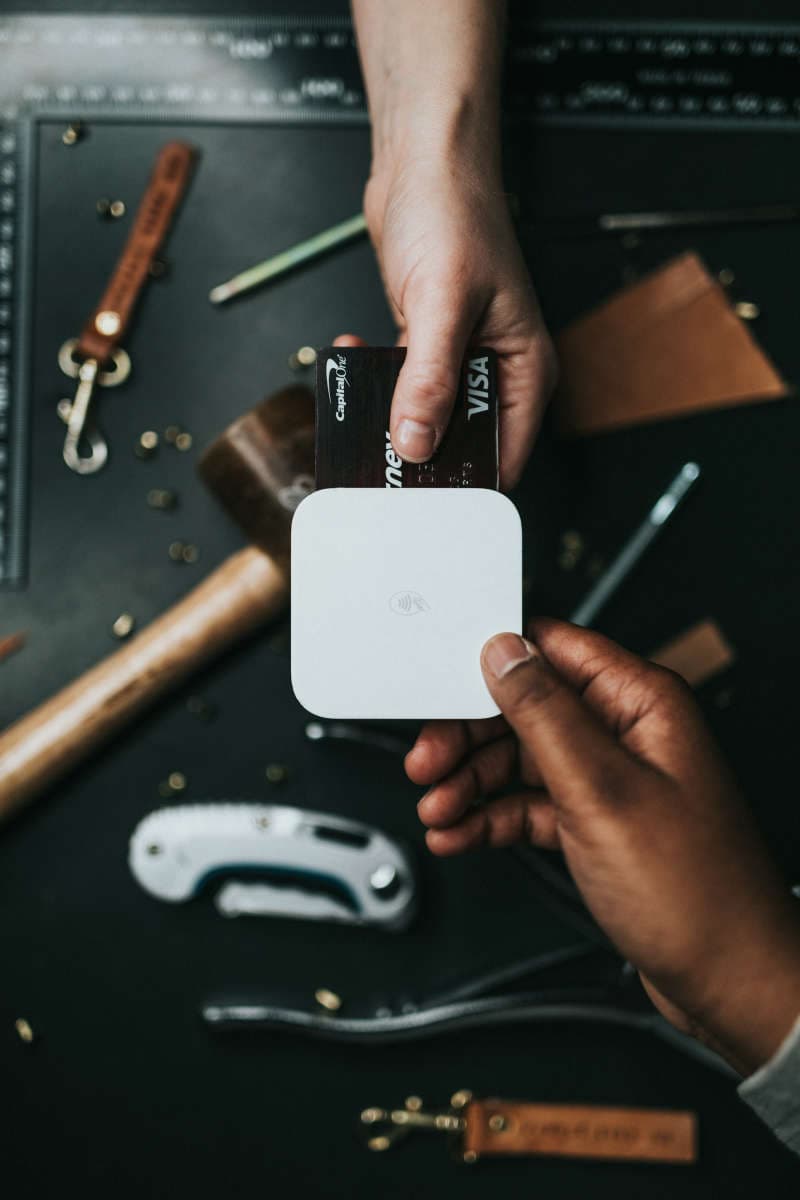
Photo by Jason Goodman on Unsplash
How to Validate Your Startup Idea Before Building an MVP
How to Validate Your Startup Idea Before Building an MVP
The graveyard of failed startups is filled with products that were brilliantly built but never needed.
According to CB Insights, the #1 reason startups fail is "no market need"—not bad technology, not running out of money, not getting outcompeted. Founders build something nobody wants, and by the time they realize it, they've spent months of time and thousands of dollars.
An MVP helps you validate faster than a full product. But even an MVP takes 4-8 weeks to build. Before you invest that time, you should validate that:
- The problem is real and painful enough to pay for
- Your target audience can be reached
- Your proposed solution is something they'd actually use
- People will pay money for it
This guide covers 10 proven validation methods—ordered from cheapest and fastest to most involved—so you can build confidence before you build code.
The Validation Mindset
Before diving into methods, let's establish the right mindset:
You are not your customer
Your personal experience with a problem doesn't mean millions of others share it. Validation means getting outside your own head and collecting evidence from real people.
Validation is not confirmation
You're not looking for people to agree with you. You're looking for honest signals—positive or negative—about whether your idea has legs. The best validation sometimes tells you to pivot or stop.
Speed beats perfection
A rough validation in 3 days beats a perfect one in 3 months. You're making a go/no-go decision, not writing a dissertation. Good enough data now is better than perfect data later.
The goal is de-risking
Every validation method removes a specific risk:
| Risk | Question | Validation Method |
|---|---|---|
| Problem risk | Is this a real problem? | Customer interviews |
| Audience risk | Can I reach these people? | Community engagement, ads |
| Solution risk | Will they use my approach? | Prototype testing, concierge MVP |
| Willingness-to-pay risk | Will they pay for it? | Pre-sales, landing page with pricing |
| Competitive risk | Why would they switch? | Competitor analysis |
Method 1: Customer Interviews (Cost: $0 | Time: 3-5 Days)
The single most valuable validation method. Nothing replaces talking to real people who might use your product.
How to do it:
Find 15-20 people in your target audience. Use:
- LinkedIn (search by job title, industry)
- Reddit and niche forums
- Facebook and Slack groups
- Twitter/X (search for people complaining about the problem)
- Your personal network
- Cold email (keep it short and genuine)
Ask the right questions. Focus on the problem, not your solution:
- "Tell me about the last time you dealt with [problem]. What happened?"
- "How do you currently handle [problem]?"
- "What's the most frustrating part of your current approach?"
- "Have you tried any tools or solutions? What worked? What didn't?"
- "How much time/money does this problem cost you per week/month?"
- "If a tool solved this for you, what would that be worth?"
Don't ask these questions:
- "Would you use an app that does X?" — Too hypothetical. People say yes to be polite.
- "Do you like this idea?" — You'll only hear what you want to hear.
- "How much would you pay for this?" — Without context, the answer is meaningless.
What to listen for:
Strong signals (proceed):
- People describe the problem with emotion and specific examples
- They've already tried (and abandoned) other solutions
- They can quantify the cost of the problem (time or money)
- They ask when your solution will be available
- They offer to be beta testers
Weak signals (proceed with caution):
- "Yeah, that's kind of annoying, I guess"
- They can't describe a specific recent instance of the problem
- They have a workaround that's "good enough"
- Polite but vague interest
Red flags (reconsider):
- "I don't really have that problem"
- "I tried something like that and stopped using it"
- The problem comes up but is low priority
- No one can quantify the cost
Document everything:
Create a simple spreadsheet:
| Person | Role | Problem Severity (1-5) | Current Solution | Would Pay? | Key Quote |
|---|---|---|---|---|---|
| Jane D. | Freelance designer | 5 | Manual invoices | Yes, $20-30/mo | "I chase payments for hours every week" |
| Mark T. | Freelance writer | 3 | QuickBooks | Maybe | "It's annoying but manageable" |
After 15-20 conversations, patterns will emerge. If 10+ people describe the same painful problem with emotional urgency, you're onto something.
Method 2: Competitor and Market Research (Cost: $0 | Time: 1-2 Days)
If no one else is solving this problem, ask yourself: is it because you found a gap, or because the problem isn't big enough to sustain a business?
What to research:
Direct competitors:
- Google your idea. What comes up?
- Search Product Hunt, G2, Capterra for similar tools
- Check Crunchbase for funded companies in the space
- Look at app stores if it's a mobile concept
For each competitor, document:
| Competitor | Users/Revenue (if known) | Pricing | Strengths | Weaknesses | User Complaints |
|---|---|---|---|---|---|
| Competitor A | 10K users | $29/mo | Feature-rich | Complex UI | "Too complicated for simple tasks" |
| Competitor B | Unknown | Free | Simple | Missing features | "No payment integration" |
Indirect competitors:
- Spreadsheets, email, pen-and-paper—whatever people use instead
- These are often your biggest competitor
User reviews of competitors:
- Read 1-star and 2-star reviews on G2, Capterra, App Store, Reddit
- These reveal what's missing and what frustrates users
- Common complaints = your product's opportunity
What to look for:
Positive signals:
- Competitors exist and have paying customers (proves market exists)
- Users complain about specific, fixable problems
- No one serves your specific niche (e.g., "project management for solo freelancers" vs. generic PM tools)
- Competitors have raised funding (investors validated the market)
Cautionary signals:
- A dominant player with 80%+ market share and high satisfaction
- Many competitors have tried and failed (why?)
- The market is shrinking or being absorbed by larger platforms
Your differentiation angle might be:
- Simpler (fewer features, easier to use)
- Cheaper (lower price, better free tier)
- Niche-focused (built specifically for [audience])
- Better UX (same features, 10x easier)
- Different business model (one-time purchase vs. subscription)
Method 3: Landing Page Test (Cost: $0-$200 | Time: 2-3 Days)
A landing page test is the fastest way to measure real interest with real actions—not just words in an interview.
What to build:
A single page with:
- Headline — Clearly state the problem you solve
- Subheadline — One sentence describing how you solve it
- 3-4 benefit bullets — What the user gets
- Social proof (if any) — Even "Join 50 others on the waitlist" works
- Call to action — Email signup, waitlist join, or "Get Early Access"
- Optional: pricing — Including pricing tests willingness to pay, not just interest
Tools to build it fast:
- Framer — Drag-and-drop, beautiful templates, free tier
- Carrd — Simple single-page sites, $19/year
- Webflow — More customization, free tier available
- Typedream — Notion-like builder, free tier
- Your own Next.js app — If you already have a codebase with a landing page template
How to drive traffic:
- Share in relevant communities (Reddit, Indie Hackers, niche Slack groups, Facebook groups)
- Post on Twitter/X with a thread about the problem
- Run a small ad campaign ($50-$100 on Google Ads targeting problem-related keywords)
- Send to your interview contacts — "Remember that problem we discussed? I'm building a solution."
- Post on Product Hunt's "Coming Soon" page
What to measure:
| Metric | Good Signal | Weak Signal |
|---|---|---|
| Landing page → email signup rate | >10% | <3% |
| Email open rate (follow-up) | >50% | <20% |
| Reply rate to follow-up email | >10% | <3% |
| "When will it be ready?" replies | Strong demand | — |
| Shares/forwards | Organic growth potential | — |
Advanced: The "Fake Door" Test
Add a "Buy Now" or "Start Free Trial" button with real pricing. When clicked, show a message: "We're not quite ready yet. Enter your email and we'll let you know when we launch."
This tests willingness to pay, not just interest. A 3-5% click rate on a pricing CTA is a strong signal.
Method 4: Community Engagement (Cost: $0 | Time: Ongoing)
Before building, become a visible presence in the communities where your target users hang out.
Where to engage:
- Reddit — Find 3-5 subreddits where your audience discusses the problem
- Indie Hackers — For B2B/SaaS ideas
- Twitter/X — Build in public, share your journey
- Slack/Discord communities — Industry-specific groups
- Facebook groups — Especially strong for niche B2C audiences
- Hacker News — For developer and tech-focused products
- LinkedIn — For B2B and professional services
What to do:
Don't pitch. Listen and help.
- Search for problem discussions — Look for posts where people describe the exact problem you want to solve
- Answer questions — Become a trusted voice in the community
- Ask questions — "How do you all handle [problem]? I'm considering building something for this."
- Share your progress — "Build in public" posts get genuine feedback
- Note the language people use — This becomes your marketing copy
What to look for:
- Recurring threads about the problem (people keep asking = ongoing pain)
- Workarounds people share (existing solutions are inadequate)
- Emotional language ("I hate...", "So frustrating...", "Why isn't there...")
- Request posts ("Is there a tool that does X?")
- Willingness to try new things ("I'd pay for something that just works")
Track your findings:
| Community | Problem Mentions (per month) | Emotional Intensity | Existing Solutions Mentioned | Gap/Opportunity |
|---|---|---|---|---|
| r/freelance | 8-10 | High | QuickBooks, manual tracking | "Too complex for my needs" |
| Indie Hackers | 3-5 | Medium | Spreadsheets | "I need automation" |
Method 5: Pre-Sell Before You Build (Cost: $0 | Time: 1-2 Weeks)
The ultimate validation: ask people to pay before the product exists.
How it works:
- Create a compelling description of what you're building
- Offer early access at a discount (e.g., "50% off lifetime" or "Founding member pricing")
- Accept payment through Stripe, Gumroad, or LemonSqueezy
- Deliver the product within a stated timeframe (be honest about the timeline)
Where to pre-sell:
- Your landing page (add a pricing section with a "Pre-order" button)
- Direct outreach to interview contacts
- Twitter/X thread with a Gumroad or Stripe link
- Indie Hackers post
- Email to your waitlist
What success looks like:
| Result | Interpretation |
|---|---|
| 10+ pre-sales in the first week | Strong signal — build immediately |
| 3-9 pre-sales | Moderate signal — talk to buyers, refine the offer |
| 0-2 pre-sales | Weak signal — revisit positioning, audience, or idea |
Why pre-selling works:
- Money is the ultimate vote of confidence. People say they'd pay for lots of things. People who actually pay have genuine need.
- You have customers before you ship. This changes your psychology from "I hope someone wants this" to "People are waiting for this."
- Built-in feedback loop. Pre-sale customers are highly engaged and will give you detailed feedback.
Important ethics:
- Be transparent that the product isn't built yet
- Give a realistic delivery timeline
- Offer refunds if you can't deliver or if users aren't satisfied
- Keep pre-sale customers updated on progress
Method 6: The "Concierge MVP" (Cost: $0 | Time: 1-2 Weeks)
A concierge MVP delivers your product's value manually — no code required. You do by hand what the software will eventually automate.
Examples:
| Product Idea | Concierge Version |
|---|---|
| AI meal planning app | You personally create custom meal plans for 10 users based on a questionnaire |
| Automated invoice follow-ups | You manually send payment reminders for 5 freelancers |
| Job matching platform | You personally match candidates to jobs via email |
| Social media scheduler | You post content for 5 clients based on their briefs |
| Data analytics dashboard | You build custom spreadsheet reports for 10 customers |
How to run it:
- Find 5-10 willing participants (from your interviews or community)
- Deliver the service manually for 1-2 weeks
- Charge for it (even a small amount validates willingness to pay)
- Collect feedback after each interaction
- Document the process — This becomes your product spec
What you learn:
- Exactly what users need (not what you assumed)
- The workflow that matters (which steps are essential, which are unnecessary)
- Edge cases (things you'd never think of without real usage)
- Whether people actually value the outcome (or if it's a "nice to have")
- What to automate first (the most repetitive, time-consuming parts)
Why it's powerful:
You're not guessing what to build. You've done the job manually and know exactly what software needs to do. Your MVP spec writes itself.
Method 7: Social Media Validation (Cost: $0 | Time: 1-3 Days)
Use social media to test messaging, gauge interest, and build an initial audience—before writing any code.
Twitter/X Thread Test
Write a thread about the problem you're solving:
- Hook — "I spent 3 years freelancing and the hardest part wasn't finding clients. It was getting paid on time."
- Problem story — Share your personal experience or data points
- Current solutions and why they fail — Acknowledge what exists and where it falls short
- Your proposed approach — "So I'm building [X]. Here's how it works..."
- CTA — "If this resonates, drop a like or reply. I'm looking for 10 beta testers."
What signals to measure:
| Signal | Strong | Moderate | Weak |
|---|---|---|---|
| Likes | 50+ | 15-49 | <15 |
| Replies | 20+ | 5-19 | <5 |
| DMs | 5+ | 1-4 | 0 |
| Email signups (from link in thread) | 30+ | 10-29 | <10 |
| "When can I use this?" comments | Any | — | — |
(Adjust based on your current follower count. These assume 500-2,000 followers.)
Reddit Post Test
Find the right subreddit and post a genuine question or discussion:
- "Fellow freelancers: how do you handle late payments? I'm exploring building a tool for this."
- Don't be promotional. Be genuinely curious.
- Upvotes and comment depth indicate interest level.
LinkedIn Post Test (for B2B)
Write a professional post about the problem:
- Share a specific insight or data point
- Ask your network for input
- Impressions and comments from your target audience are the signal
Method 8: Paid Ad Validation (Cost: $100-$500 | Time: 3-7 Days)
Running small paid ad campaigns is one of the fastest ways to test demand with measurable data.
Google Ads test:
-
Identify 10-20 keywords people search when they have this problem
- Use Google Keyword Planner (free) to find search volume
- Example: "freelance invoice tool," "automate payment reminders," "get clients to pay on time"
-
Create a simple ad pointing to your landing page
- Headline: Address the problem directly
- Description: State the benefit
- CTA: "Join the waitlist" or "Get early access"
-
Set a budget: $10-$20/day for 5-7 days ($50-$140 total)
-
Measure results:
| Metric | Strong Signal | Needs Work |
|---|---|---|
| Click-through rate (CTR) | >3% | <1% |
| Landing page conversion (click → signup) | >10% | <3% |
| Cost per signup | <$5 | >$15 |
Facebook/Instagram Ads test:
Better for B2C products and visual concepts.
- Create a simple image or short video explaining the problem and solution
- Target by interest, job title, or behavior
- Same budget: $50-$150 total
- Drive to your landing page
What the data tells you:
- High CTR + high conversion = Strong demand, good messaging
- High CTR + low conversion = People are interested but your landing page doesn't convince them (fix the page)
- Low CTR + any conversion = Your messaging doesn't resonate (rewrite ads or reconsider positioning)
- No clicks at all = Either wrong audience, wrong platform, or low demand
Method 9: Survey Validation (Cost: $0-$100 | Time: 3-5 Days)
Surveys help you quantify patterns you've heard in interviews across a larger audience.
When to use surveys:
- After initial interviews (not instead of)
- When you need to validate patterns across a larger group
- When you need data to convince a co-founder, investor, or yourself
How to design the survey:
Keep it short. 5-8 questions maximum. Anything longer tanks completion rates.
Example survey structure:
- "What best describes your role?" (Multiple choice — identifies your audience)
- "How often do you experience [problem]?" (Scale: Daily / Weekly / Monthly / Rarely / Never)
- "How do you currently deal with [problem]?" (Multiple choice + Other)
- "How satisfied are you with your current approach?" (1-5 scale)
- "How much time do you spend on [problem] per week?" (Multiple choice ranges)
- "Would you try a new tool that [one-sentence solution]?" (Yes / Maybe / No)
- "How much would you pay monthly for this?" ($0 / $5-10 / $10-25 / $25-50 / $50+)
- "Can we follow up with you?" (Email field — optional)
Where to distribute:
- Email to interview contacts
- Post in relevant communities (with permission)
- Twitter/LinkedIn with a personal message
- Paid panel (SurveyMonkey Audience, Prolific) for $50-$100
Interpreting results:
| Question | Strong Signal | Weak Signal |
|---|---|---|
| Problem frequency | >60% say daily or weekly | >50% say rarely or never |
| Current satisfaction | >50% rate 1-2 out of 5 | >50% rate 4-5 out of 5 |
| Would try new tool | >60% say yes | >50% say no |
| Willing to pay | >40% select a paid tier | >60% select $0 |
| Leave email | >30% leave email | <10% leave email |
Method 10: Existing Product Hack (Cost: $0 | Time: 1-2 Weeks)
Before building custom software, see if you can deliver your product's value using existing tools stitched together.
Examples:
| Product Idea | Existing Tool Hack |
|---|---|
| Client portal for freelancers | Notion template + Stripe payment link |
| Automated email follow-ups | Zapier + Gmail + Google Sheets |
| Project management for agencies | Airtable with custom views and automations |
| Booking and scheduling tool | Calendly + Stripe + Google Forms |
| Newsletter with paid tiers | Substack or Beehiiv |
| Online course platform | Gumroad + Notion or Google Drive |
How to run it:
- Build the workflow using Zapier, Make, Notion, Airtable, or similar tools
- Offer it to 5-10 users from your interview pool
- Charge for it (even a small amount)
- Run it for 2-4 weeks
- Collect feedback and measure retention
What you learn:
- Does the workflow actually solve the problem?
- What parts do users value most?
- Where does the duct-tape solution break down? (These are features to build)
- Are users willing to pay on an ongoing basis?
When to move to a real MVP:
- Users are consistently using and paying for the hacked-together version
- The manual/duct-tape parts are costing you too much time
- You've identified exactly what to automate
- You have a clear feature list validated by real usage
Putting It All Together: The Validation Playbook
You don't need to do all 10 methods. Here's a recommended sequence based on how much time you have:
The 1-Week Sprint (Minimum Viable Validation)
| Day | Method | Goal |
|---|---|---|
| Day 1-3 | Customer interviews (8-10 people) | Confirm the problem is real and painful |
| Day 2 | Competitor research | Understand the landscape |
| Day 3-4 | Landing page + community posts | Measure real interest |
| Day 5-7 | Analyze results + go/no-go decision | Decide whether to build |
The 2-Week Deep Validation
| Week | Methods | Goal |
|---|---|---|
| Week 1 | Interviews (15-20) + competitor research + survey | Deep problem understanding |
| Week 2 | Landing page + paid ads + social media test + pre-sell | Demand and willingness-to-pay validation |
The 3-4 Week Full Validation
| Week | Methods | Goal |
|---|---|---|
| Week 1 | Interviews + competitor research | Problem validation |
| Week 2 | Landing page + community engagement + survey | Interest validation |
| Week 3 | Paid ads + social media test + pre-sell | Demand validation |
| Week 4 | Concierge MVP or existing product hack | Solution validation |
The Go / No-Go Decision Framework
After validation, score your idea:
| Criteria | Score (1-5) | Weight |
|---|---|---|
| Problem severity (how painful?) | __ | High |
| Problem frequency (how often?) | __ | High |
| Willingness to pay | __ | High |
| Market size (enough potential customers?) | __ | Medium |
| Your ability to reach the audience | __ | Medium |
| Competitive advantage | __ | Medium |
| Your passion and expertise | __ | Low |
| Technical feasibility | __ | Low |
Scoring guide:
- Average score above 4: Strong green light. Build the MVP.
- Average score 3-4: Proceed with caution. Validate further on weak areas.
- Average score 2-3: Significant concerns. Consider pivoting the idea.
- Average score below 2: Stop. This idea likely won't work in its current form.
The hardest but most important rule:
If the evidence says stop, stop. It's far better to kill an invalidated idea in week 2 than to discover no one wants it in month 6. Your next idea might be the one that works—but only if you have the time, money, and energy to pursue it.
Common Validation Mistakes
Asking friends and family
They love you. They'll tell you your idea is great even if it isn't. Validate with strangers who match your target audience.
Confusing interest with demand
"That's a cool idea!" is not validation. An email signup is mild validation. A pre-purchase is strong validation. Someone using your concierge MVP for 3 weeks is the strongest validation.
Validating the solution before the problem
Don't ask "Would you use this app?" Ask "How do you currently deal with this problem?" If the problem isn't real, the solution doesn't matter.
Surveying before interviewing
Surveys are great for quantifying patterns. But you need interviews first to discover the patterns. You can't write a good survey without understanding the problem deeply.
Giving up after 5 interviews
Five conversations isn't enough data. You need 15-20 to see patterns emerge. Keep going even when early results are mixed.
Confirmation bias
You want the idea to work, so you unconsciously weight positive signals and dismiss negative ones. Fight this by documenting everything objectively and having someone else review your findings.
Final Thoughts
Validation isn't a barrier to building—it's the foundation of building the right thing.
The best founders don't fall in love with their idea. They fall in love with the problem. And they stay curious enough to let evidence—not ego—guide their decisions.
Spend 1-3 weeks validating. It might save you 6 months of building something nobody wants.
Then, when you're confident the problem is real, the demand is there, and people will pay—build your MVP with conviction.
Ready to build? Follow The MVP Development Checklist: From Idea to Launch.
First time building an MVP? Start with What Is an MVP in Software? A Practical Guide.
Want to launch fast? See The Fastest Way to Launch a Startup: Use an MVP Boilerplate.
Budgeting your build? Read How Much Does It Cost to Build an MVP in 2026?.