Home & Furniture
Furniture, decor, planters.
Popular examples:
Related Subcategories in E-Commerce
Fashion & Apparel
Clothing, t-shirts, hoodies, accessories.
Beauty & Cosmetics
Skincare, makeup, fragrance.
Kids & Toys
Toys, kids clothing, baby gear.
Electronics
Gadgets, devices, accessories.
Plants & Garden
Plants, succulents, garden supplies.
Hardware & Plumbing
Fixtures, tools, B2B supplies.
Showing 2 of 2 apps
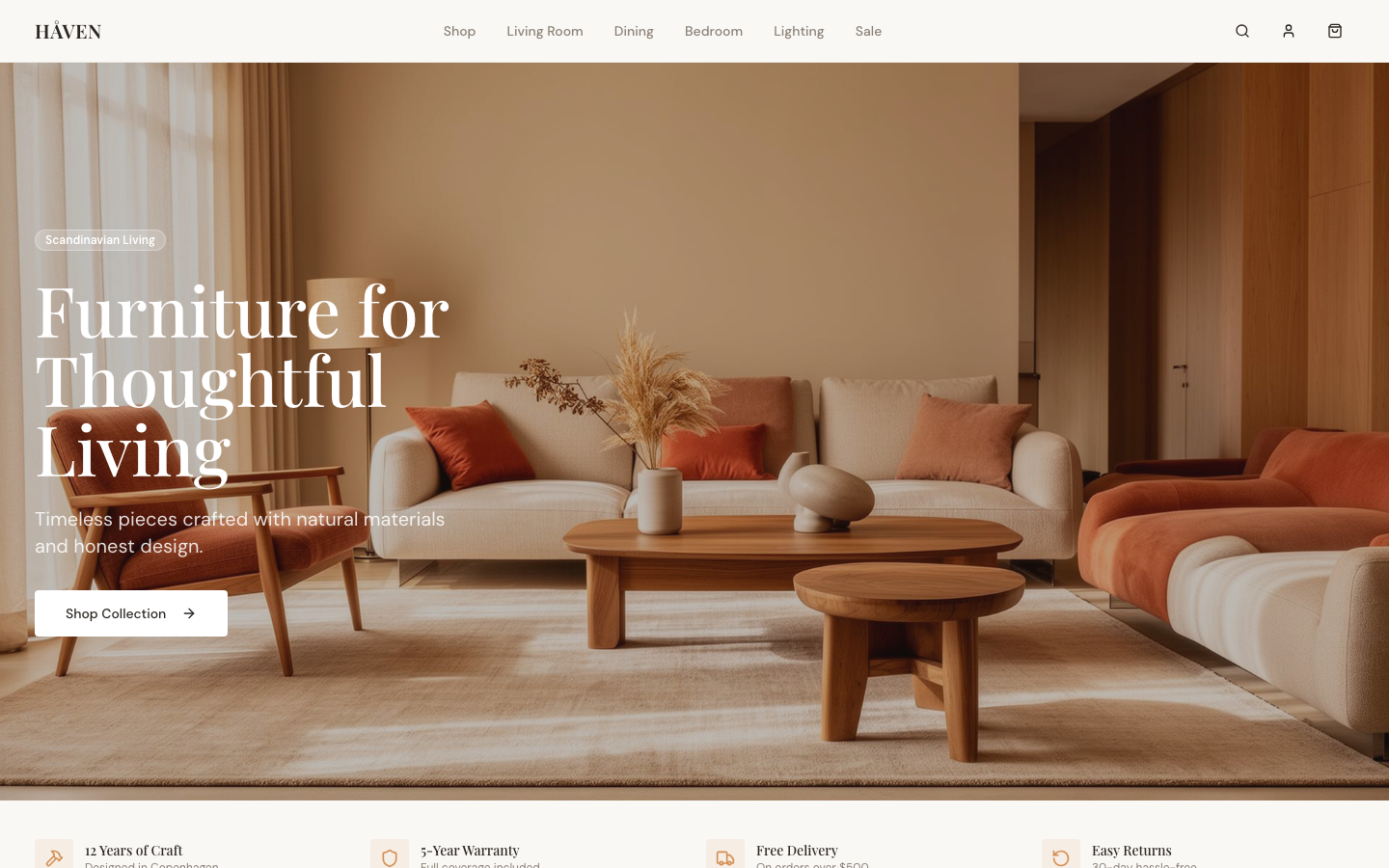
Furniture Store
An elegant furniture and home furnishing e-commerce app with a design-forward Next.js storefront for SEO-optimized product pages and server-rendered category browsing. Alternative framework and mobile ports are available on demand. The visual design emphasizes large product imagery, room-based browsing, and material/color variant selection. Built with Radix UI, shadcn/ui, Tailwind CSS, and Framer Motion for a premium feel. Connects to any headless commerce backend — Medusa JS SDK integration is included. Form handling via React Hook Form with Zod validation ensures robust checkout and account flows. Great for furniture brands, interior design shops, or home decor marketplaces.
by

Plant Pot Store
A stylish Next.js e-commerce app specializing in plant pots, planters, and plant stands, with server-rendered product pages for SEO. Alternative framework and mobile ports are available on demand. Features size and color variant selection, material-based filtering (ceramic, terracotta, concrete, wood), and curated collections. The UI uses shadcn/ui and Tailwind CSS with Framer Motion animations for smooth product transitions. Connects to any headless commerce backend — Medusa JS SDK is integrated in the storefront. Easy to maintain and extend — the component architecture is modular, and the API layer is abstracted for quick backend swaps. Perfect for home decor brands, plant accessory shops, or artisan pottery stores.
by